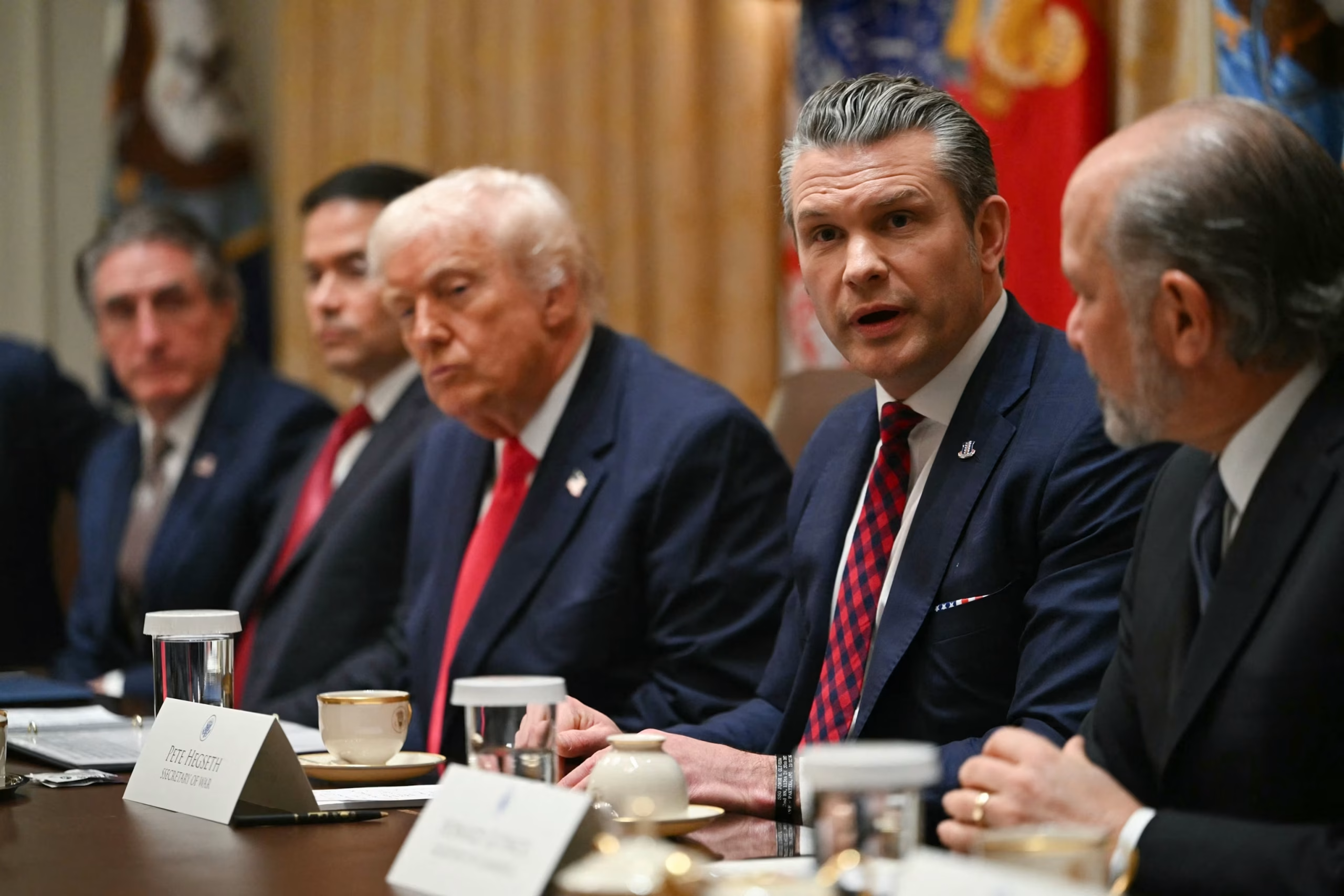
What was supposed to be a straightforward, policy-heavy cabinet session inside the White House turned into yet another round of online hysteria, fueled largely by critics who continue grasping at anything that might embarrass or undermine the Trump administration. The televised meeting stretched for more than two hours, covering everything from border security to drug trafficking networks to upcoming legislative pushes. But rather than focusing on any of that, much of the noise online revolved around a single nameplate that appeared in front of Secretary of War Pete Hegseth.
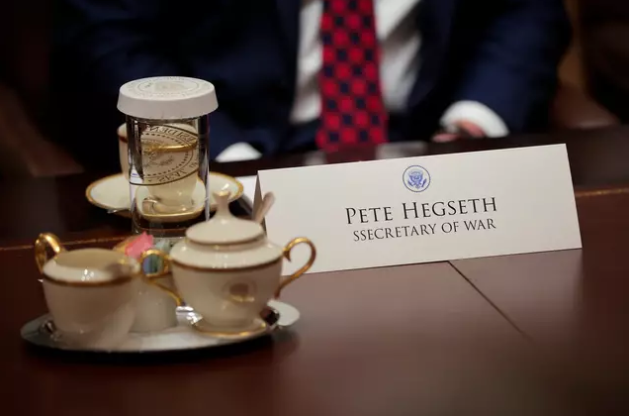
Viewers noticed that the placard on the table listed Hegseth’s title as “SSECRETARY OF WAR.” A simple extra “S,” most likely a formatting slip by a staffer, ignited a wave of commentary across social platforms. Some commenters called it embarrassing, others insisted it was trivial and irrelevant, and a few fringe voices even tried to assign some deeper or darker meaning to the typo. It was an innocuous mistake, but to a certain corner of the internet, it became the main storyline of the meeting.
Before the viral chatter over the nameplate began swirling, the president had already set the tone for the session by addressing reporters who were again questioning his stamina and health. Frustrated with what he sees as obsessive media fixation, he pushed back hard. He pointed out that he routinely holds multiple press engagements a day, while his predecessor would often avoid the press entirely for months at a time. His point was clear: the people questioning his energy are the same people who refused to ask the same questions of others.
Reporters continued pressing him on everything from policy to personal health, and the president responded in kind, answering forcefully and bluntly, clearly irritated but fully engaged. At one moment, the cameras captured him lowering his eyes briefly, prompting some online critics to claim he was “nodding off.” But footage of the meeting showed him responding immediately afterward, jumping into discussions, giving direction, and interacting with his cabinet — all of which contradicts the narrative that he was inattentive or drowsy.
White House Press Secretary Karoline Leavitt quickly pushed back on the claims after the meeting, noting that the president was not only alert but leading the discussion throughout the two-hour, seventeen-minute briefing. She described it as a “marathon session” that required intense focus, something she said the president demonstrated from start to finish. Leavitt added that the small group of commentators online who keep trying to turn brief eye moments or still-frame screenshots into full-blown controversies are simply ignoring the substance of the administration’s work.
The nameplate typo emerged almost immediately as a second flashpoint. Users quickly clipped images of the “SSECRETARY OF WAR” plate and circulated them widely. While many viewers shrugged it off as an obvious clerical error, others treated it as if it were a scandal. The curiosity, fueled partly by the virality of political content online, overshadowed discussion about the pressing issues addressed during the session: border enforcement solutions, fentanyl interdiction, budget matters, and international security challenges.
What most viewers didn’t pay attention to was how focused the president remained on policy discussions. He emphasized tightening the country’s approach to drug trafficking and improving coordination between federal agencies. At multiple points he cut into conversations with detailed questions, asking for clearer data, more aggressive timelines, and tighter interdepartmental cooperation.
For those who watched the full meeting rather than short clips, the narrative of him “falling asleep” made little sense. Even the moment critics isolated appeared to last only a few seconds — a still frame that, once removed from context, became the seed of speculation. But context is rarely the currency of online political commentary. Screenshots matter more than substance; perception matters more than policy.
The meeting also turned toward immigration, with the president pressing for a tougher posture toward criminal networks exploiting migrant routes. His remarks sparked another wave of commentary, but again, the online discourse revolved more around tone than the issues themselves. As the session continued, cabinet members presented department updates, including progress metrics and bureaucratic obstacles they want resolved. The president responded with a mix of support and impatience, urging faster action.
Around the midpoint of the meeting, viewers began noticing the nameplate, and the hashtag associated with the typo climbed steadily across X (formerly Twitter) and Reddit. Some users joked about the mistake, others mocked the White House staffer responsible, and a handful attempted to craft theories out of the extra letter. But despite the noise, administration officials kept the focus on the policy agenda rather than the trending topic outside the room.
The White House has not yet issued a formal statement about the typographical mistake, although several staffers privately noted that such errors, while rare, do happen during large-scale meetings where numerous placards must be prepared quickly. The more serious policy-oriented attendees at the event seemed unaware of the online storm until after the meeting had ended.
Meanwhile, supporters of the president argued that the attention placed on a nameplate typo reveals more about the state of political discourse — one where trivial details overshadow substantive policy. They pointed out that those fixating on the placard seemed uninterested in the administration’s strong messaging about drug cartels, law enforcement coordination, and national security reforms.
The meeting also touched on economic indicators and upcoming legislative proposals aimed at stabilizing domestic markets and improving federal resource allocation. Yet this part of the discussion received virtually no online coverage. Instead, the combination of the president’s brief eye closure and the misspelled nameplate dominated the conversation hours afterward.
Those within the administration dismissed both controversies outright. They emphasized that the president’s long working schedule — including frequent press interactions, internal briefings, and multi-hour government sessions — speaks for itself. As one adviser put it, “If critics want to take a screenshot out of a three-hour meeting and pretend that’s the whole story, they’re not interested in the truth.”
Despite critics trying to frame the moment as “embarrassing,” others pushed back, saying that the frenzy over the nameplate wasn’t embarrassment at all — it was evidence of how eager some online communities are to spin neutral moments into symbolic ones. Mistakes happen, they argued, but the ability of political opponents to seize them instantly and amplify them might be more embarrassing than the error itself.
As always, the meeting closed with a summary from senior officials, outlining next steps for each department. The president appeared engaged, asking follow-up questions and offering direction for the remainder of the month’s agenda. Those in the room described the environment as serious, fast-paced, and densely packed with policy content — a stark contrast to the online portrayal focusing on a single moment and a single typo.
By the end of the day, one thing was clear: while the online world buzzed over a misplaced letter and an out-of-context clip, the administration continued moving forward with its agenda. And despite attempts to spin minor details into major scandals, the president’s supporters say episodes like this only strengthen their belief that the criticisms he faces are more theatrical than substantive.

Emily Johnson is a critically acclaimed essayist and novelist known for her thought-provoking works centered on feminism, women’s rights, and modern relationships. Born and raised in Portland, Oregon, Emily grew up with a deep love of books, often spending her afternoons at her local library. She went on to study literature and gender studies at UCLA, where she became deeply involved in activism and began publishing essays in campus journals. Her debut essay collection, Voices Unbound, struck a chord with readers nationwide for its fearless exploration of gender dynamics, identity, and the challenges faced by women in contemporary society. Emily later transitioned into fiction, writing novels that balance compelling storytelling with social commentary. Her protagonists are often strong, multidimensional women navigating love, ambition, and the struggles of everyday life, making her a favorite among readers who crave authentic, relatable narratives. Critics praise her ability to merge personal intimacy with universal themes. Off the page, Emily is an advocate for women in publishing, leading workshops that encourage young female writers to embrace their voices. She lives in Seattle with her partner and two rescue cats, where she continues to write, teach, and inspire a new generation of storytellers.