What began as a moment of grief following a violent family tragedy quickly escalated into a political controversy this week after President Donald Trump offered a highly charged explanation for the deaths of filmmaker Rob Reiner and his wife, Michele. The president’s remarks prompted swift condemnation from across the political spectrum, including a rare and notable rebuke from Representative Marjorie Taylor Greene, a figure long associated with Trump’s political movement.
The deaths of Reiner and his wife shocked both Hollywood and the broader public. Law enforcement authorities confirmed that the couple was found dead inside their Los Angeles home on Sunday, both victims of fatal stab wounds. Investigators reported no signs of forced entry, a detail that immediately suggested the possibility of a domestic connection rather than a random act of violence.
Later that evening, police arrested the couple’s 32-year-old son, Nick Reiner, in connection with the killings. Authorities stated that he remains in custody while the investigation continues. While officials have not publicly released further details about motive or circumstances, they confirmed that the case is being treated as a homicide investigation involving a close family member.
As news of the arrests spread, attention initially focused on the tragedy itself and the loss of two well-known figures. That tone shifted abruptly when President Trump took to social media and posted a statement linking Rob Reiner’s death to what he described as “Trump Derangement Syndrome,” a phrase he has frequently used to dismiss or criticize vocal opponents.
The president’s post, which suggested that Reiner’s political views and criticism of Trump somehow contributed to his death, spread rapidly online. The message immediately drew outrage, with critics accusing Trump of politicizing a family tragedy and showing a lack of empathy toward surviving relatives.
Greene Issues Public Rebuke
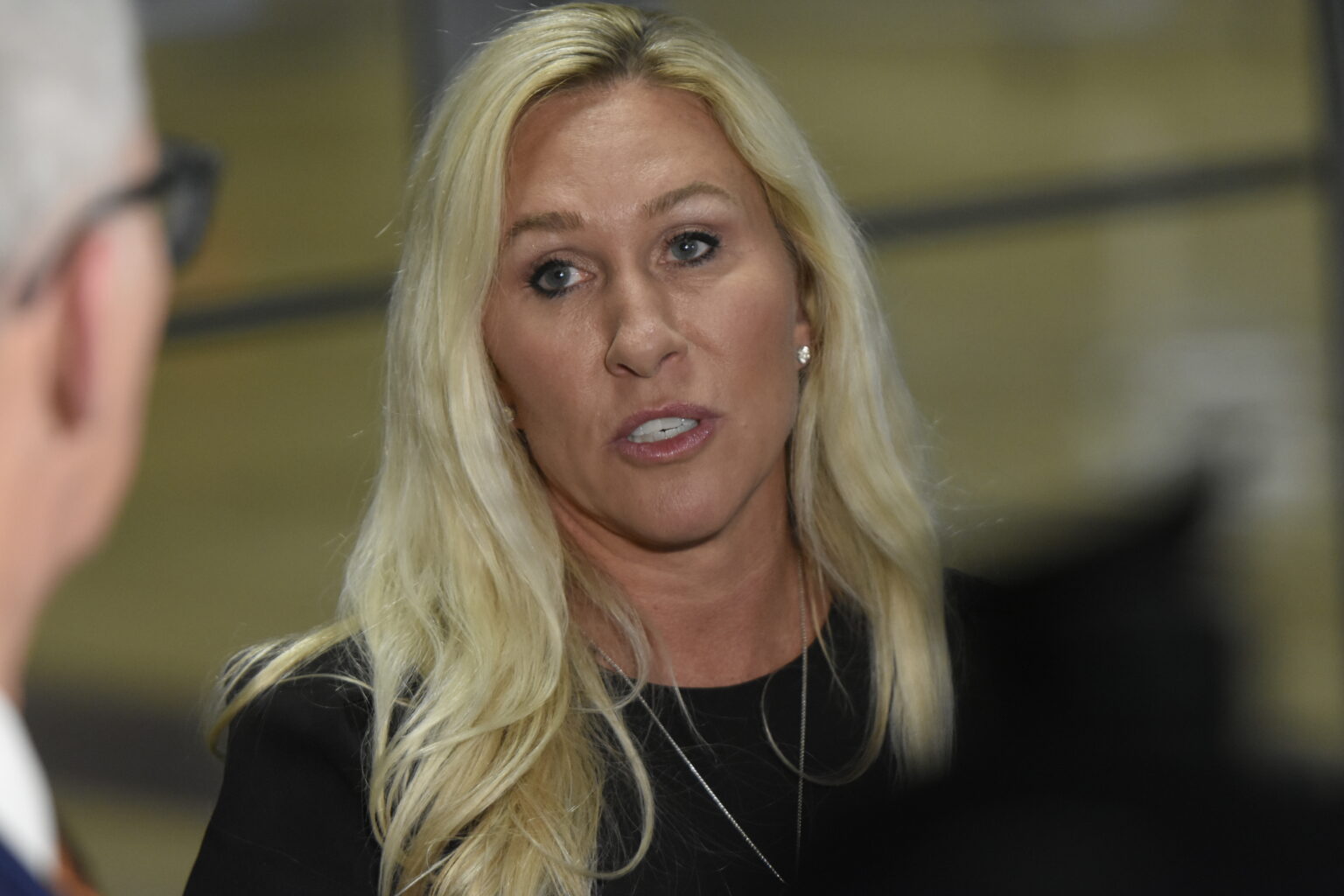
Among those responding was Representative Marjorie Taylor Greene, who has often defended Trump in moments of controversy and built her national profile as one of his most vocal allies in Congress. Her response, however, marked a clear departure from that pattern.
In a statement posted on social media, Greene condemned the president’s remarks and urged restraint. She described the deaths of Reiner and his wife as a family tragedy, not a political event, and emphasized the need for compassion, particularly when addiction and mental health issues may be involved.
“This is a family tragedy,” Greene wrote, according to her post. “It should not be turned into a political attack. Families dealing with addiction and mental health struggles deserve empathy and understanding, not public judgment.”
Her comments stood out not only for their content but also for their source. Greene’s decision to publicly criticize Trump highlighted growing tensions within conservative circles over tone, rhetoric, and the limits of political messaging in moments of personal loss.
While Greene did not directly address her past alignment with Trump, her statement made clear that she viewed the president’s remarks as crossing a line. The rebuke was widely shared and interpreted by analysts as a rare instance of a prominent Trump ally openly distancing herself from his language.
A Family at the Center of the Tragedy
As political reactions dominated headlines, those closest to the victims attempted to process their loss away from the spotlight. Rob and Michele Reiner had been married since 1989 and raised three children together. Friends and family described their marriage as long-lasting and deeply connected.
The couple’s eldest daughter, Tracy Reiner, spoke publicly about the shock of the loss. She described her family as close-knit and loving and said the events surrounding her parents’ deaths were still difficult to comprehend.
Those familiar with the family emphasized that the Reiners had maintained strong relationships with their children and remained active in each other’s lives. The sudden and violent nature of their deaths has left relatives grappling not only with grief but also with unanswered questions as the legal process unfolds.
Authorities have not released further information about Nick Reiner’s condition or the circumstances leading up to the killings. Law enforcement officials have urged the public to avoid speculation while investigators continue their work.
Hollywood and Political Leaders Respond
Beyond the family, tributes poured in from across entertainment, politics, and the arts. Rob Reiner, a filmmaker, actor, and longtime public figure, was widely recognized for both his creative contributions and his outspoken political views.
Former President Barack Obama released a statement honoring Reiner’s legacy, describing him as a gifted storyteller whose work resonated across generations. California Governor Gavin Newsom and Los Angeles Mayor Karen Bass also issued statements expressing condolences and acknowledging Reiner’s cultural influence.
Author Stephen King, who had known Reiner personally and collaborated with him professionally, praised his commitment to storytelling and social engagement. Many tributes emphasized Reiner’s passion, humor, and belief in civic participation, even as they avoided commentary on the political controversy surrounding Trump’s remarks.
Within Hollywood, colleagues recalled Reiner not only for his body of work but also for his mentorship and advocacy. Several figures stressed that whatever disagreements may have existed over politics, the circumstances of his death demanded respect and humanity.
Political Fallout and Broader Implications
The episode has renewed debate over the role of political leaders in shaping public discourse during moments of crisis. Critics argue that Trump’s comments reflected a pattern of personalizing tragedy and framing events through a political lens, even when doing so risks deepening divisions.
Supporters of the president defended his right to express his views but acknowledged that the timing and tone of the post were controversial. Some conservative commentators noted that Greene’s response signaled unease within Trump-aligned circles about the potential consequences of such rhetoric.
Greene’s remarks also highlighted a broader issue frequently discussed in national conversations: how mental health and addiction are addressed in public life. By focusing her response on compassion rather than ideology, she aligned herself with calls for sensitivity when families are dealing with internal crises.
Observers noted that Greene did not challenge Trump on policy or leadership, but rather on empathy, an area where political alliances are often tested. The incident has fueled speculation about whether other Republican figures may follow suit in pushing back against rhetoric they view as harmful or counterproductive.
Returning Focus to the Victims
As the controversy unfolded, many voices emphasized the need to shift attention back to the victims and their surviving family members. Advocacy groups and commentators urged restraint, warning that politicizing violent deaths risks overshadowing the human cost of such tragedies.
In Los Angeles, community members gathered quietly to pay respects, leaving flowers and messages near the Reiner home. Some tributes focused on Michele Reiner, who largely avoided public attention during her life but was described by friends as a devoted partner and mother.
The investigation into the killings remains ongoing, and authorities have stated that further updates will be provided as appropriate. For now, officials have reiterated that there is no evidence of a broader threat to the public.
A Moment That Exposed Fault Lines
The deaths of Rob and Michele Reiner, followed by the political storm that erupted in their aftermath, have exposed fault lines not only between political parties but also within them. Greene’s public condemnation of Trump’s remarks underscored the discomfort some allies feel when personal tragedy becomes a platform for political messaging.
At the same time, the widespread calls for dignity and compassion reflected a shared sentiment across ideological lines: that grief, particularly when it involves violence within a family, should be met with care rather than confrontation.
As the nation continues to process the events, many observers argue that the lasting lesson may lie less in the political fallout and more in the reminder that public figures wield enormous influence in shaping how tragedy is discussed.
For the Reiner family, the focus remains on mourning and healing. For the broader public, the episode has reignited conversations about empathy, responsibility, and the boundaries of political discourse in moments of profound loss.

Emily Johnson is a critically acclaimed essayist and novelist known for her thought-provoking works centered on feminism, women’s rights, and modern relationships. Born and raised in Portland, Oregon, Emily grew up with a deep love of books, often spending her afternoons at her local library. She went on to study literature and gender studies at UCLA, where she became deeply involved in activism and began publishing essays in campus journals. Her debut essay collection, Voices Unbound, struck a chord with readers nationwide for its fearless exploration of gender dynamics, identity, and the challenges faced by women in contemporary society. Emily later transitioned into fiction, writing novels that balance compelling storytelling with social commentary. Her protagonists are often strong, multidimensional women navigating love, ambition, and the struggles of everyday life, making her a favorite among readers who crave authentic, relatable narratives. Critics praise her ability to merge personal intimacy with universal themes. Off the page, Emily is an advocate for women in publishing, leading workshops that encourage young female writers to embrace their voices. She lives in Seattle with her partner and two rescue cats, where she continues to write, teach, and inspire a new generation of storytellers.