

Attorney General Pam Bondi faced pointed questioning during a recent House Judiciary Committee hearing examining the Department of Justice’s handling of matters related to the Epstein files and survivor treatment — a performance that has since drawn scrutiny not only from lawmakers but also from political commentators.
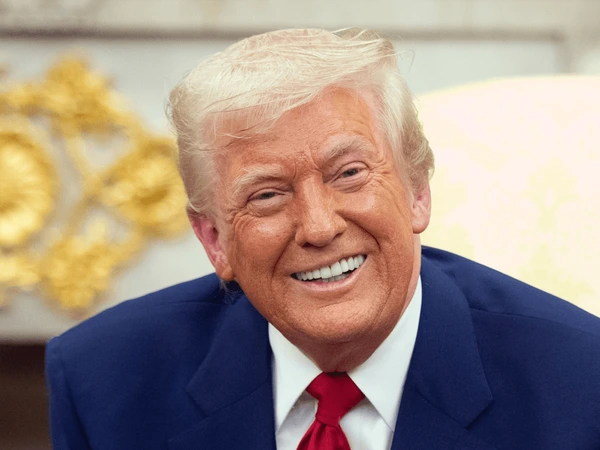
Among those weighing in was media executive Joanna Coles, Chief Creative and Content Officer of The Daily Beast, who argued in a published analysis that Bondi’s approach during the hearing may have carried broader political implications. According to Coles, the attorney general’s forceful and combative style appeared directed toward a specific audience: President Donald Trump.
Coles suggested that while Bondi may have intended to project loyalty and strength, the performance could risk backfiring if it conflicted with what Trump historically prefers from close allies, particularly women in high-profile roles.
High-Pressure Oversight Session
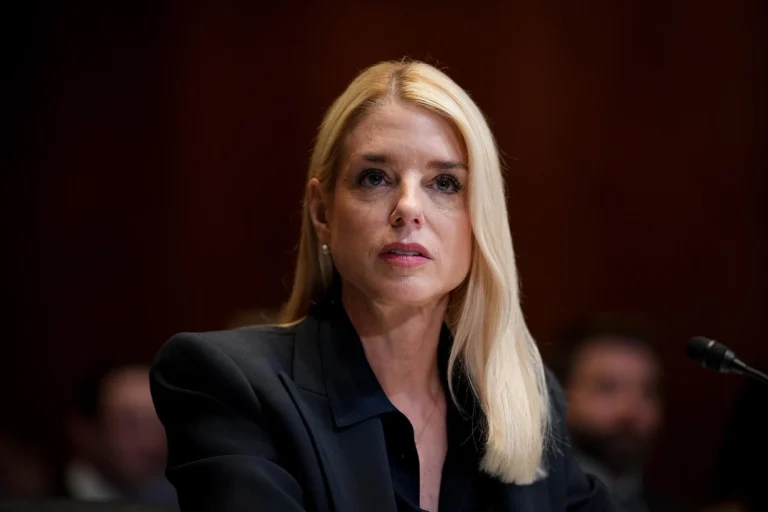
The hearing itself focused on oversight of the Department of Justice, with particular attention paid to documents and decisions connected to financier Jeffrey Epstein. Lawmakers pressed Bondi on issues ranging from transparency to the treatment of survivors and the release of investigative records.
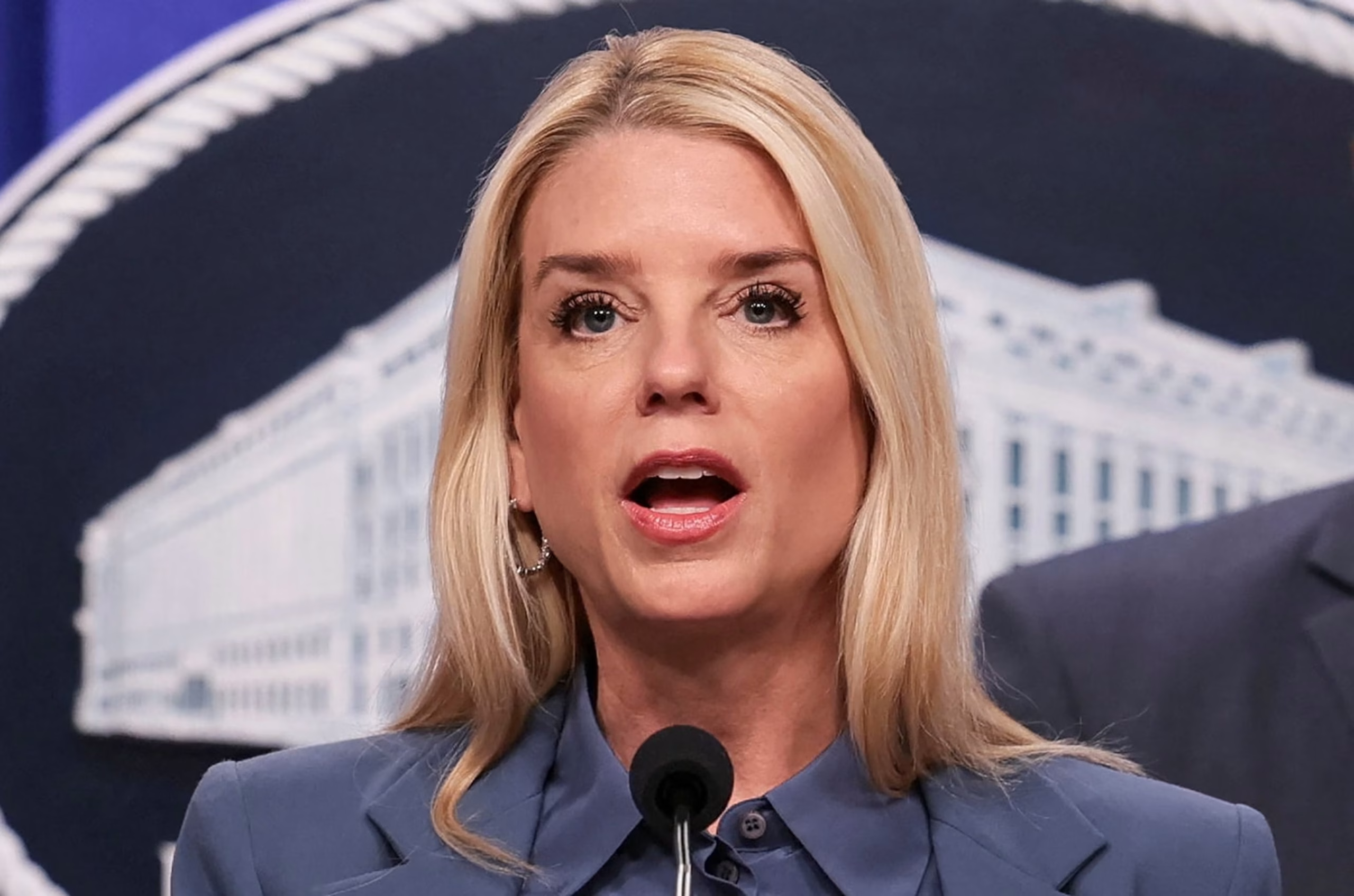
Throughout the session, Bondi responded assertively, at times raising her voice and engaging in sharp exchanges with members of Congress. Observers noted moments of visible tension, as questioning intensified over DOJ processes and public accountability.
Coles characterized Bondi’s demeanor as confrontational and theatrical, describing it as part of a broader trend in Washington where hearings serve not only as fact-finding exercises but also as public spectacles. In her view, modern political hearings are often staged for maximum impact — sometimes for audiences beyond the committee room.
“Because these hearings, like so much political theater now, are staged for an audience of one,” Coles wrote, referring to Trump.
Calculated Loyalty or Political Risk?
Coles’ central argument was that Bondi’s performance appeared designed to signal unwavering loyalty to the president. However, she questioned whether that strategy aligned with Trump’s longstanding preferences regarding tone and public demeanor.
According to Coles, Trump has historically expressed strong opinions about how women in his orbit should present themselves in public settings. She referenced past comments by the president that criticized female political opponents and journalists for what he perceived as hostile or unsmiling behavior.
For example, Trump previously described former Secretary of State Hillary Clinton as a “nasty woman” during a 2016 debate, a phrase that became widely discussed in political discourse. He has also publicly commented on the demeanor of journalists such as Kaitlan Collins, at times suggesting disapproval of their tone during exchanges.
Coles contrasted Bondi’s forceful approach with what she described as Trump’s admiration for women who maintain a composed, polished image in public. She cited figures such as Melania Trump and Ivanka Trump as examples of individuals who project restraint and calm.
In Coles’ analysis, visible anger or sharp-edged exchanges from a female official might be interpreted differently than similar behavior from male counterparts.
The Politics of Optics
The broader question raised by the commentary is whether Bondi’s assertiveness enhances or undermines her political standing. Within partisan circles, combative exchanges during congressional hearings are often viewed through sharply divergent lenses. Supporters may see such moments as evidence of strength and resolve under pressure, while critics may frame them as unprofessional or inflammatory.
Coles suggested that Trump values dominance and control in public settings and prefers to occupy the emotional center of major political moments. She argued that subordinates who appear to seize the spotlight — particularly through heated exchanges — could be viewed unfavorably.
“Trump likes dominance. He likes control,” Coles wrote. “He likes television moments in which he is the axis and others orbit smoothly around him.”
The implication, according to her analysis, is that Bondi’s assertive demeanor could risk clashing with that dynamic.
Historical Patterns and Leadership Style
Trump’s leadership style has long been described by both allies and critics as highly personal and loyalty-focused. His well-known catchphrase “You’re fired,” popularized during his time hosting The Apprentice, became symbolic of an approach that prioritizes perception and optics alongside performance.
Coles argued that Trump’s decisions regarding personnel have often been influenced by tone and presentation as much as by policy outcomes. In her view, emotional displays — particularly by women in high-profile positions — may be scrutinized differently within that framework.
However, it remains unclear whether Bondi’s hearing performance will carry tangible consequences. As attorney general, she occupies a constitutionally significant role overseeing the Department of Justice. Any personnel decision would involve complex political considerations beyond a single hearing.
Divided Reactions
Public reaction to Bondi’s testimony has been sharply divided. Some supporters praised her for defending the department against what they characterized as partisan attacks. They argued that forceful rebuttals were warranted given the intensity of questioning.
Critics, meanwhile, described the exchanges as unnecessarily confrontational and questioned whether the tone advanced constructive dialogue on the issues at hand.
The hearing itself reflects the broader national focus on accountability and transparency related to the Epstein files, which have resurfaced as a politically sensitive topic. Lawmakers on both sides of the aisle have called for clarity regarding investigative decisions and the handling of records.
Media Framing and Political Narratives
Coles’ commentary underscores how quickly high-profile hearings can evolve into broader narratives about power, gender, and loyalty. In modern politics, the line between policy substance and personal optics is often blurred.
Analysts note that media framing can shape public perception as much as the events themselves. A tense exchange during a hearing may be interpreted differently depending on partisan alignment and broader political context.
Whether Bondi’s performance will have lasting implications remains uncertain. Political history is replete with moments that appeared consequential at the time but ultimately faded as attention shifted elsewhere.
What Comes Next
For now, Bondi remains in her position, and there has been no public indication from the White House suggesting dissatisfaction with her performance. Any assessment of potential fallout remains speculative.
The hearing, however, serves as a reminder of the complex interplay between governance, media analysis, and presidential dynamics. In an era where congressional oversight often unfolds under intense public scrutiny, the presentation of authority can be as closely examined as the policies themselves.
Coles concluded her commentary by suggesting that political survival in Trump’s orbit has often depended as much on mood and optics as on merit. Whether Bondi’s assertiveness strengthens her standing or invites further criticism may depend on how both supporters and the president interpret the moment.
As debates over the Epstein files and DOJ oversight continue, the broader political story may hinge less on a single hearing and more on how officials navigate the delicate balance between loyalty, independence, and public perception in a highly polarized environment.

Emily Johnson is a critically acclaimed essayist and novelist known for her thought-provoking works centered on feminism, women’s rights, and modern relationships. Born and raised in Portland, Oregon, Emily grew up with a deep love of books, often spending her afternoons at her local library. She went on to study literature and gender studies at UCLA, where she became deeply involved in activism and began publishing essays in campus journals. Her debut essay collection, Voices Unbound, struck a chord with readers nationwide for its fearless exploration of gender dynamics, identity, and the challenges faced by women in contemporary society. Emily later transitioned into fiction, writing novels that balance compelling storytelling with social commentary. Her protagonists are often strong, multidimensional women navigating love, ambition, and the struggles of everyday life, making her a favorite among readers who crave authentic, relatable narratives. Critics praise her ability to merge personal intimacy with universal themes. Off the page, Emily is an advocate for women in publishing, leading workshops that encourage young female writers to embrace their voices. She lives in Seattle with her partner and two rescue cats, where she continues to write, teach, and inspire a new generation of storytellers.