A tense congressional hearing intended to probe the Department of Justice’s handling of sensitive matters involving the Epstein files quickly evolved into a wider political spectacle—one that, according to media executive Joanna Coles, may have had an unintended audience and an even more unintended consequence.
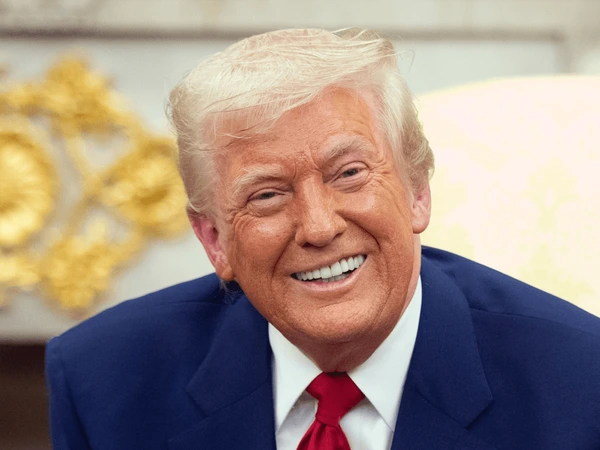
Writing in her role as Chief Creative and Content Officer at The Daily Beast, Coles argued that the aggressive tone on display appeared less like routine oversight and more like a performance carefully tailored for a single viewer: Donald Trump. In today’s highly theatrical political environment, Coles suggested, such hearings are often staged as much for television optics as for legislative inquiry.
Yet the strategy, she wrote, may have misfired.
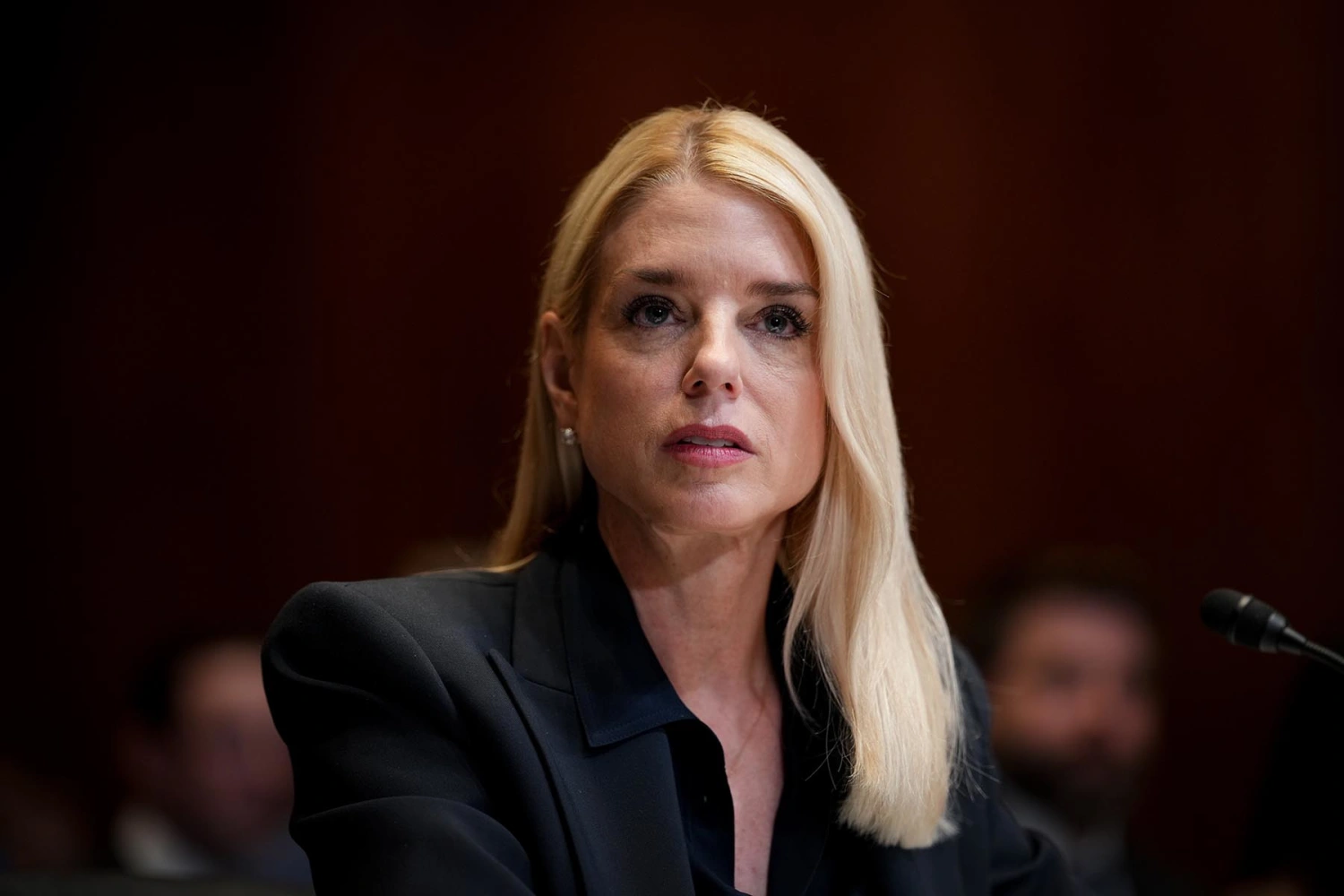
The hearing itself centered on questions surrounding the Department of Justice’s conduct and its management of records connected to Jeffrey Epstein, as well as the treatment of survivors and the pace of transparency. Lawmakers pressed for answers, seeking clarity on investigative decisions, document releases, and the broader direction of federal enforcement.
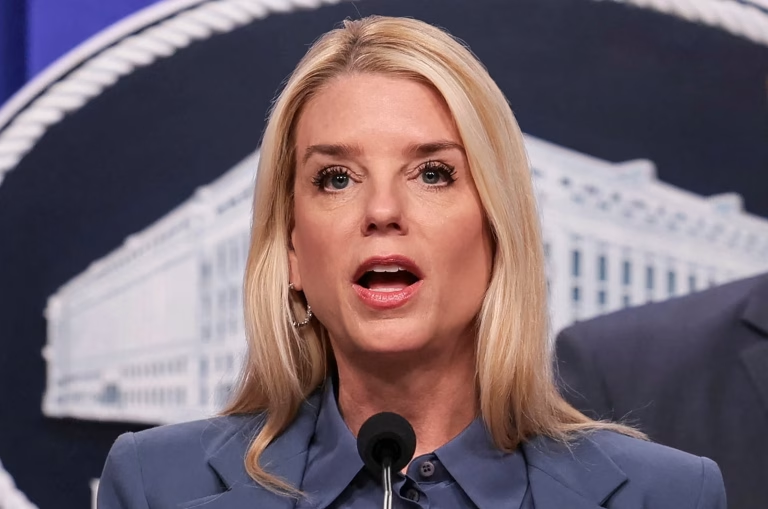
Under the glare of cameras and a charged political climate, the exchange grew heated. The Attorney General pushed back forcefully against several lines of questioning, at times raising her voice and directly challenging members of Congress. Observers noted repeated interruptions, sharp rebuttals, and moments of open frustration—scenes that quickly spread across social media and cable news clips.
It is in that context that Pam Bondi entered the center of Coles’s analysis.
According to Coles, the combative approach seemed designed to signal loyalty and strength—qualities often associated with favor in Trump’s orbit. But instead of projecting control, she argued, the performance risked creating an image that clashes with the preferences Trump has historically demonstrated regarding the public demeanor of women in his political circle.
Coles framed the moment bluntly: in trying to play the role of a fierce defender, Bondi may have crossed into territory that Trump himself has often criticized. She pointed to a long pattern of public remarks in which Trump has expressed clear expectations about how women in high-profile positions should present themselves—expectations that tend to emphasize composure, restraint, and visual poise.
To illustrate this dynamic, Coles referenced figures frequently associated with Trump’s preferred aesthetic. Melania Trump, she noted, has long cultivated a reserved and composed public image. Similarly, Ivanka Trump has typically maintained a polished and measured tone in public appearances. In Coles’s telling, these examples represent a broader pattern of presentation that aligns with Trump’s personal branding: controlled, calm, and visually composed.
By contrast, the heated exchanges in the hearing—marked by raised voices and visible irritation—stood in sharp contrast to that model. Coles suggested that this divergence could carry political risk, particularly when the intended audience is known to react strongly to tone and optics.
She further cited past examples of Trump’s public criticisms of women who did not meet those expectations. These included comments about Kaitlin Collins of CNN and his well-known description of Hillary Clinton as a “nasty woman” during the 2016 presidential campaign. In each case, Coles argued, the criticism focused as much on demeanor as on substance.
From that perspective, the risk for Bondi was not simply political disagreement but visual narrative: who appeared controlled, who appeared agitated, and who seemed to command the moment.
Coles argued that Trump has consistently signaled a preference for dominance paired with composure—scenarios in which he remains the central figure and others reinforce that structure rather than disrupt it. In televised settings especially, she suggested, Trump gravitates toward moments where he appears as the focal point while allies operate in disciplined alignment.
When that dynamic shifts—when a subordinate figure commands emotional attention or appears to “take the spotlight” through visible anger—the reaction may be less favorable. Coles described this as a matter of instinctive optics rather than formal policy: a reaction shaped by television sensibilities and personal brand management.
In her analysis, visible anger from a woman in Trump’s orbit may be interpreted not as strength but as volatility—what she termed “dangerous currency” in a political environment where perception often outweighs policy detail. Whether or not that perception is fair, Coles suggested, it is nonetheless a real factor in how internal dynamics unfold.
The potential consequences, she argued, extend beyond a single hearing. In a political culture shaped by loyalty and optics, moments that clash with leadership preferences can have ripple effects on careers, access, and influence. Trump’s own history of abrupt personnel changes—frequently framed in dramatic, television-ready language—adds to that sense of unpredictability.
Coles ultimately concluded that the exchange may have carried more risk than reward. The hearing, meant to demonstrate command and resolve under pressure, instead may have presented an image at odds with the expectations of the very audience it was designed to impress.
Whether that interpretation proves accurate remains to be seen. Political reputations are often shaped over months and years, not single hearings. Still, in an era where viral clips and televised moments can define public narratives overnight, the stakes of presentation are higher than ever.
What is clear is that the intersection of performance, perception, and power continues to define modern political life. In that arena, tone can be as consequential as testimony—and the difference between loyalty and liability may hinge on how a moment looks, not just what it means.