A major winter storm system is set to impact millions of residents along the eastern United States, with forecasters warning of severe and potentially historic conditions stretching from Maryland through Massachusetts. The approaching Nor’easter is expected to unleash intense snowfall, powerful winds, dangerous coastal flooding, and widespread travel disruptions beginning Sunday and continuing into early next week.
According to the National Weather Service, the storm has the potential to produce sustained blizzard conditions across large portions of the region. Meteorologists warn that snowfall could fall at rates of two to three inches per hour at times, rapidly accumulating and creating near-whiteout visibility. These conditions, combined with strong wind gusts, could make travel nearly impossible in some areas.
State and local officials have moved swiftly to prepare for the storm’s arrival. Kathy Hochul declared a state of emergency in New York on February 21, citing forecasts that call for between 18 and 24 inches of snow in New York City and on Long Island. The declaration allows state agencies to mobilize resources more quickly, coordinate emergency response operations, and support local governments facing the storm’s impacts.
Other states including Connecticut, Delaware, Massachusetts, New Jersey, and Rhode Island have issued similar emergency declarations, reflecting the broad geographic footprint of the storm. Emergency management agencies across the region have activated contingency plans, pre-positioned snow removal equipment, and urged residents to prepare for extended periods of hazardous weather.
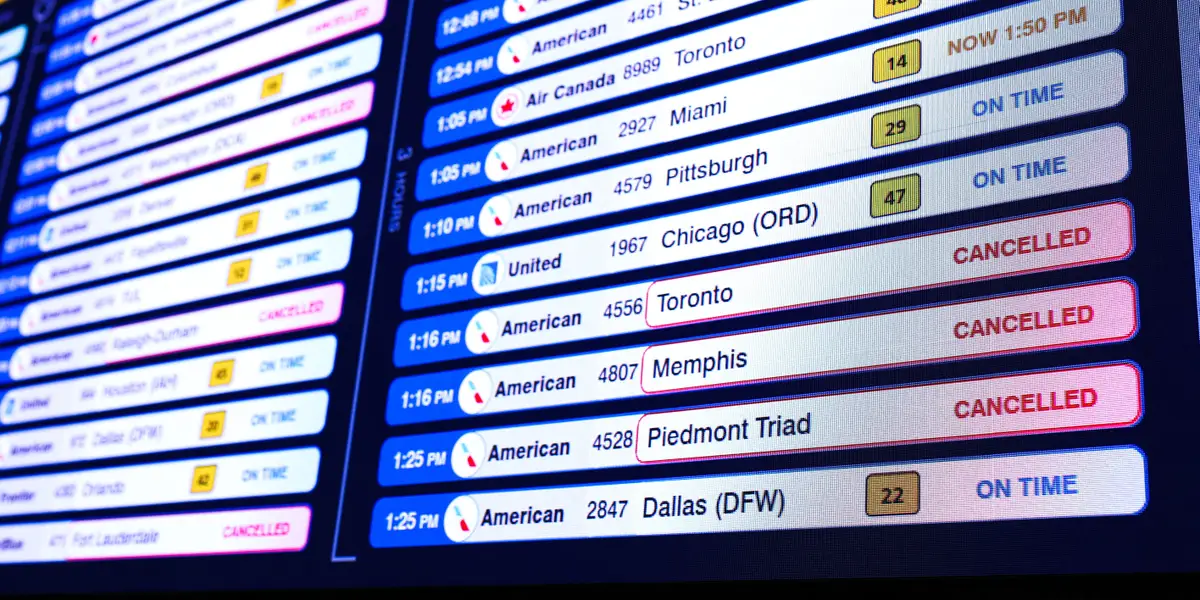
Air travel has already been significantly affected. By early Sunday afternoon, more than 3,100 flights within, into, or out of the United States had been canceled, according to data compiled by FlightAware. The majority of those cancellations were concentrated in the New York metropolitan area, one of the nation’s busiest aviation hubs.
At John F. Kennedy International Airport, more than 700 flights were canceled, while LaGuardia Airport reported over 550 cancellations. Newark Liberty International Airport saw more than 460 flights grounded. Other major airports including Philadelphia International Airport, Ronald Reagan Washington National Airport, Boston Logan International Airport, and Baltimore/Washington International Thurgood Marshall Airport also experienced hundreds of cancellations throughout the day.
Airlines have already preemptively canceled more than 4,300 additional flights scheduled for Monday as the storm intensifies and moves northward. Officials warn that further cancellations and delays are likely as conditions deteriorate, particularly if snowfall rates and wind gusts exceed current projections.
Ground travel is expected to become equally challenging. Departments of transportation across multiple states issued advisories warning drivers of treacherous road conditions and urging residents to avoid unnecessary travel. In New Jersey, transportation authorities implemented restrictions on commercial vehicles along several major interstate highways beginning Sunday afternoon, a measure intended to reduce the risk of accidents and keep roadways clear for emergency responders and plow crews.
The storm’s reach extends from the Delmarva Peninsula—covering parts of Delaware, Maryland, and Virginia—northward through southeastern New England. In many of these areas, blizzard conditions are expected, defined by sustained winds or frequent gusts of at least 35 miles per hour combined with significant falling or blowing snow that reduces visibility to a quarter mile or less.
Municipal governments have taken additional steps to mitigate the storm’s impact on urban infrastructure. In Boston, officials declared a snow emergency beginning Sunday afternoon and implemented a parking ban on major roadways to facilitate snow removal operations. City authorities warned that vehicles left on main thoroughfares would be towed once the emergency took effect.
Boston Mayor Michelle Wu urged residents to remain indoors during the height of the storm, emphasizing that the approaching system could rank among the most significant Nor’easters in recent memory. During a press conference, she noted that while Boston is accustomed to winter storms, the scale and intensity of this event demand heightened caution and preparation.
Educational institutions have also responded to the forecast by canceling classes. Major school systems including Boston Public Schools and New York Public Schools announced closures for Monday, citing safety concerns for students, staff, and families. Additional districts throughout the region are expected to follow suit as conditions evolve.
Beyond snowfall, high winds pose a significant threat to infrastructure. Forecasts indicate that wind gusts could reach up to 70 miles per hour from New Jersey into southeastern New England. Such winds, combined with the heavy weight of wet snow on tree limbs and power lines, are likely to cause scattered to widespread power outages. Utility companies have deployed additional crews and resources in anticipation of outages and to accelerate restoration efforts once conditions allow.
Coastal communities face an additional hazard: flooding driven by strong onshore winds and high tides. Forecasters warn that moderate to major coastal flooding is possible from Delaware to Cape Cod, with low-lying areas at particular risk. Storm surge combined with wave action could lead to erosion, inundation of roadways, and damage to coastal properties.
Emergency management officials are advising residents in flood-prone areas to monitor evacuation guidance and prepare emergency kits. Residents are also encouraged to secure outdoor objects, ensure backup heating sources are safe and functional, and check on vulnerable neighbors, including the elderly and those with medical needs.
As the storm advances, authorities stress that conditions may change rapidly. Even areas that initially experience rain or mixed precipitation could transition quickly to heavy snow as colder air moves in. This variability increases the risk of hazardous travel and complicates forecasting efforts.
The coming days are expected to test infrastructure, emergency services, and community resilience across a wide swath of the eastern United States. Officials at every level of government are urging the public to remain vigilant, heed official guidance, and prioritize safety until the storm passes and recovery efforts can begin.

Emily Johnson is a critically acclaimed essayist and novelist known for her thought-provoking works centered on feminism, women’s rights, and modern relationships. Born and raised in Portland, Oregon, Emily grew up with a deep love of books, often spending her afternoons at her local library. She went on to study literature and gender studies at UCLA, where she became deeply involved in activism and began publishing essays in campus journals. Her debut essay collection, Voices Unbound, struck a chord with readers nationwide for its fearless exploration of gender dynamics, identity, and the challenges faced by women in contemporary society. Emily later transitioned into fiction, writing novels that balance compelling storytelling with social commentary. Her protagonists are often strong, multidimensional women navigating love, ambition, and the struggles of everyday life, making her a favorite among readers who crave authentic, relatable narratives. Critics praise her ability to merge personal intimacy with universal themes. Off the page, Emily is an advocate for women in publishing, leading workshops that encourage young female writers to embrace their voices. She lives in Seattle with her partner and two rescue cats, where she continues to write, teach, and inspire a new generation of storytellers.