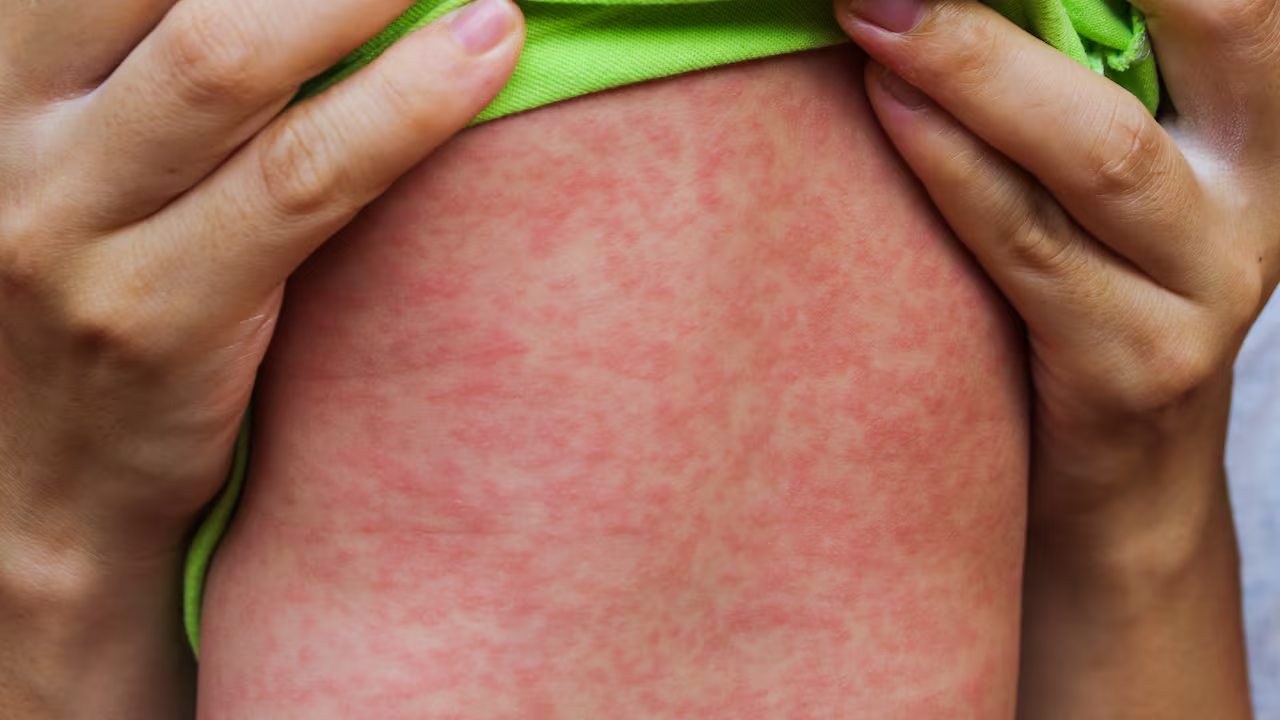
The United States is facing a startling resurgence of measles in 2025, with public health officials reporting more cases than at any time in the past 30 years. Multiple states have documented dozens of new infections, and at least one state is reporting a case for the first time in more than four years, highlighting the contagious disease’s growing foothold across the country.
In Connecticut, which had not reported a measles case since 2021, state health authorities are investigating a newly confirmed infection and conducting extensive contact tracing to prevent further spread. According to a press release from the Connecticut Department of Public Health, the patient is a child under the age of 10 from Fairfield County who had not been vaccinated and had recently traveled internationally. The child began exhibiting symptoms, including a cough, runny nose, congestion, fever, and the characteristic measles rash, several days after returning to the U.S.
Connecticut’s case is a stark reminder of how quickly measles can travel across borders and spark local outbreaks. Despite the state boasting one of the nation’s highest vaccination rates—roughly 98 percent of residents are immunized against measles—an unvaccinated individual can still trigger community transmission. Officials emphasize that even isolated cases in highly vaccinated areas can pose risks to vulnerable populations, including infants too young to be vaccinated and those with compromised immune systems.
Meanwhile, Utah has seen a dramatic increase in measles cases in 2025, reporting a total of 115 infections so far. Twenty-six of these cases emerged within just the past three weeks, signaling a rapid acceleration of the outbreak. In stark contrast, Utah reported no cases in 2024 and only one in 2023. Most of the cases—82 in total—are concentrated in the southwestern region of the state, but public health experts are concerned about the virus spreading further into other populated areas, including the Wasatch Front.
“On its own, this number is deeply concerning,” said Utah State Epidemiologist Dr. Leisha Nolen. “We haven’t seen this many measles cases in Utah for over 30 years. I had hoped to contain the outbreak to southern Utah, and seeing it expand into other parts of the state is alarming. We may see quite a few people becoming sick in the coming months.”
The current surge is not limited to Connecticut and Utah. South Carolina has recently quarantined 254 individuals following a cluster of measles infections. The state has reported a total of 123 cases in 2025, including 27 cases since the previous Friday, a steep increase compared with just one case in 2024. The outbreak has prompted officials to emphasize the importance of vaccination campaigns and immediate reporting of potential exposures.
Measles, mumps, and rubella are preventable through the MMR vaccine, which the Centers for Disease Control and Prevention (CDC) says is 97 percent effective at preventing infection for those who receive both doses. One dose provides 93 percent protection. The recommended vaccination schedule calls for the first dose between 12 and 15 months of age and a second dose between ages four and six. To achieve herd immunity and prevent large-scale outbreaks, public health experts estimate that at least 95 percent of a community must be fully immunized. Nationwide, however, only 92.5 percent of kindergarteners have received both doses, leaving pockets of vulnerability that the virus can exploit.
Utah’s outbreak illustrates this vulnerability. Of the 115 measles cases in the state, 108 patients were unvaccinated, while seven had received at least one dose of the vaccine. Because measles is one of the most contagious diseases in the world, unvaccinated individuals have a 90 percent chance of contracting the illness if exposed, even briefly or indirectly to airborne viral particles.
“Measles spreads incredibly easily,” said Dr. Nolen. “It only takes minimal exposure to infect susceptible individuals, which is why vaccination is critical to protecting communities.”
The disease is highly dangerous, particularly for children. Of the nearly 1,912 Americans infected in 2025, 500 are under five years old, and 786 are between ages 5 and 19. Another 613 patients are adults 20 and older, while 13 cases involve individuals whose ages are unknown. Overall, 92 percent of cases occurred in people who were unvaccinated or whose vaccination status was unknown. Three percent of cases had received one dose of the MMR vaccine, and four percent had received both.
Hospitalizations are also a concern. According to the CDC, 218 patients—or roughly 11 percent of those infected—have required hospitalization, with children under five making up 21 percent of hospitalized cases. Complications from measles can include severe pneumonia, seizures, encephalitis (brain inflammation), and permanent neurological damage. In rare cases, measles can be fatal. In 2025, three deaths have been confirmed, marking the first measles-related fatalities in the U.S. in decades.
“The single best way to protect your children and yourself from measles is to be vaccinated,” said Connecticut Department of Health Commissioner Dr. Manisha Juthani. “We must continue to protect those who matter most—children and other vulnerable people—from vaccine-preventable illnesses through on-time vaccination.”
Before the introduction of the two-dose measles vaccine in 1968, the disease claimed hundreds of lives annually in the U.S. On average, there were up to 500 deaths each year, 48,000 hospitalizations, and 1,000 cases of permanent brain swelling. The virus infected roughly three to four million Americans annually. Following the widespread adoption of the MMR vaccine, measles was declared eliminated in the United States in 2000, meaning there was no continuous transmission for more than 12 months.
However, the resurgence of measles in 2025 demonstrates that elimination does not equal eradication. The virus can easily re-enter communities through international travel, and even highly vaccinated populations remain at risk if vaccination coverage dips below the herd immunity threshold. The recent outbreak in Connecticut, linked to international travel, exemplifies this global vulnerability.
Experts warn that international travel remains a significant factor in measles transmission. The virus can incubate for 7 to 14 days before symptoms appear, meaning travelers may unknowingly introduce the disease into communities far from the initial infection site. Once measles reaches an under-vaccinated population, the outbreak can escalate quickly, as the virus spreads through airborne droplets and direct contact with infectious patients.
The symptoms of measles typically begin with flu-like signs such as fever, cough, runny nose, and red eyes, followed by a distinctive rash that often starts on the face and spreads downward across the body. Patients are contagious from four days before the rash appears until four days afterward. Severe complications, although uncommon, can include pneumonia and encephalitis, which may lead to permanent disability or death.
The 2025 outbreak is the largest U.S. measles surge since 1992, when 2,126 cases were reported. Public health authorities are particularly concerned about the impact on young children and unvaccinated populations, who remain most susceptible. Officials are calling for immediate vaccination efforts, public education campaigns, and rapid response measures to prevent further transmission and protect vulnerable communities.
State and federal health agencies continue to emphasize that vaccination is the most effective tool to control measles outbreaks. For communities where vaccination rates are below 95 percent, there is a heightened risk of rapid disease spread. In areas like Utah and South Carolina, where clusters of unvaccinated individuals have been identified, public health departments are urging parents to ensure their children are up to date on MMR doses.
As the U.S. grapples with this unprecedented surge, the lessons of past decades remain clear: widespread vaccination, timely public health intervention, and vigilant monitoring are essential to preventing measles from reclaiming a foothold in American communities. Officials warn that without immediate action, more children, teens, and adults could become infected in the coming months, compounding both the public health burden and the strain on hospitals already managing other seasonal illnesses.
Measles, though preventable, continues to pose a substantial threat in 2025. Public health authorities stress that vaccination not only protects individual children but also shields entire communities by maintaining herd immunity. As the outbreak unfolds, the collaboration of parents, schools, health care providers, and public officials will be critical to limiting the spread and safeguarding vulnerable populations from what is largely a preventable disease.

Emily Johnson is a critically acclaimed essayist and novelist known for her thought-provoking works centered on feminism, women’s rights, and modern relationships. Born and raised in Portland, Oregon, Emily grew up with a deep love of books, often spending her afternoons at her local library. She went on to study literature and gender studies at UCLA, where she became deeply involved in activism and began publishing essays in campus journals. Her debut essay collection, Voices Unbound, struck a chord with readers nationwide for its fearless exploration of gender dynamics, identity, and the challenges faced by women in contemporary society. Emily later transitioned into fiction, writing novels that balance compelling storytelling with social commentary. Her protagonists are often strong, multidimensional women navigating love, ambition, and the struggles of everyday life, making her a favorite among readers who crave authentic, relatable narratives. Critics praise her ability to merge personal intimacy with universal themes. Off the page, Emily is an advocate for women in publishing, leading workshops that encourage young female writers to embrace their voices. She lives in Seattle with her partner and two rescue cats, where she continues to write, teach, and inspire a new generation of storytellers.