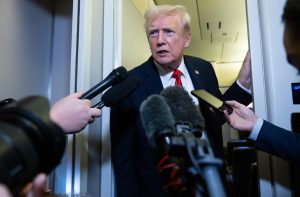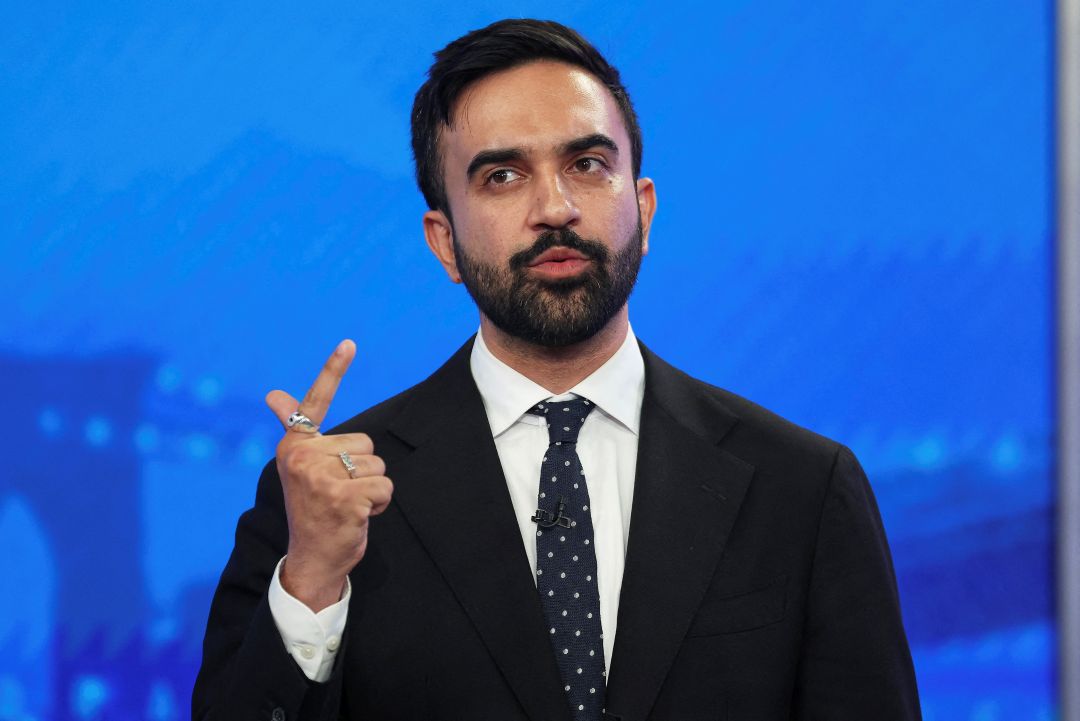
Zohran Mamdani’s rise to the position of Mayor of New York has placed him at the center of a series of political conversations far larger than the boundaries of the city he governs. At the same time, President Donald Trump’s second administration has re-established the White House’s more confrontational approach to international institutions, federal–state authority, and domestic political disputes. The intersection of these two figures — one leading the most populous city in the United States and the other leading the nation — has created a moment where local governance, international law, and federal power collide in highly visible ways.
This article outlines the known facts about Mayor Mamdani’s stated positions, the legal boundaries he must navigate, and the broader national context shaped by President Trump’s policies and executive decisions. It avoids speculation and focuses strictly on what can be accurately established through publicly verifiable information.
Mamdani’s Public Commitment to Upholding International Warrants
During his campaign and after taking office, Mayor Mamdani has emphasized one consistent principle: New York City, in his view, should uphold international law where it can, provided that such actions fit within existing legal frameworks. This means he has publicly supported the idea of honoring international warrants issued by recognized global institutions — most notably, the International Criminal Court (ICC).
Mamdani has repeatedly stated that, as mayor, he believes the city should respect warrants that exist under international humanitarian law. His remarks have included references to high-profile international cases, noting that New York City should not be a place where individuals facing allegations under international law are treated differently because of political stature.
It is important to clarify the factual boundaries: the ICC has issued arrest warrants for several world leaders and political figures, and these warrants are matters of public record. Mamdani has placed these warrants at the center of his argument that a global city like New York must align itself with principles of accountability and international justice.
However, there is also a parallel, equally factual legal limitation: the United States is not a party to the Rome Statute, which created the ICC. This means that the federal government is not legally obligated to enforce ICC warrants. This foundation of law shapes everything that follows, because New York City, as a local jurisdiction, cannot override federal policy.
Legal and Constitutional Boundaries
One of the most important realities in this entire discussion is that New York City does not possess independent authority on matters of international law or diplomacy. These powers are assigned to the federal government under the U.S. Constitution. Regardless of a mayor’s personal views, the federal government maintains control over immigration enforcement, international arrest cooperation, diplomatic immunity, and coordination with foreign governments.
Mayor Mamdani, when questioned on the feasibility of acting on international warrants, has acknowledged that any city action must comply with existing laws. He has clarified that he does not propose creating a new city-level legal mechanism for these issues; instead, he has said he would pursue every legal option available within the scope of a municipal government.
The details matter here. For instance:
-
The United States historically maintains diplomatic immunity protections for foreign heads of government.
-
Local police departments, including the NYPD, cannot independently detain foreign leaders traveling under federal diplomatic protection.
-
Any action involving a foreign official would require federal coordination, most importantly with the State Department and the Secret Service.
These are not political opinions but legal facts. They represent structural limitations that no mayor can bypass.
Therefore, while Mamdani’s rhetoric on accountability reflects a values-driven political position, the execution of such a stance is bounded by federal law. This creates a gap between moral commitment and actionable authority — a gap Mamdani himself has publicly recognized by emphasizing that he will only operate within existing legal channels.
Trump’s National Policy and Its Impact
President Donald Trump’s administration has historically taken a firm stance against the ICC. During his first term, Trump issued sanctions against ICC officials, reflecting his administration’s position that the court lacked legitimate jurisdiction over U.S. nationals and allies. This approach aligned with long-standing U.S. skepticism toward the ICC, but Trump’s use of sanctions represented an unusually strong policy tool.
In his current presidency, Trump has continued to express distrust of international institutions perceived as limiting U.S. sovereignty. His administration’s position strengthens the federal government’s reluctance to cooperate with ICC-related processes. This national posture directly affects what cities like New York can do, not because they are prohibited by Trump personally, but because federal policy takes precedence over municipal intentions.
The conflict here is structural, not personal. A mayor may support honoring international warrants; a president may oppose the ICC’s authority. The Constitution determines whose position prevails in matters involving foreign officials — and that authority lies with the federal government.
Thus, in any scenario involving an international arrest warrant, federal agencies would maintain full control over diplomatic protocol, security arrangements, and the legal interpretation of international obligations. This remains true regardless of the political identities of the individuals involved.
New York as a Global City in a Divided National Landscape
New York City occupies a uniquely influential space in American and global affairs. It hosts the headquarters of the United Nations, receives international delegations throughout the year, and serves as one of the most significant financial centers in the world. Because of this global presence, the city is often a stage on which international law, diplomacy, and politics visibly collide.
Mamdani’s statements reflect the view that New York’s global position should come with a responsibility to uphold principles of international justice. This position resonates with segments of the city’s population who value alignment with international institutions.
However, New York does not operate outside the national framework. Federal agencies have the authority to override local decisions in cases involving foreign dignitaries, diplomatic immunity, or international legal matters. This means that even a globally minded mayor must navigate realities governed by federal law, not municipal preference.
The friction between New York’s international identity and federal control is not new. It has surfaced repeatedly in areas such as immigration enforcement, national security, and international diplomacy. Under Trump’s presidency, which emphasizes national sovereignty and reduced deference to international institutions, this friction becomes even more pronounced.
Public Response and Political Implications
Public opinion regarding Mamdani’s stance has been divided along predictable ideological lines. Supporters argue that taking a strong position on international accountability is morally consistent and reflects New York’s status as a city of global conscience. Critics counter that such statements raise unrealistic expectations and risk politicizing areas of governance traditionally handled at the federal level.
President Trump’s supporters emphasize the supremacy of federal authority and interpret Mamdani’s comments as overreach, while Mamdani’s supporters counter that moral responsibility does not disappear simply because a city lacks full legal authority. These perspectives coexist, sometimes uneasily, within the same national debate.
Notably, Mamdani has never claimed that New York can unilaterally override federal law. His public statements repeatedly describe working “within the law,” even while advocating for interpretations that expand the city’s moral participation in matters of global justice.
Conclusion
The dynamic between Mayor Mamdani and President Trump illustrates a broader national conversation about the balance between local values and federal authority, especially in the context of international law. Mamdani advocates for a moral approach rooted in global accountability; Trump leads an administration firmly grounded in national sovereignty and skepticism toward international institutions.
Both positions are built on real, established facts: Mamdani’s public commitments to upholding international warrants as a matter of principle, and Trump’s long-standing national policy rejecting the ICC’s jurisdiction. The intersection of these realities creates both tension and clarity. Tension, because the moral ambitions of a local government collide with the legal boundaries set by the federal government. And clarity, because the constitutional structure leaves no doubt about who ultimately holds authority in matters of foreign policy and international law.
New York can express values. The United States sets the law.

Emily Johnson is a critically acclaimed essayist and novelist known for her thought-provoking works centered on feminism, women’s rights, and modern relationships. Born and raised in Portland, Oregon, Emily grew up with a deep love of books, often spending her afternoons at her local library. She went on to study literature and gender studies at UCLA, where she became deeply involved in activism and began publishing essays in campus journals. Her debut essay collection, Voices Unbound, struck a chord with readers nationwide for its fearless exploration of gender dynamics, identity, and the challenges faced by women in contemporary society. Emily later transitioned into fiction, writing novels that balance compelling storytelling with social commentary. Her protagonists are often strong, multidimensional women navigating love, ambition, and the struggles of everyday life, making her a favorite among readers who crave authentic, relatable narratives. Critics praise her ability to merge personal intimacy with universal themes. Off the page, Emily is an advocate for women in publishing, leading workshops that encourage young female writers to embrace their voices. She lives in Seattle with her partner and two rescue cats, where she continues to write, teach, and inspire a new generation of storytellers.