A New Flashpoint in the Immigration Debate
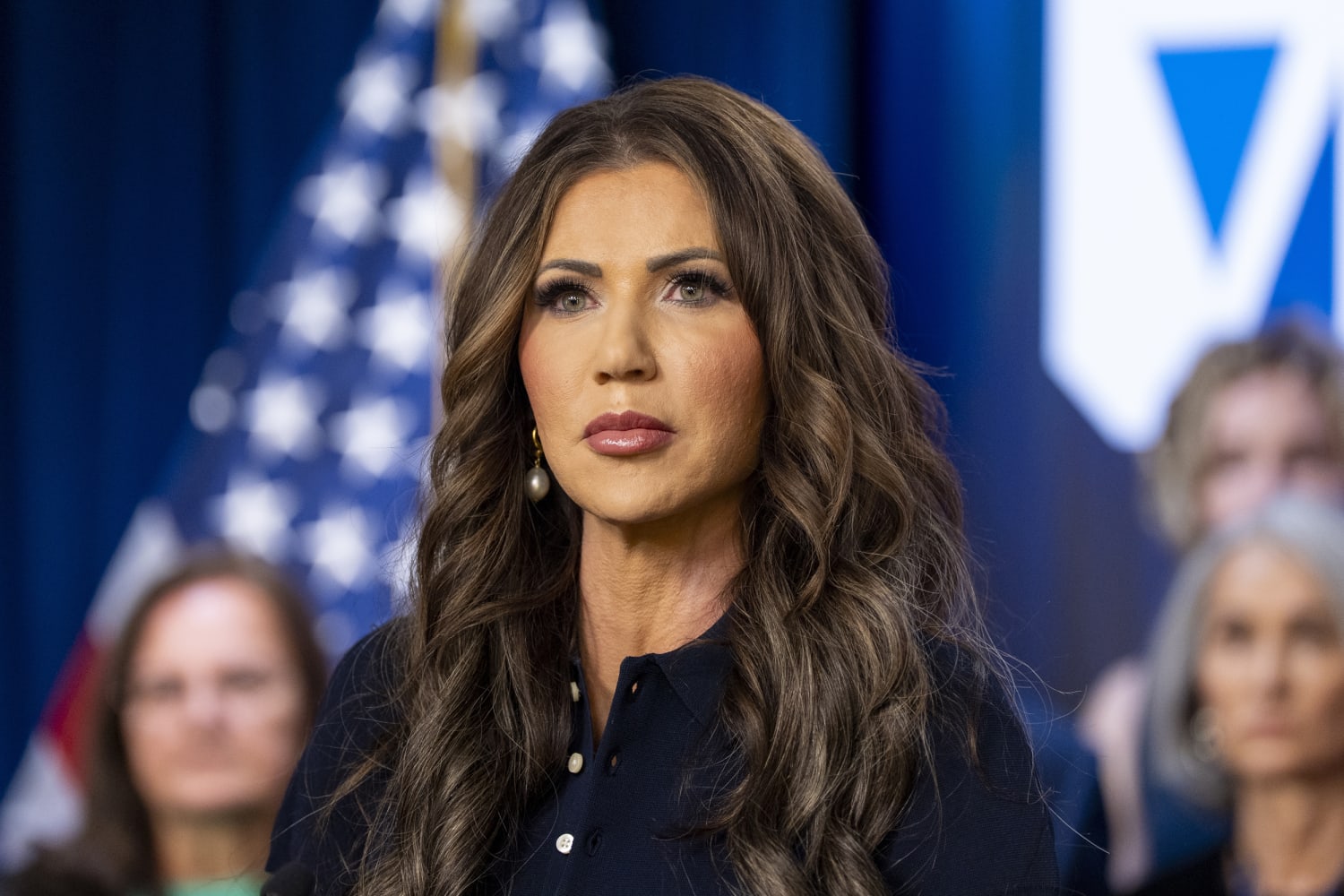
Homeland Security Secretary Kristi Noem ignited a major political firestorm this week after urging President Donald Trump to enact one of the most sweeping immigration restrictions in modern American history. Her comments came as the administration continues to respond to the deadly shooting of two National Guard members in Washington, D.C., an attack carried out by an Afghan national resettled under the Biden administration.
Noem, never known for subtlety, made her position unmistakably clear. In a forceful statement on X, she declared that the United States could no longer allow itself to function as a “dumping ground” for unvetted foreign nationals who, in her view, weaken national security and drain taxpayer-funded resources.
Noem’s Message: A Full Travel Ban Should Be on the Table
“I just met with the President,” she wrote. “I am recommending a full travel ban on every damn country that’s been flooding our nation with killers, leeches, and entitlement junkies.”
The intensity of her language immediately dominated political conversation. Supporters said her blunt approach reflected the urgency of the moment. Critics accused her of embracing rhetoric that demonizes entire populations. But Noem showed no hint of backing away. She framed her recommendation as a patriotic defense of American sovereignty and a rejection of what she described as a dangerous era of mass migration.
A Vision Rooted in America’s Founding Principles
Noem argued that the nation’s founders built the United States on sacrifice, discipline, and a commitment to freedom — not to “subsidize” large groups of people from unstable regions who arrive without thorough vetting.
“Our forefathers built this nation on blood, sweat, and the unyielding love of freedom — not for foreign invaders to slaughter our heroes, suck dry our hard-earned tax dollars, or snatch the benefits owed to AMERICANS,” she wrote.
She ended her message with an all-caps declaration:
“WE DON’T WANT THEM. NOT ONE.”
A DHS spokesperson later told the New York Post that a list of countries included in Noem’s proposed travel ban could be released “soon,” suggesting that conversations inside the administration are already underway.
The Deadly Incident Behind Noem’s Demand
The immediate catalyst for Noem’s recommendation was the December 1 attack in Washington, D.C., where two National Guard members were shot near the White House. One soldier died from a gunshot wound to the head on Thanksgiving. The suspect, Rahmanullah Lakanwal, is a 29-year-old Afghan national who entered the United States during the chaotic mass evacuation in 2021.
Noem’s response was swift and direct. She reminded the public that Lakanwal arrived among roughly 100,000 Afghans who were brought into the country as part of Operation Allies Welcome, the Biden administration’s emergency resettlement initiative following the fall of Kabul.
“The suspect who shot our brave National Guardsmen is an Afghan national who was one of the many unvetted, mass paroled into the United States under Operation Allies Welcome,” she said.
Lakanwal was later granted asylum in April, placing him on the pathway to a green card within a year. DHS officials confirmed that Biden’s program created expedited channels for Afghans to remain in the country even when background-checking systems were strained by the sheer volume of arrivals.
A Pattern That Fuels Rising Concerns
Noem’s comments also referenced another recent incident involving a different Afghan migrant who was arrested days earlier for threatening to blow up a government building in Texas — a man who also arrived under the same 2021 evacuation.
Border czar Tom Homan added fuel to the debate, confirming that the Afghans transported into the U.S. during that period “weren’t properly vetted.” His remarks reignited longstanding concerns about rushed resettlement processes and the potential national security gaps they leave behind.
Critics argue that these episodes demonstrate a dangerous trend. Supporters of stricter immigration controls say the Biden administration’s rapid resettlement of unvetted Afghans created exactly the type of threat that Trump officials are now scrambling to confront.
The Cost of the 2021 Resettlement Effort
Congress allocated $6.3 billion for the Biden administration’s Afghan relocation program. Noem and other administration officials now question whether that investment yielded any measurable benefit for national security or humanitarian aims.
Instead, they argue, it introduced preventable risks.
Noem framed the issue as one of stewardship and responsibility. She said taxpayers should not be expected to subsidize wave after wave of arrivals who have not been properly screened and who may have no interest in assimilating.
A Deeper Warning About America’s Direction
In her posts and public remarks, Noem warned that the United States is drifting toward an unsustainable model where the federal government functions as an open-ended welfare provider for people entering the country from troubled regions.
She argued that the Founding Fathers would be horrified if they saw the current state of immigration. In her view, the country was never intended to act as a “dumping ground” for individuals who drain public resources, commit violent crimes, or remain dependent on government support.
The symbolism of her message is clear: she wants to portray this moment as a turning point. Either the U.S. restores strict control over its borders and its immigration system, or it risks losing the stability that allowed the nation to prosper.
Supporters See a Necessary Reset — Critics See Dangerous Rhetoric
Noem’s statements were met with intense reactions from both sides of the political spectrum. Supporters praised her for speaking plainly and for urging the White House to take stronger, more decisive action after repeated warnings about the consequences of mass migration.
Opponents accused her of promoting collective punishment and stoking fear against immigrants. They argued that addressing violent crimes should not involve sweeping restrictions on entire countries.
Still, her stance aligns closely with Trump’s emerging 2026 campaign themes: restoring control, prioritizing national security, and rejecting what he describes as reckless policies adopted under his predecessor.
https://twitter.com/Sec_Noem/status/1995642101779124476
A Decision That Could Reshape U.S. Immigration Policy
Whether Trump adopts Noem’s recommendation remains to be seen, but it has clearly pushed the administration toward a potential inflection point.
A full travel ban, especially one applied broadly to “every country flooding the U.S.,” would be one of the biggest shifts in immigration policy since the early 20th century. It would also likely face immediate legal challenges from civil-rights groups, immigration activists, and blue-state governments.
Yet Noem’s message resonates with large segments of the public who feel their safety, communities, and tax dollars are at risk. The deadly shooting in Washington only intensified those concerns.
What Comes Next
The DHS is preparing a list of targeted countries, and internal discussions are underway about what shape a new travel ban might take. The administration’s final decision will likely involve balancing national security concerns, public pressure, diplomatic considerations, and legal limitations.
For now, the message from Noem is unmistakable: she believes the era of mass entry from volatile regions must end immediately.
And she is urging the president to take the boldest step yet.
Sarah Mitchell is a bestselling novelist recognized for her insightful and emotionally resonant stories that explore the complexities of human relationships. Originally from Denver, Colorado, Sarah grew up in a family of teachers who nurtured her curiosity and love for storytelling. She studied psychology at Stanford University, where she became fascinated by the intricacies of human behavior—an interest that would later shape her writing career. Sarah’s novels are praised for their nuanced characters, intricate plots, and ability to capture the subtle tensions that define love, friendship, and family ties. Her breakthrough novel, The Spaces Between Us, became an instant bestseller, lauded for its honest portrayal of strained family relationships and the fragile bonds that hold people together. Since then, she has published several works that continue to captivate audiences around the world. Outside of her writing career, Sarah is passionate about mental health advocacy and often partners with organizations to promote awareness and support for those struggling with emotional well-being. Her personal life is quieter—she enjoys hiking in the Colorado mountains, practicing yoga, and spending time with close friends. With each new book, Sarah Mitchell cements her reputation as a writer who illuminates the beauty and struggles of human connection.