Authorities in Los Angeles County are investigating the killing of a former professional football player whose body was discovered this week inside a homeless encampment, a case that officials have confirmed is being treated as a homicide.
The Los Angeles County Medical Examiner’s Office reported that the victim suffered fatal injuries consistent with a violent assault. Investigators said the death involved blunt force trauma and stab wounds, prompting the Los Angeles County Sheriff’s Department to open a full homicide investigation.
Deputies were dispatched early Wednesday morning after receiving a report of a deceased individual in the unincorporated community of Willowbrook, an area just south of Compton that has seen a rise in violent incidents connected to homelessness in recent years.
According to a sheriff’s department press release, deputies arrived at the 1300 block of East 120th Street at approximately 7:30 a.m. and located the victim unresponsive inside a homeless encampment. Paramedics pronounced him dead at the scene.
Authorities have not announced any arrests, and investigators have not yet released details regarding potential suspects or a motive. The Sheriff’s Department’s Homicide Bureau is leading the investigation.
Believed to Have Been Experiencing Homelessness
Law enforcement officials indicated that the victim was believed to have been living at the encampment where his body was found. Los Angeles County Sheriff’s Lt. Steve De Jong told Newsweek Sports that the former athlete was likely experiencing homelessness at the time of his death.
Officials have not said how long he had been living at the location or what circumstances led to his presence there.
NTD News contacted the Sheriff’s Department seeking additional information, but officials declined to comment further, citing the ongoing investigation.
The case has drawn renewed attention to safety concerns surrounding homeless encampments across Los Angeles County, where violent crime, substance abuse, and untreated mental health issues often intersect.
From College Standout to Professional Football
The victim’s background reveals a striking contrast between his earlier success and the circumstances of his death.
Born and raised in Los Angeles, he began his football career at Los Angeles Harbor College, where he quickly distinguished himself as a powerful and athletic defensive lineman. His performance at the junior college level earned him an opportunity to continue his education and football career at Texas Southern University in Houston.
At Texas Southern, he developed into a pro-caliber defensive tackle, drawing the attention of NFL scouts during a time when the league was aggressively recruiting talent from historically Black colleges and universities.
His efforts paid off in the 1993 NFL Draft, when he was selected in the fourth round by the New England Patriots.
Although he did not make the Patriots’ final roster that season, the selection marked the beginning of a professional football journey that would span multiple teams and leagues.
Establishing Himself in the NFL
After a brief setback early in his career, the former lineman found his footing when he signed with the Philadelphia Eagles in 1995. He spent two seasons with the team, earning playing time as a rotational defensive tackle and contributing consistently on the defensive line.
In 1997, he continued his NFL career with the Oakland Raiders, appearing in additional games and adding to his professional résumé.
Over the course of his NFL career, he played in 38 games, recording seven sacks, 40 solo tackles, and one forced fumble. While his time in the league was relatively short, he succeeded in reaching the highest level of professional football—an achievement few players ever attain.
Following his NFL tenure, he extended his career in the Arena Football League, playing for the Orlando Predators and later the Los Angeles Avengers, remaining connected to the sport he had played most of his life.
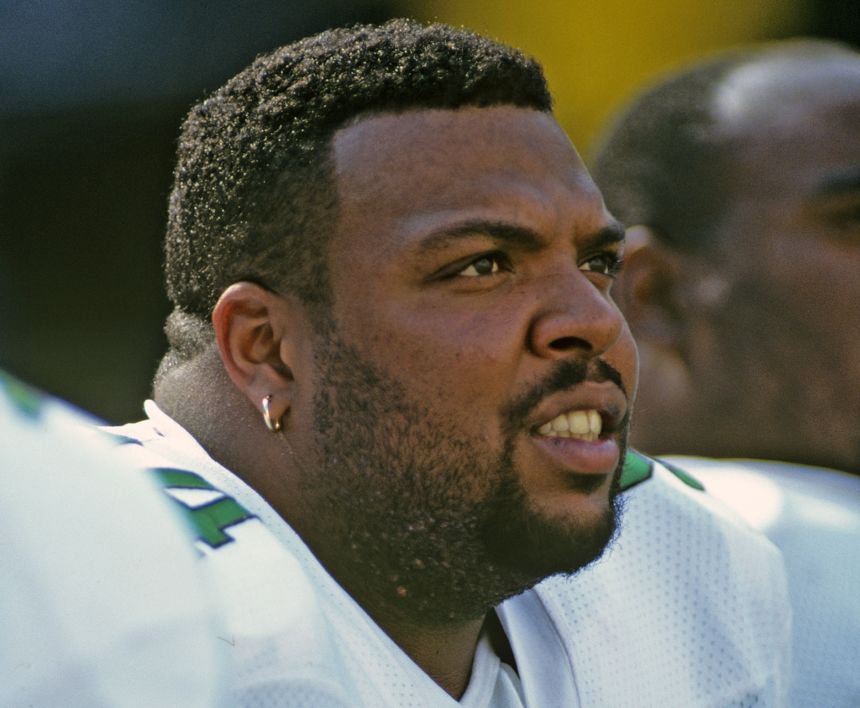
Authorities later identified the victim as Kevin Johnson, 55, a former NFL defensive tackle whose professional career spanned the 1990s.
Johnson’s name was released by the Los Angeles County Medical Examiner’s Office after his family was notified.
A Life Marked by Resilience and Struggle
Johnson’s life included moments of both achievement and hardship. In 1999, while playing for the Orlando Predators, he survived a shooting at a restaurant in Grand Rapids, Michigan, where he was struck in the chest during a violent altercation that erupted nearby.
Despite the seriousness of the injury, Johnson returned to football within weeks, demonstrating remarkable physical resilience.
In later interviews, Johnson spoke candidly about personal struggles that followed his playing career, including the death of his father, a divorce, and challenges adjusting to life after football.
“We have to change sometimes when you’re not doing the right things,” Johnson said in a 2006 interview with the Orlando Sentinel. “I wasn’t doing the right things. I was hanging out too much, partying too much.”
He said he eventually sought therapy and worked to regain balance in his life.
“I know inside my heart that I’m not as bad as I was yesterday,” Johnson said at the time. “I feel at peace.”
A Broader Issue Beyond One Case
Advocates for former athletes say Johnson’s death highlights a broader issue facing many professional sports veterans after their careers end. While some transition successfully into new careers, others struggle with injuries, financial instability, mental health challenges, and a lack of long-term support.
Former players experiencing homelessness often fall through gaps in social services, particularly if they lack family support or access to consistent healthcare.
Johnson’s death also underscores the risks faced by individuals living in homeless encampments, where violence is more likely to go undetected and where victims may be reluctant or unable to seek help.
Investigation Continues
As of Thursday, investigators have not released additional information regarding the homicide. The Sheriff’s Department is asking anyone with knowledge of the incident to contact its Homicide Bureau.
Officials have not said whether surveillance footage exists or whether the killing is believed to have been targeted or random.
For now, investigators continue working to reconstruct the final hours of a former professional athlete whose life ended far from the stadiums and crowds where he once competed.

Emily Johnson is a critically acclaimed essayist and novelist known for her thought-provoking works centered on feminism, women’s rights, and modern relationships. Born and raised in Portland, Oregon, Emily grew up with a deep love of books, often spending her afternoons at her local library. She went on to study literature and gender studies at UCLA, where she became deeply involved in activism and began publishing essays in campus journals. Her debut essay collection, Voices Unbound, struck a chord with readers nationwide for its fearless exploration of gender dynamics, identity, and the challenges faced by women in contemporary society. Emily later transitioned into fiction, writing novels that balance compelling storytelling with social commentary. Her protagonists are often strong, multidimensional women navigating love, ambition, and the struggles of everyday life, making her a favorite among readers who crave authentic, relatable narratives. Critics praise her ability to merge personal intimacy with universal themes. Off the page, Emily is an advocate for women in publishing, leading workshops that encourage young female writers to embrace their voices. She lives in Seattle with her partner and two rescue cats, where she continues to write, teach, and inspire a new generation of storytellers.