A newly released cache of materials tied to the late financier Jeffrey Epstein has reignited public outrage and renewed questions about how much remains hidden within government archives related to one of the most notorious criminal cases of the modern era. The latest disclosures, made public by the House Committee on Oversight, include a series of photographs, documents, and digital communications that lawmakers say underscore the disturbing scope of Epstein’s private world and the extensive network of powerful figures who intersected with him over the years.
The release follows mounting pressure on federal authorities to provide greater transparency surrounding Epstein’s activities and the evidence collected before and after his death in 2019. Although Epstein died while awaiting trial on federal sex trafficking charges, interest in the case has never subsided, fueled by lingering questions about accountability, institutional failures, and the full extent of his relationships.
According to committee officials, the newly disclosed materials were part of a broader trove maintained by Epstein or recovered during investigations into his conduct. While the documents do not, on their own, constitute proof of criminal wrongdoing by others, lawmakers argue they offer troubling insight into Epstein’s behavior, his methods, and the environment he cultivated around himself.
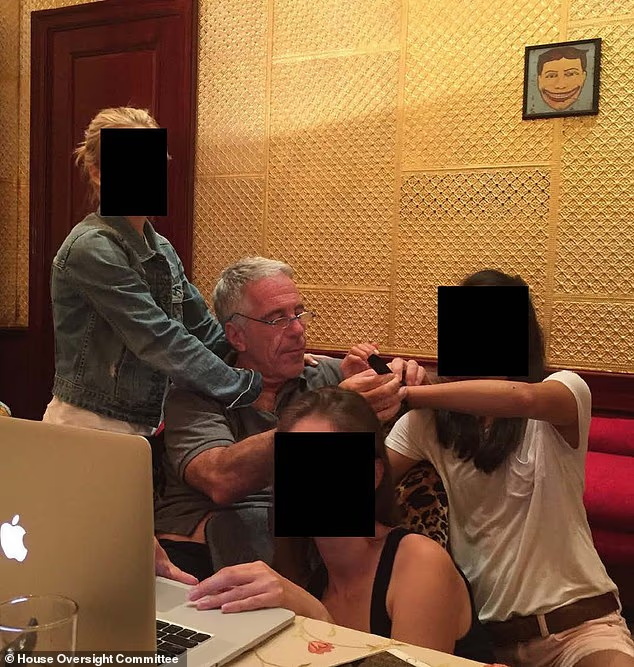
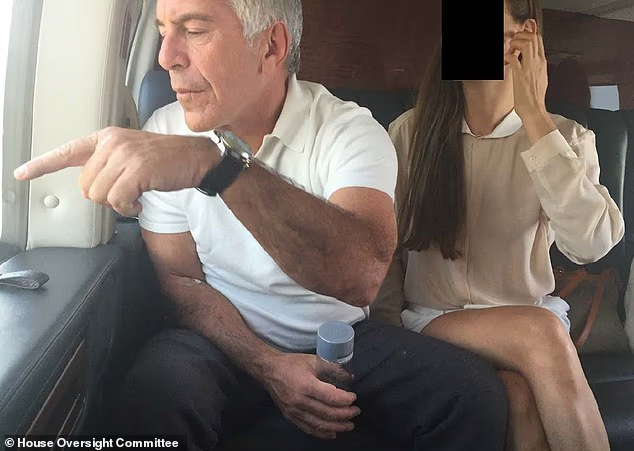
Among the most unsettling materials are photographs that depict Epstein in close proximity to multiple women in private settings. Some images show him aboard aircraft, while others appear to have been taken in personal residences. Faces and identifying features in several photographs have been deliberately obscured by redactions, a step taken to protect privacy and comply with legal standards.
One set of images has drawn particular attention for its disturbing symbolism. The photographs show portions of a woman’s body marked with handwritten quotations attributed to Vladimir Nabokov’s novel Lolita, a work long associated with themes of exploitation and abuse. A copy of the book is visible in the background of at least one image. Investigators have not identified the woman pictured, and officials emphasized that the images themselves do not establish criminal conduct. Nevertheless, their content has sparked widespread condemnation and renewed scrutiny of Epstein’s personal interests.
Other photographs in the release depict Epstein alongside well-known public figures. In one image, billionaire technology executive Bill Gates appears standing next to a woman whose face has been redacted. Gates has previously acknowledged meeting Epstein and has publicly stated that his association with the financier was a “huge mistake.” The appearance of Gates in the latest materials has once again placed his past interactions under public examination, though no allegations of illegal activity have been made against him in connection with the images.
Also included is a photograph showing Epstein seated next to renowned linguistics professor Noam Chomsky aboard a private aircraft. Chomsky has previously acknowledged encounters with Epstein in academic and social contexts. As with other individuals appearing in the files, officials stress that the image alone does not imply knowledge of or involvement in Epstein’s crimes.
In addition to photographs, the document release includes images of personal items and records recovered from Epstein’s possessions. One image shows medication commonly prescribed to treat a urinary tract infection, with identifying details of the patient redacted. Another depicts a passport belonging to a woman from Eastern Europe, with personal information blacked out. Investigators have not clarified the relevance of these items, though their inclusion suggests they were considered noteworthy during evidence collection.
Perhaps most troubling are screenshots of text messages included in the release. The messages, sent by an unidentified individual, reference young women from overseas and include a discussion of payment amounts described in dollar figures. The context and participants of the messages have not been publicly identified, and officials have cautioned against drawing conclusions without further corroboration. Even so, the language used in the messages has heightened concerns about potential trafficking activity and the recruitment of vulnerable individuals.
The Oversight Committee stated that the release was intended to advance public understanding of what evidence exists and what remains undisclosed. Representative Robert Garcia, the committee’s ranking Democratic member, said the materials raise serious questions about the completeness of prior disclosures by the Department of Justice.
“As we approach the deadline set by the Epstein Files Transparency Act, these images and documents underscore how much the public still does not know,” Garcia said in a statement. “The American people deserve clarity about what evidence exists, how it has been handled, and why so much remains shielded from view.”
Garcia and other lawmakers have accused federal authorities of unnecessarily withholding records related to Epstein’s estate and investigations connected to him. They argue that continued secrecy only deepens mistrust and fuels speculation about favoritism or protection afforded to influential individuals.
The Department of Justice has not issued a detailed response to the latest release but has previously maintained that certain materials must remain confidential due to ongoing legal considerations, privacy rights, and the need to protect victims. Officials have also emphasized that not all materials recovered during investigations are relevant to criminal proceedings.
Despite those assurances, criticism has intensified across the political spectrum. Transparency advocates argue that Epstein’s death eliminated the possibility of a full courtroom reckoning and that releasing as much information as legally possible is the only remaining path to accountability.
The renewed focus on Epstein’s connections has also reignited debate over how institutions respond when allegations involve powerful figures. Critics point to earlier plea deals, missed warning signs, and the continued prominence of individuals who associated with Epstein as evidence of systemic failure.
At the same time, legal experts caution against conflating association with culpability. They note that Epstein actively sought relationships with influential people and often used his wealth and perceived connections to enhance his own status. Being photographed with him or appearing in his records does not, by itself, indicate wrongdoing.
Still, the emotional response to the images has been intense. Advocacy groups representing survivors of sexual abuse have described the materials as deeply disturbing, saying they reflect a pattern of objectification and exploitation consistent with what victims have alleged for years.
For many observers, the latest disclosures reinforce a sense that the Epstein case remains unfinished. Each new release seems to answer some questions while raising many more, particularly about how Epstein operated for so long with limited consequences and how many warning signs were overlooked.
As Congress continues to push for additional disclosures, attention is now turning to what other materials may still be held by federal agencies. Lawmakers have indicated that further releases are possible and that oversight efforts will continue into the coming year.
Whether the newly released files will lead to concrete legal action remains uncertain. What is clear, however, is that Epstein’s shadow continues to loom large, years after his death. The images and documents now in the public domain have once again forced an uncomfortable reckoning with the failures that allowed his conduct to persist and with the unresolved questions that still surround one of the most infamous scandals in recent history.
For a public that has repeatedly demanded answers, the latest release may be only another chapter in a long and deeply unsettling story—one that many believe will not truly end until transparency replaces secrecy and accountability replaces silence.



Emily Johnson is a critically acclaimed essayist and novelist known for her thought-provoking works centered on feminism, women’s rights, and modern relationships. Born and raised in Portland, Oregon, Emily grew up with a deep love of books, often spending her afternoons at her local library. She went on to study literature and gender studies at UCLA, where she became deeply involved in activism and began publishing essays in campus journals. Her debut essay collection, Voices Unbound, struck a chord with readers nationwide for its fearless exploration of gender dynamics, identity, and the challenges faced by women in contemporary society. Emily later transitioned into fiction, writing novels that balance compelling storytelling with social commentary. Her protagonists are often strong, multidimensional women navigating love, ambition, and the struggles of everyday life, making her a favorite among readers who crave authentic, relatable narratives. Critics praise her ability to merge personal intimacy with universal themes. Off the page, Emily is an advocate for women in publishing, leading workshops that encourage young female writers to embrace their voices. She lives in Seattle with her partner and two rescue cats, where she continues to write, teach, and inspire a new generation of storytellers.