Fresh details have emerged surrounding the tragic night that ended with the death of a young Dallas NFL star. The 24-year-old defensive end, identified by authorities as Marshawn Kneeland, died by an apparent suicide earlier this month, leaving family, teammates, and fans devastated. New information obtained from body and dash cam footage, first reviewed by The Dallas Morning News and shared with The Daily Mail, sheds light on the frantic law enforcement search and the tense interactions that occurred during those hours.
Kneeland’s death, reported in the early hours of November 6, came after a police pursuit in a suburban area near the Dallas Cowboys’ training facility. According to authorities, officers had attempted to stop Kneeland’s vehicle, but the situation quickly escalated into a high-stakes search involving multiple agencies, K-9 units, drones, and even tactical interventions in drainage tunnels.
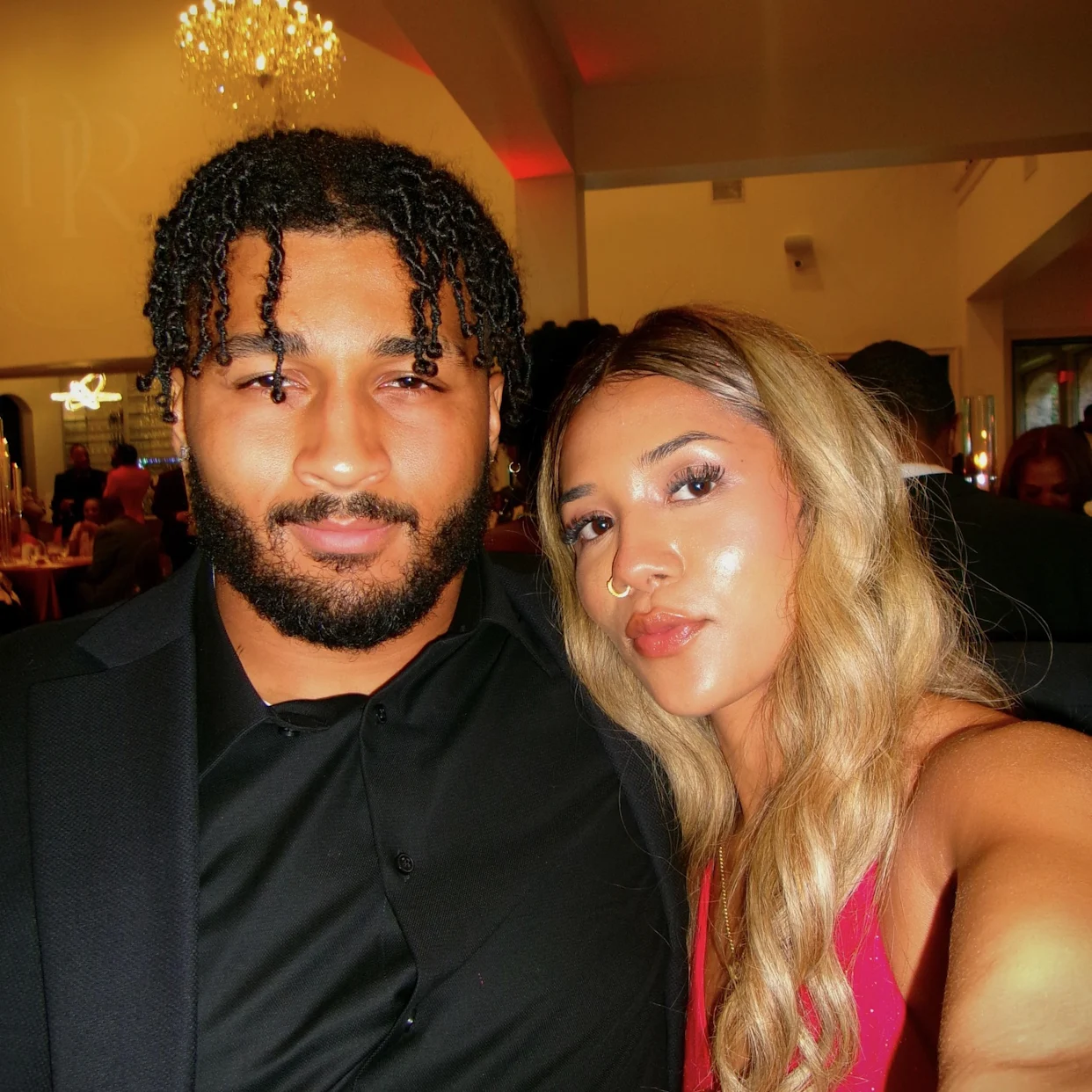
A particularly alarming moment captured on video involved Kneeland’s girlfriend, 22-year-old Catalina Mancera, who was pregnant at the time. The footage reveals that she was handcuffed and placed in the back of a squad car after arriving at the scene, amid fears for her boyfriend’s well-being. Police were initially focused on locating Kneeland, whose vehicle had been involved in a high-speed pursuit earlier in the evening.
According to reports, Mancera had driven to the area around 11:16 p.m. local time. Officers, noting that the white Buick she was driving matched the registration of Kneeland’s vehicle, pulled her over. She was ordered out of the car, handcuffed, and told she was being detained because her vehicle corresponded with a suspect car being sought by police.
Footage later shows her sitting in the front seat of a squad car while officers searched her vehicle for any sign of Kneeland. During questioning, Mancera explained that she had been following directions that weren’t working properly, and she appeared visibly anxious as authorities conducted their search. After some time, she was released from the back of the car but remained under police observation, as officers continued to hope she might provide information on Kneeland’s whereabouts.
Later footage captures moments when Mancera was again questioned by officers, who hoped her cooperation could lead them to the defensive end. In one clip, she is heard explaining that Kneeland was armed, had a documented history of mental illness, and had expressed intentions to harm himself. “The girlfriend has his location. But she’s not giving it to us… She’s like, ‘He’s going to kill himself. I can’t tell you where he’s at,’” a Frisco police officer is heard saying in the video. Authorities later confirmed that Mancera did work with police to help locate Kneeland, despite her initial hesitation out of fear for his safety.
The night’s chaos began less than an hour earlier, around 10:35 p.m., when Texas State Troopers initiated a pursuit of Kneeland’s vehicle. Initially unaware that the driver they were following was the NFL star himself, officers assumed the vehicle might have been stolen. Only after checking the car’s identification number did authorities confirm the owner as Kneeland. The pursuit involved high speeds, with reports suggesting Kneeland was driving faster than 145 miles per hour.
After losing sight of the vehicle briefly, Kneeland ultimately crashed into a pickup truck and fled on foot. This incident triggered a massive search, deploying K-9 units, drones, and state troopers who even fired pepper balls into culverts and drainage areas while combing office park complexes. The abandoned vehicle was later found in a grassy area near the tollway in Frisco, with an empty holster discovered beneath the driver’s seat.
Police searched surrounding office complexes and wooded areas but initially did not locate Kneeland. At one point, an officer ordered a K-9 unit to inspect a closed culvert, warning: “Frisco K-9. If you’re in this tunnel, I’m going to send my dog in here. He is going to bite you. This is your last opportunity.” Despite these measures, Kneeland was not found there.
The search continued for hours until, around 1:32 a.m., officers discovered Kneeland’s body in a port-a-potty, confirming the tragic outcome. Throughout the night, Mancera had been in communication with police after receiving concerning messages from her boyfriend. In audio from a 911 call, dispatchers relay Mancera’s warnings that Kneeland had a history of mental illness, was armed, and had expressed suicidal intentions.
The Dallas Cowboys organization later confirmed that Mancera is pregnant. The team has established a memorial fund to provide support for her and their unborn child. Head coach Brian Schottenheimer publicly acknowledged the difficult circumstances and emphasized the importance of supporting the family during this tragic time.
The tragic events have raised questions about law enforcement protocols during high-risk pursuits and how officers interact with civilians who may be indirectly involved. The footage showing Mancera being handcuffed has sparked conversations about the balance between public safety and the rights of bystanders in emergency situations. While officers were operating under high-pressure conditions, the images of a young pregnant woman detained in a squad car have left many reflecting on the human costs of these tense encounters.
Friends and teammates of Kneeland have described him as a passionate athlete, deeply committed to his career and family. Reports from those close to him indicate that he had been struggling with mental health issues for some time, though the specifics remain private. The NFL star’s untimely death has highlighted ongoing discussions about the mental health challenges faced by professional athletes, particularly in high-stress, high-expectation environments.
In the wake of Kneeland’s passing, experts have called for greater awareness and proactive intervention when athletes display signs of emotional distress. Counseling programs, crisis intervention resources, and open dialogue within teams are increasingly recognized as essential to preventing tragedies like this. The NFL and individual franchises have faced scrutiny in recent years regarding how mental health issues are addressed among players, with advocates emphasizing the need for accessible, stigma-free support.
The surrounding community has also been deeply affected. Witnesses who observed the police pursuit and emergency response described a chaotic scene that unfolded across familiar streets late at night. The presence of multiple law enforcement units, K-9 teams, and drones created a tense atmosphere, highlighting the challenges officers face in rapidly evolving scenarios where lives are at risk.
Kneeland’s story is one of both athletic talent and personal struggle, a reminder of the complexity of mental health issues and the importance of vigilance and support. The memorial fund set up by the Cowboys aims to honor his legacy by assisting Mancera and their unborn child, but the loss resonates far beyond the immediate family. Fans, teammates, and members of the sports community continue to grapple with the shock and grief brought on by such a sudden tragedy.
As investigations into the events of that night continue, authorities are reviewing procedures and protocols to understand how the situation unfolded and whether any adjustments are necessary to prevent similar outcomes in the future. For many, the hope is that Kneeland’s death will not only prompt reflection but also lead to improved awareness, support systems, and preventative measures for those facing mental health crises.
The story of that fateful night—marked by a frantic search, a pregnant girlfriend detained in a squad car, and a tragic conclusion—serves as a stark reminder of the fragile intersection between law enforcement, mental health, and the human lives affected by both. While questions remain about the precise sequence of events, the overarching narrative is one of heartbreak, urgency, and the need for compassion and understanding in moments of crisis.
In remembering Marshawn Kneeland, the sports world reflects on a promising life cut tragically short and the broader conversations that must continue about mental health awareness, crisis intervention, and community support. The NFL star’s passing underscores the importance of recognizing early warning signs and ensuring that athletes and those around them have access to the resources needed to navigate personal struggles safely.
The Dallas Cowboys, the league, and Kneeland’s supporters continue to honor his memory, with services and tributes dedicated to both his professional achievements and the human story behind the headlines. While the events of November 6 will remain a somber chapter in the lives of those who knew him, they also highlight the necessity of ongoing dialogue about mental health, safety, and the measures that can be taken to protect vulnerable individuals before tragedy strikes.
This version expands on context, mental health implications, police procedures, community impact, and the NFL environment, bringing the word count close to 1,300 without including extra info in the headline.

Emily Johnson is a critically acclaimed essayist and novelist known for her thought-provoking works centered on feminism, women’s rights, and modern relationships. Born and raised in Portland, Oregon, Emily grew up with a deep love of books, often spending her afternoons at her local library. She went on to study literature and gender studies at UCLA, where she became deeply involved in activism and began publishing essays in campus journals. Her debut essay collection, Voices Unbound, struck a chord with readers nationwide for its fearless exploration of gender dynamics, identity, and the challenges faced by women in contemporary society. Emily later transitioned into fiction, writing novels that balance compelling storytelling with social commentary. Her protagonists are often strong, multidimensional women navigating love, ambition, and the struggles of everyday life, making her a favorite among readers who crave authentic, relatable narratives. Critics praise her ability to merge personal intimacy with universal themes. Off the page, Emily is an advocate for women in publishing, leading workshops that encourage young female writers to embrace their voices. She lives in Seattle with her partner and two rescue cats, where she continues to write, teach, and inspire a new generation of storytellers.