Federal law enforcement officials announced this week that they had disrupted a significant domestic threat in Southern California following a coordinated investigation led by the Federal Bureau of Investigation. The operation, which involved multiple federal and local agencies, resulted in the arrest of several individuals and the seizure of materials authorities say could have led to a major act of violence.
The arrests were confirmed by the Department of Justice after a months-long investigation that officials say intensified in recent weeks as the suspects’ activities escalated. While authorities initially withheld specific details, citing the ongoing nature of the case, they described the operation as a critical intervention that prevented potential harm to civilians.
Attorney General Pam Bondi addressed the case publicly during a press briefing, praising the FBI and its Joint Terrorism Task Force for identifying the threat before it could be carried out. She said the investigation involved extensive surveillance, confidential sources, and cooperation between federal agencies and local law enforcement departments in California and beyond.
“This is exactly how law enforcement is supposed to work,” Bondi said. “Quietly, carefully, and decisively to stop violence before lives are lost.”
Officials stressed that while the suspects were taken into custody without incident, the seriousness of the alleged plan cannot be overstated. According to investigators, the operation unfolded as authorities determined the group was moving from ideological planning into operational preparation.
The FBI confirmed that the arrests took place in a remote area east of Los Angeles, where agents intercepted the suspects while they were allegedly handling materials associated with explosive construction. The location was selected, officials said, because it limited the risk to the public during the arrests.
At that point in the briefing, authorities revealed the core of the investigation.
Federal prosecutors allege that four individuals were actively planning a coordinated bombing operation timed to coincide with New Year’s Eve celebrations in Southern California. According to court filings, the suspects intended to deploy multiple improvised explosive devices at separate locations in the greater Los Angeles and Orange County areas.
The plan, investigators say, was designed to maximize chaos during a period of heavy public activity, travel, and celebration.
The suspects have been charged with conspiracy and possession of unregistered destructive devices. Prosecutors allege that the group had developed a written operational plan outlining targets, timing, and execution methods. The plan reportedly included the use of pipe-style explosive devices and coordination across multiple sites.
Authorities said the suspects discussed targeting large commercial facilities described as logistics or distribution centers, though officials declined to publicly name specific companies. Investigators also alleged that the plan included follow-on actions directed at law enforcement responding to the initial attacks.
Federal officials emphasized that no functional explosive devices were detonated and that the operation was disrupted before the suspects could reach their intended targets.
Investigators have linked the group to a fringe domestic extremist faction that espouses anti-government, anti-law enforcement, and anti-capitalist ideology. According to officials, the group framed its planned violence as an act of resistance and used political rhetoric to justify the use of force.
Court documents indicate that one of the suspects drafted a handwritten manifesto describing the operation in detail and shared it with an individual who later cooperated with authorities. That information, officials said, became a key turning point in the investigation.
The FBI credited intelligence sharing and proactive intervention for stopping the plot before it progressed further. Officials said the case underscores the evolving nature of domestic threats, particularly those that originate online and move quickly toward real-world action.
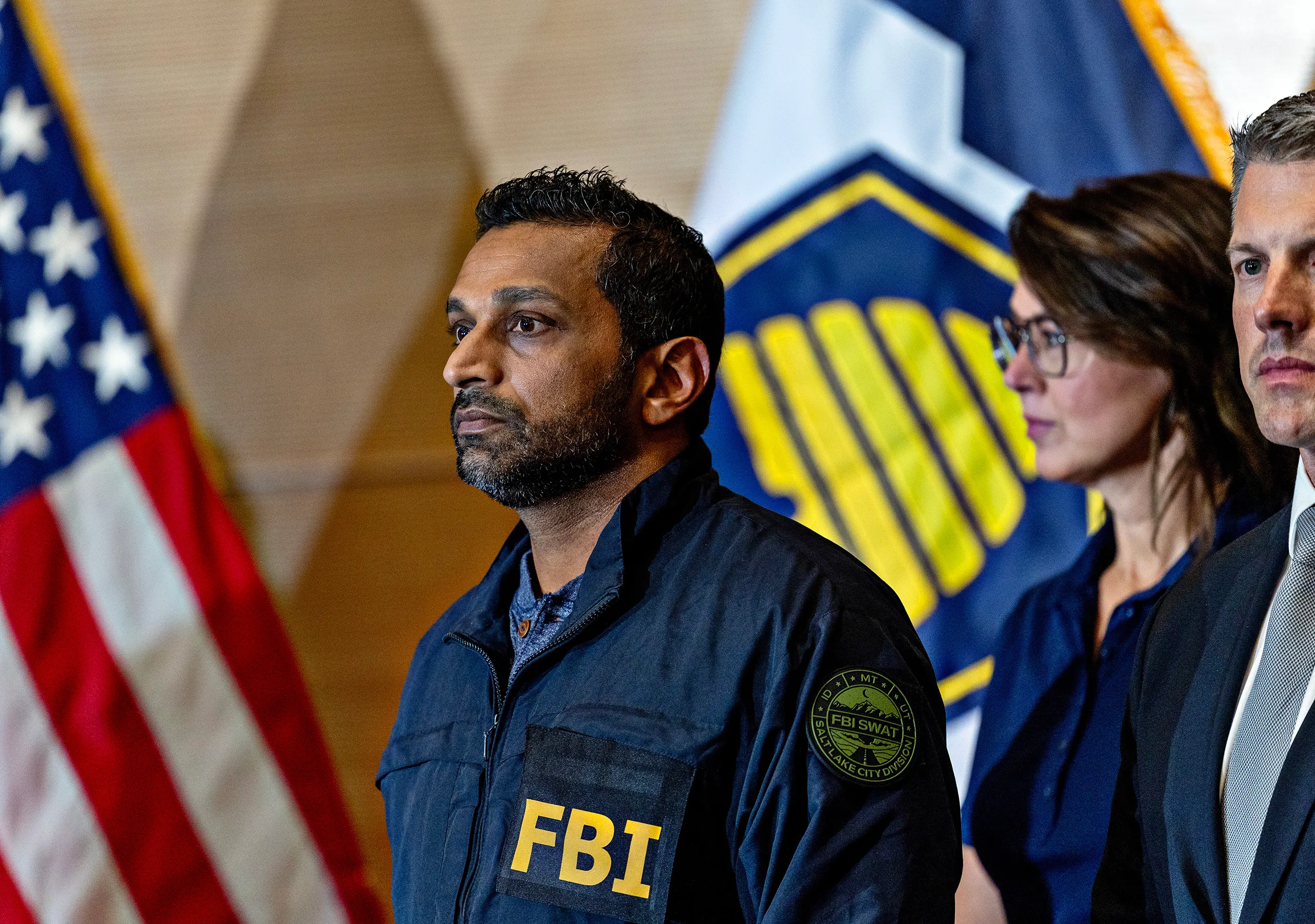
FBI Director Kash Patel addressed the case in a statement, calling the disruption a clear example of why aggressive counter-extremism efforts remain necessary.
“This investigation shows the danger posed by domestic extremist networks when rhetoric turns into planning,” Patel said. “The FBI will continue to identify and dismantle threats before Americans are put in harm’s way.”
Patel also confirmed that investigators are reviewing communications, electronic devices, and financial records seized during the arrests to determine whether additional individuals were involved or whether the group had external support.
The case has already sparked broader political discussion about domestic extremism and the balance between civil liberties and security. Some lawmakers praised the FBI’s actions as a success story in preemptive law enforcement, while others have raised questions about transparency and oversight in domestic terrorism investigations.
Civil liberties advocates have cautioned against broad labeling of political groups, urging the government to clearly distinguish between protected speech and criminal conspiracy. Federal officials, however, maintain that the charges are based on concrete actions, materials, and documented planning, not ideology alone.
In addition to the arrests in California, FBI officials confirmed that a separate individual believed to be connected to the same network was detained in New Orleans on unrelated charges. Investigators are examining whether that individual played a supporting role or had prior knowledge of the alleged plot.
The disruption comes at a time when federal agencies say they are increasingly concerned about homegrown threats emerging across the ideological spectrum. Law enforcement leaders have warned that small, loosely organized groups can pose outsized risks when they adopt violent tactics.
Officials said the timing of the alleged plot—New Year’s Eve—made the case particularly urgent, given the density of crowds and the strain such events place on emergency responders.
As the case proceeds through the courts, prosecutors are expected to file additional motions outlining evidence gathered during the investigation. Detention hearings and preliminary court appearances are scheduled in the coming days.
Federal officials say the investigation remains active and that additional charges are possible as evidence continues to be reviewed.
For now, authorities are emphasizing the outcome rather than the intent.
“This was stopped before anyone was hurt,” Patel said. “That is the measure of success.”

Sarah Mitchell is a bestselling novelist recognized for her insightful and emotionally resonant stories that explore the complexities of human relationships. Originally from Denver, Colorado, Sarah grew up in a family of teachers who nurtured her curiosity and love for storytelling. She studied psychology at Stanford University, where she became fascinated by the intricacies of human behavior—an interest that would later shape her writing career. Sarah’s novels are praised for their nuanced characters, intricate plots, and ability to capture the subtle tensions that define love, friendship, and family ties. Her breakthrough novel, The Spaces Between Us, became an instant bestseller, lauded for its honest portrayal of strained family relationships and the fragile bonds that hold people together. Since then, she has published several works that continue to captivate audiences around the world. Outside of her writing career, Sarah is passionate about mental health advocacy and often partners with organizations to promote awareness and support for those struggling with emotional well-being. Her personal life is quieter—she enjoys hiking in the Colorado mountains, practicing yoga, and spending time with close friends. With each new book, Sarah Mitchell cements her reputation as a writer who illuminates the beauty and struggles of human connection.