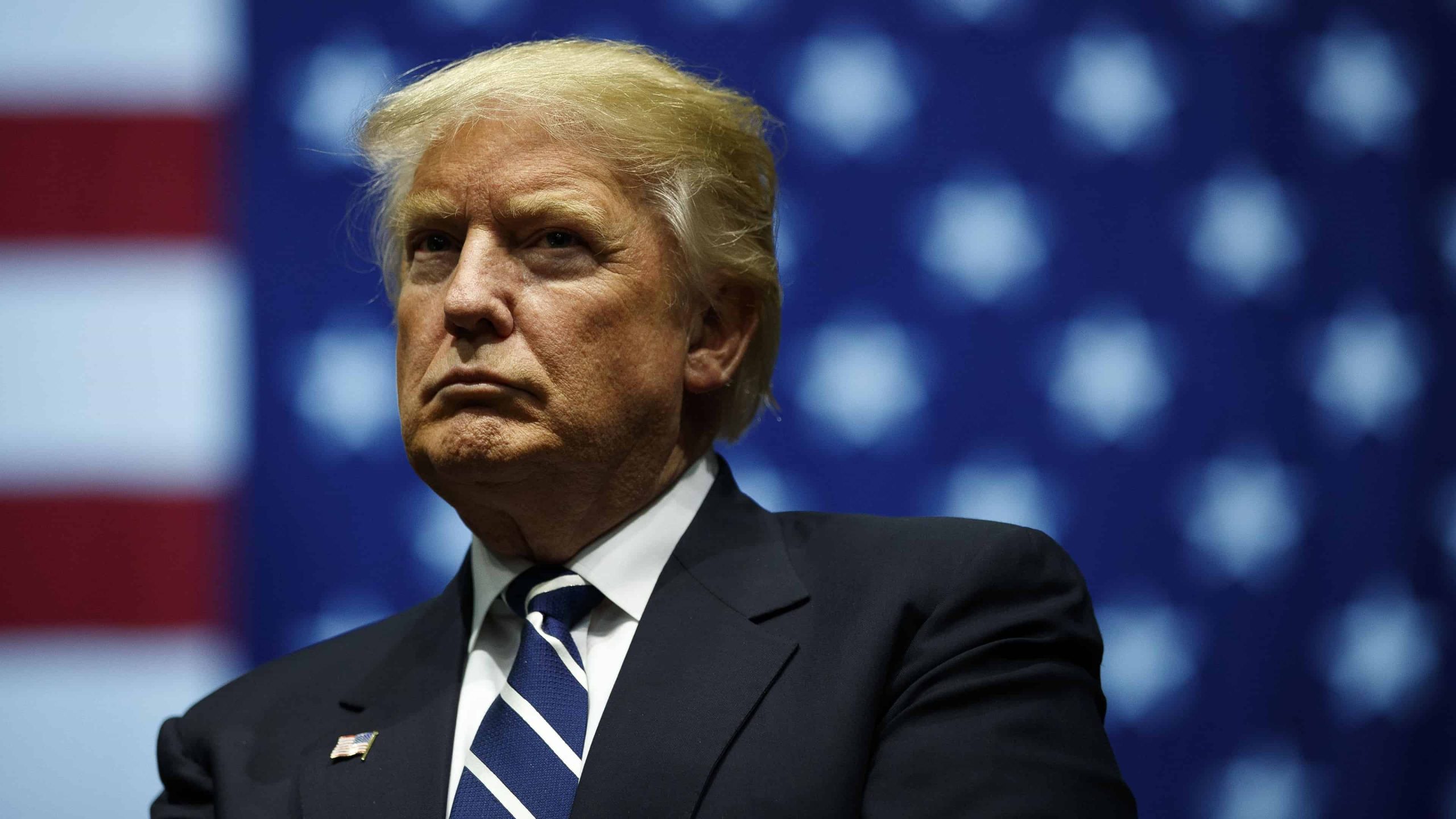
President Donald Trump is facing one of the most challenging stretches of his second term, as his national approval ratings have dropped to unprecedented lows. According to a recent survey conducted by the Public Polling Project through Big Data Poll, public sentiment toward Trump has shifted markedly, with negative views now outpacing positive ones by double digits and the intensity of disapproval rising sharply. Analysts note that such trends can have significant implications for political momentum, voter turnout, and legislative strategy in the months leading up to the midterm elections.
The survey, carried out between February 16 and 18, included 2,012 registered voters and 1,805 likely voters nationwide. It found that only 42.4 percent of registered voters approved of Trump’s job performance, while 54.6 percent disapproved, leaving the president more than 12 points underwater. What is particularly notable, analysts say, is not just the total disapproval rate, but the level of intensity attached to those negative opinions. Fully 43 percent of respondents said they “strongly disapprove” of Trump’s performance, a figure that surpasses the total percentage of those expressing any form of approval. Political strategists often describe this as an intensity gap, and it is historically significant because it correlates with voter mobilization patterns and midterm election outcomes.
Across every policy issue included in the monthly survey, from economic management to foreign affairs and domestic initiatives, Trump received more negative than positive marks. This pattern indicates that public dissatisfaction is widespread rather than concentrated in a single domain. In political terms, a broad spectrum of discontent can suggest structural challenges for a president, as it reflects systemic concerns among multiple voter groups rather than temporary reactions to isolated incidents or policies.
The methodology behind the poll involved a combination of online and live-agent phone interviews, as well as text-to-online outreach, with respondents sourced from Lucid (CINT) and the L2 National Voter File Database. Results were weighted to align with national demographic distributions across age, race, gender, education, and geographic location. The reported margin of error is ±2.1 percentage points for registered voters and ±2.3 points for likely voters, providing a statistically robust measure of public opinion at this juncture in the administration.
Political observers have traced the decline in Trump’s approval ratings to several key phases of his second term. He began this term with a relatively strong mandate, entering office with a 55.5 percent approval rating and only 37.4 percent disapproval. Early momentum was sustained through the spring, bolstered by his loyal voter base and the residual effects of his 2024 electoral victory. However, ratings began to dip noticeably after May 2025, coinciding with an increased emphasis on foreign policy initiatives, including the controversial bombing of Iranian nuclear sites and expanded military operations abroad. Analysts argue that while international security issues can consolidate support among certain segments of the electorate, they also risk alienating voters whose primary concerns are domestic, such as inflation, healthcare, and infrastructure.
Approval ratings reached a low point in late October 2025, followed by a modest recovery toward the end of the year. Even as some metrics showed slight improvement in December, underlying voter sentiment remained negative, as evidenced by the Intensity Index produced by Big Data Poll. This index, which measures the strength of voter approval and disapproval, registered at minus 14.1 in December 2025 and widened further to minus 18.6 by January 2026. Analysts interpret this as a clear signal that opposition to the administration is consolidating rather than softening, suggesting that negative opinions are becoming entrenched.
In response to the poll, the White House has downplayed the implications of the findings. Spokesperson Davis Ingle emphasized the significance of Trump’s 2024 electoral victory, describing it as “the ultimate poll” and underscoring the administration’s ongoing agenda. Ingle highlighted the president’s recent accomplishments, both domestically and internationally, asserting that these achievements demonstrate the administration’s effectiveness and maintain Trump’s status as a dominant figure in American politics. Supporters argue that temporary fluctuations in approval ratings are normal for any presidency and contend that Trump’s deeply committed base remains mobilized and engaged.
Despite the White House’s framing, independent political analysts caution that the data signal substantial challenges. With midterm elections approaching, the intensity of negative opinions is particularly concerning. Historically, voters who strongly disapprove of a sitting president tend to turn out at higher rates in congressional and state-level elections, especially when motivated by opposition to policy direction or leadership style. In practical terms, this could have ramifications for party control of Congress and the administration’s ability to advance its legislative priorities.
Further complicating the political landscape, the survey indicates that voter dissatisfaction is not limited to any single issue. Areas of concern identified in the poll include economic performance, foreign policy decisions, and domestic governance. Critics point out that sustained disapproval across multiple domains suggests structural weaknesses, as it indicates that a large segment of the electorate perceives a mismatch between expectations and outcomes. For Trump, this broad-based dissatisfaction presents a unique challenge: it requires not only addressing specific policy criticisms but also rebuilding credibility and trust among a diverse range of voters.
Political commentators note that reversing a trend like the one indicated in this poll typically requires a combination of tangible policy achievements and effective communication strategies. For Trump, potential avenues for improvement could include demonstrating measurable progress on domestic priorities, such as economic growth, healthcare access, and infrastructure investment, while also managing international challenges in ways that resonate with the American public. The administration’s ability to influence public perception will likely be critical in determining whether approval ratings stabilize or continue to decline.
At the same time, the data highlight the potential role of external events in shaping public opinion. Unforeseen crises, international developments, and legislative successes or failures can all dramatically alter voter sentiment. Analysts emphasize that while the current poll indicates significant dissatisfaction, the trajectory of approval ratings is not predetermined; strategic action and timely communication can mitigate or reverse downward trends. Nonetheless, the consolidation of negative opinions, particularly at high intensity levels, suggests that Trump faces a narrowing margin of political resilience.
For the political landscape at large, these developments underscore the importance of intensity in public opinion. While raw approval percentages offer a snapshot of sentiment, intensity measures—how strongly voters feel about their support or opposition—can provide deeper insight into potential electoral behavior. In this case, the fact that a larger percentage of the electorate strongly disapproves than approves indicates that Trump’s challenges may extend beyond simple persuasion; mobilization and voter enthusiasm for opposing candidates may play a decisive role in the upcoming electoral cycle.
Taken together, the poll results paint a portrait of a presidency confronting majority disapproval and intensifying opposition. Analysts suggest that the coming months will serve as a critical test of the administration’s capacity to address voter concerns, maintain a cohesive policy agenda, and engage effectively with the electorate. Whether the administration can stabilize approval ratings and reduce the intensity gap will be a key determinant of political leverage heading into the midterm elections.
In conclusion, the national survey reflects a complex and evolving political environment for President Donald Trump. With approval ratings at a low point, intensity of disapproval higher than ever, and dissatisfaction spread across multiple policy areas, the administration faces significant hurdles. Political observers will be closely monitoring how the administration navigates these challenges, whether through policy adjustments, communication strategies, or engagement with the electorate. The data underscore that the president’s political fortunes now hinge not only on general approval but on the ability to manage voter intensity, turn sentiment into actionable support, and respond effectively to both domestic and international developments as the midterm campaign unfolds.
This snapshot provides an early warning of the political headwinds confronting the administration. It also highlights the broader dynamics of voter behavior in a polarized landscape, where intensity and engagement can be as consequential as raw percentages. How the Trump administration responds to these pressures will have lasting implications not just for the president personally, but for his party and the trajectory of legislative and electoral outcomes through 2026.

Emily Johnson is a critically acclaimed essayist and novelist known for her thought-provoking works centered on feminism, women’s rights, and modern relationships. Born and raised in Portland, Oregon, Emily grew up with a deep love of books, often spending her afternoons at her local library. She went on to study literature and gender studies at UCLA, where she became deeply involved in activism and began publishing essays in campus journals. Her debut essay collection, Voices Unbound, struck a chord with readers nationwide for its fearless exploration of gender dynamics, identity, and the challenges faced by women in contemporary society. Emily later transitioned into fiction, writing novels that balance compelling storytelling with social commentary. Her protagonists are often strong, multidimensional women navigating love, ambition, and the struggles of everyday life, making her a favorite among readers who crave authentic, relatable narratives. Critics praise her ability to merge personal intimacy with universal themes. Off the page, Emily is an advocate for women in publishing, leading workshops that encourage young female writers to embrace their voices. She lives in Seattle with her partner and two rescue cats, where she continues to write, teach, and inspire a new generation of storytellers.