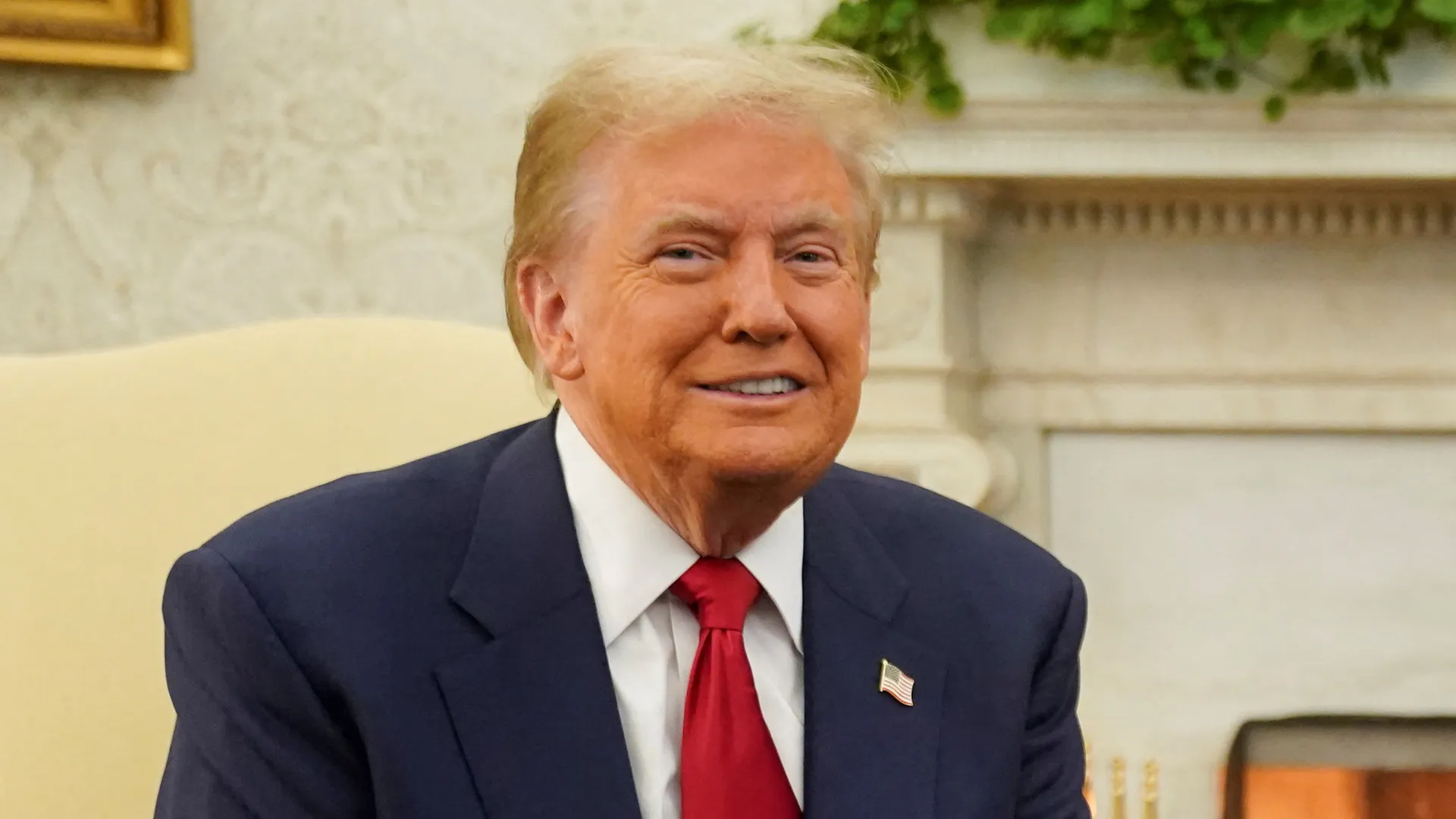
As the United States approaches the one-year anniversary of Donald Trump’s return to the White House, a sweeping new round of national polling has delivered a clearer picture of how Americans view his presidency so far. The data, drawn from multiple major surveys across November and early December, paints a complex portrait of public sentiment: a mix of frustration, disillusionment, and a small but noticeable uptick in approval after months of historic lows.
Trump, who reclaimed the presidency in January as the 47th President of the United States, has spent the past 11 months implementing a series of aggressive policy shifts. From sweeping tariff expansions to reshaping federal agencies, invoking National Guard deployments in major cities, and engaging in high-stakes international diplomacy, his administration has been defined by rapid, combative decision-making that continues to sharply divide the nation.
Now, with the latest figures coming in, analysts say the political landscape heading into Trump’s twelfth month in office is more volatile than ever.
Year One: Policy Turbulence and National Upheaval
The president’s second term has been marked by immediate and destabilizing changes. After taking office in January, Trump moved swiftly to reverse or rewrite large portions of his predecessor’s policies. Immigration rules, environmental regulations, and international trade agreements all underwent rapid transformation as the new administration sought to reassert what it framed as a stronger, more self-reliant national posture.
The president’s tariff policies, in particular, sent shockwaves through global markets. American businesses experienced intense economic friction as trade relationships shifted sharply. By autumn, the United States faced the longest federal government shutdown in American history, spanning from October into late November. The shutdown—and the political standoff surrounding it—eroded public trust and triggered widespread criticism over the administration’s handling of economic pressures.
Internationally, Trump sparked controversy with a series of decisions and statements on global conflicts. His headline-grabbing meeting with Russian President Vladimir Putin, framed as an attempt to address the ongoing Ukraine conflict, became one of the most scrutinized diplomatic moments of the year. Critics labeled the meeting risky and poorly timed, while supporters argued it demonstrated decisive leadership.
At home, Trump ordered National Guard troops into several major US cities, including Washington, D.C., as part of an effort to suppress what he described as escalating urban crime. The move drew fierce backlash from civil liberties groups and local officials, though some voters praised the show of force.
Through it all, the president’s approval rating sank steadily for most of the year, with even once-reliable voter groups beginning to fracture.
Approval Ratings Near Rock Bottom
In October, a major national survey of more than 1,000 Americans delivered a stark assessment: 63% of respondents disapproved of Trump’s performance. That figure placed him only a few points above his lowest approval rating ever recorded—66% disapproval—following the Capitol Hill riots in January 2021 during his first term.
Throughout the fall, Trump’s numbers remained deeply underwater. Voters cited frustration with the cost-of-living crisis, concerns about foreign conflicts, and dissatisfaction with the administration’s slow release of the long-awaited Jeffrey Epstein files.
A Reuters/Ipsos poll released in November found a pronounced dip in confidence regarding Trump’s stewardship of the economy. Only 26% of respondents believed he was managing inflation and overall cost-of-living issues effectively.
Even some of Trump’s strongest political allies appeared to waver. A Marquette University poll showed approval among Republicans for Trump’s economic policies dropping from 82% in July to 75% by late autumn. Although still high, the decline signaled meaningful erosion of the party unity Trump has relied upon.
A Slight Rebound Emerges
Despite the bleak numbers, there are signs of a modest rebound. A new poll from the New York Times, released on December 5, showed Trump ticking up to a 42% approval rating against a 55% disapproval rating.
While still decisively negative, the improvement stands out after months of steep decline.
Political analysts say the slight bump may reflect a combination of factors: recent economic stabilization in certain markets, public fatigue with ongoing political conflict, or a potential rally effect among conservative voters as media scrutiny intensifies.
Still, the rebound is limited. Voters continue to express deep anxieties about the economy, foreign affairs, and the direction of the country overall.
A Gallup poll published last month found Trump’s strongest issue-area approvals remained subdued:
-
Crime: 43% approval
-
Foreign affairs: 41%
-
Foreign trade: 39%
-
Immigration: 37%
These figures show the president performing somewhat better on security and international issues, though still far below majority support.
Key Voting Blocs Are Shifting Away
One of the most troubling trends for Trump is the slippage within previously reliable demographic groups. A Fox News poll concluded that Trump’s support among white, college-educated men—once one of his strongest constituencies—has fallen notably in 2025. Their approval rating slid from 47% in June to 40% by November.
This demographic movement, combined with frustrations among independent voters and suburban blocs, suggests a broader erosion that could impact congressional races next year.
A separate Economist/YouGov poll showed Trump’s net approval rating hitting -15 or lower for seven consecutive weeks—his longest sustained stretch of deeply negative sentiment across both of his terms. During Trump’s first term, he never sustained a -15 rating for more than three consecutive weeks.
By comparison, Joe Biden held a -9 net approval rating at the same point in his presidency—a painful reminder that even a deeply unpopular predecessor outperformed Trump on several key metrics.
The Obama Factor: A Shadow Over 2025
Adding to Trump’s challenges, recent surveys show former President Barack Obama continues to enjoy significantly stronger favorability among American voters. His enduring popularity serves as a sharp contrast to the turmoil and polarization surrounding Trump’s second term.
Political strategists note that Obama’s legacy has increasingly become a measuring stick—fair or not—for both Trump’s presidency and Biden’s before him. In a political climate defined by rapid swings in public sentiment, Obama’s stable approval ratings stand in striking contrast to the volatility facing his successors.
Democrats Gain Ground Ahead of Midterms
If the election were held today, the data suggests Democrats could benefit substantially from voter dissatisfaction. Multiple polling models indicate a potential blue shift heading into the next year’s midterm cycle.
A recent survey found that 55% of Americans say they are more likely to vote Democrat in their district, compared to just 41% who remain committed to their Republican candidate. If such numbers hold—and historically, they often tighten—Democrats could enter the midterms with a formidable advantage.
The combination of economic strain, foreign policy unease, and fatigue with Trump’s leadership style appears to be pushing swing voters and suburban moderates toward the Democratic side of the ballot.
A Presidency at a Crossroads
Eleven months into Trump’s return to the White House, the nation remains deeply divided—and his approval ratings reflect that polarization. While a modest rebound offers a small bright spot for the president, the wider picture remains challenging.
The economy continues to dominate voter concerns, and many Americans are openly skeptical of the administration’s direction. International turmoil, domestic unrest, and ideological battles within the Republican Party are adding further strain as the president approaches the one-year mark of his second term.
With midterms approaching and polls showing Americans leaning toward Democratic candidates, Trump faces mounting pressure to demonstrate stability, deliver economic relief, and regain the confidence of key voting blocs.
For now, the data is clear: the American public is watching closely, opinions remain sharply divided, and the next few months could define the trajectory of Trump’s second presidency.

Emily Johnson is a critically acclaimed essayist and novelist known for her thought-provoking works centered on feminism, women’s rights, and modern relationships. Born and raised in Portland, Oregon, Emily grew up with a deep love of books, often spending her afternoons at her local library. She went on to study literature and gender studies at UCLA, where she became deeply involved in activism and began publishing essays in campus journals. Her debut essay collection, Voices Unbound, struck a chord with readers nationwide for its fearless exploration of gender dynamics, identity, and the challenges faced by women in contemporary society. Emily later transitioned into fiction, writing novels that balance compelling storytelling with social commentary. Her protagonists are often strong, multidimensional women navigating love, ambition, and the struggles of everyday life, making her a favorite among readers who crave authentic, relatable narratives. Critics praise her ability to merge personal intimacy with universal themes. Off the page, Emily is an advocate for women in publishing, leading workshops that encourage young female writers to embrace their voices. She lives in Seattle with her partner and two rescue cats, where she continues to write, teach, and inspire a new generation of storytellers.