

NOTE: VIDEO INSIDE THE ARTICLE.
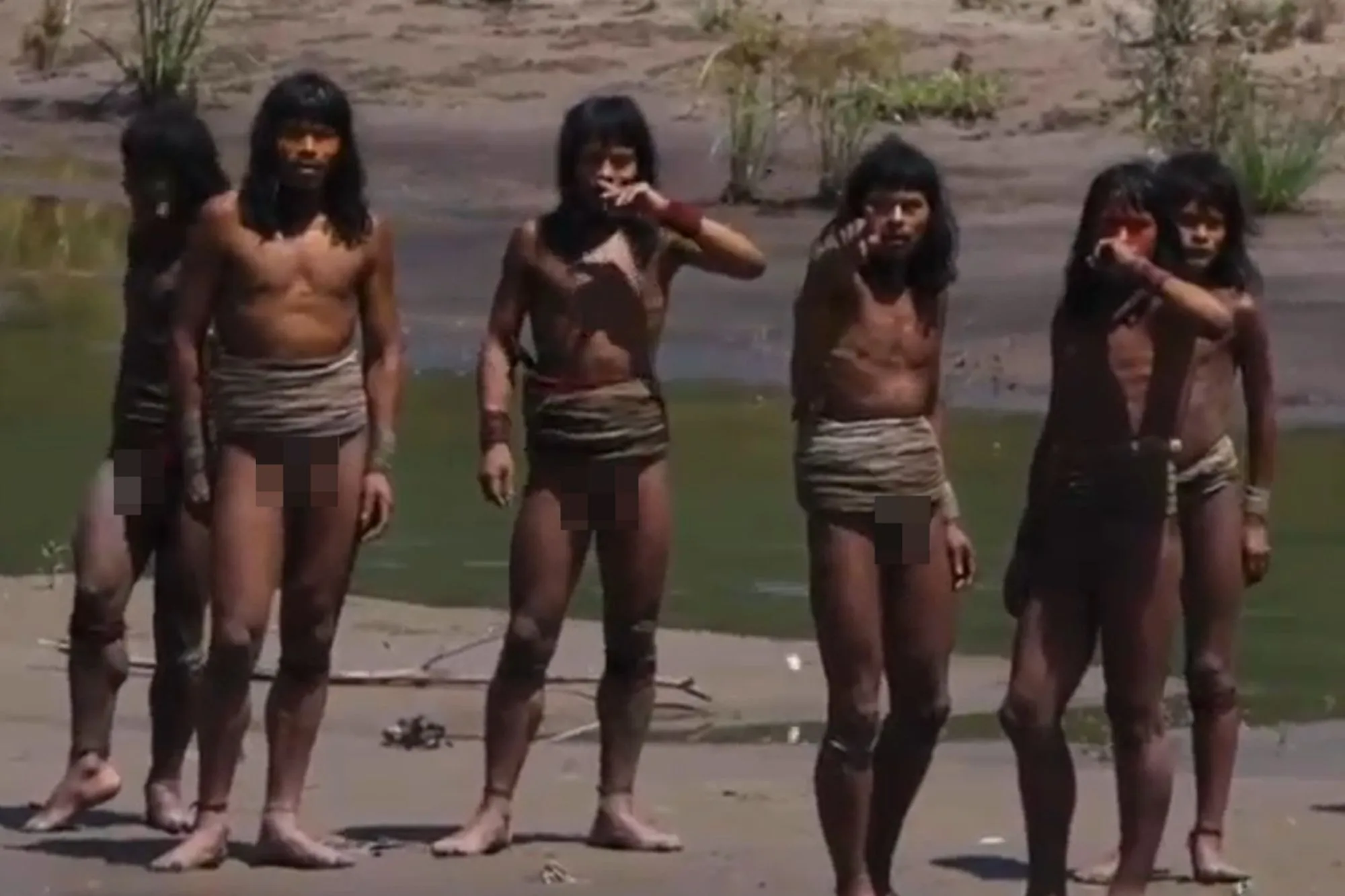
A groundbreaking video released this week has offered the clearest glimpse yet of an uncontacted Amazonian tribe, sparking fascination, awe, and, in some corners of the internet, speculation over subtle details in the footage. The video, featured during a January 14 episode of the Lex Fridman Podcast, captures members of the Mashco Piro people, an isolated Indigenous community residing in the remote Peruvian Amazon near the border with Brazil.
The footage was shared by conservationist and author Paul Rosolie, who has spent over two decades working in the region, observing and advocating for the protection of Indigenous communities. Rosolie described the experience as one of the most profound of his career. “In order for any of this to make sense, I had to show you this footage … This has not been shown ever before. This is a world first,” he told Fridman, emphasizing the rarity and importance of such visual documentation.
The Mashco Piro are believed to number around 750 individuals, making them one of the largest uncontacted tribes in the world. Their territory lies deep within dense rainforest, an environment increasingly threatened by illegal logging, encroachment, and other forms of environmental degradation. Due to the extreme risks posed by exposure to disease, governments and conservation groups enforce strict no-contact protocols. Even minor interactions with outsiders can prove deadly for these communities, who lack immunity to common illnesses.
Historically, most footage of uncontacted tribes has been grainy and distant, often shot from hundreds of meters away. “The only thing you’ve ever seen are these blurry images … from 100 meters away,” Rosolie explained. “And we’re sitting there with, you know, 800mm with a 2x teleconverter.” His dedication to capturing a clear, respectful view of the Mashco Piro represents a major advance in the documentation of isolated Indigenous cultures.
A Mesmerizing Encounter
The video opens with the Mashco Piro emerging from the rainforest in a literal cloud of butterflies, stepping cautiously onto a sandy riverbank. Initially, the group appears tense, moving in formation with bows and arrows at the ready. Rosolie recalls the nervous energy of the moment. “Look at the way they move. Look at the way they point. Look at him with his bow,” he said. “I’m looking in every direction … going, ‘Which way is the arrow coming from?’”
But as the encounter progresses, the atmosphere shifts dramatically. The warriors begin to relax, setting down their weapons as curiosity overtakes caution. “See, he’s laying down his bow and arrow. They understand. No, no more,” Rosolie described. Laughter and smiles replace the initial tension, revealing a deeply human and surprisingly playful side to a group often depicted as remote and enigmatic.
Throughout the filming, Rosolie adhered to strict safety and no-contact protocols to prevent the transmission of diseases that could devastate the tribe. The encounter is a delicate dance, balancing the desire to document these remarkable people with the ethical responsibility to preserve their health and autonomy.
Online Speculation and Strange Details
After the video was released, viewers quickly focused on seemingly minor details that raised questions about how “uncontacted” the Mashco Piro truly are. Some noticed what appeared to be a modern rope tied around one man’s head, sparking speculation online. One viewer commented, “They’re so ‘uncontacted’ they all wear multiple colored ropes from industrial civilizations.” Another questioned a rope around a waist, noting the presence of blue material: “How would that rope have blue in it if they don’t have outside contact?”
These observations highlight the complex reality of life for tribes like the Mashco Piro. While classified as uncontacted or voluntarily isolated due to a lack of sustained interaction with outsiders, their territory overlaps with areas increasingly penetrated by illegal loggers and other trespassers. Brief exchanges of tools, clothing, or other items may occur during such encounters, accounting for some of the materials noticed in the footage. Experts caution against jumping to conclusions, emphasizing that occasional contact does not negate their uncontacted status.
Rosolie reflected on this nuance during his conversation with Fridman, explaining that the Mashco Piro maintain a deliberate distance from outsiders but may occasionally acquire objects introduced inadvertently into their territory. Such interactions are often fleeting and do not constitute sustained cultural contact, which remains minimal to nonexistent.
A Broader Context
The Mashco Piro are one of nearly 200 uncontacted groups still estimated to exist worldwide, most of them in the Amazon regions of Peru and Brazil. Their continued survival depends heavily on legal protections, local enforcement, and the global recognition of their rights to remain undisturbed. Even minor contact with outsiders can have devastating consequences, as diseases like influenza, measles, and other pathogens can sweep through a population with catastrophic speed. History has shown that entire communities can be wiped out within weeks when exposed to common illnesses to which they have no immunity.
Deforestation, mining, and illegal trafficking continue to push deeper into Indigenous lands, increasing the frequency of accidental or forced encounters. Conservation groups such as Survival International and governmental agencies like Brazil’s FUNAI advocate vigorously for no-contact policies and stronger enforcement of protections for these vulnerable populations. Their work remains challenging in vast, remote, and often lawless regions of the rainforest, where monitoring is logistically difficult and illegal activity can go undetected for extended periods.
Despite these challenges, the release of Rosolie’s video offers a rare and valuable perspective on the daily lives of uncontacted people, highlighting their intelligence, resilience, and humanity. The footage underscores the importance of safeguarding not only the physical safety of tribes like the Mashco Piro but also the integrity of their culture and autonomy.
For researchers, conservationists, and the broader public, the video is a striking reminder of the fragility and richness of life in the world’s most remote regions. It demonstrates the care and skill required to document uncontacted tribes ethically, without imposing modern influence or inadvertently introducing deadly pathogens.
For readers viewing this story online or in a multimedia format, the video itself should be placed near the end of the article, just before the concluding paragraph. This placement allows the narrative to build context—introducing the tribe, explaining the conservationist’s work, discussing the risks and speculation—and then presents the visual content as a culmination of the story. By positioning it here, viewers approach the footage with informed understanding and appreciation for both the encounter’s rarity and the ethical considerations involved.
The footage is mesmerizing and tense in equal measure: a fleeting glimpse of a world that few outside the Amazon have ever seen, captured with respect and care. By situating the video near the conclusion, readers can experience firsthand the awe that Rosolie describes, while also contemplating the ongoing challenges faced by uncontacted tribes in a rapidly changing world.
In sum, the release of this never-before-seen footage of the Mashco Piro is a reminder of the delicate balance between human curiosity and the responsibility to protect vulnerable communities. It invites reflection on the diversity of human existence, the pressures exerted by modern encroachment, and the ethical obligations of those who document it. While online speculation about minor details may capture attention, the larger story is one of resilience, caution, and respect for one of the last truly isolated human societies on Earth.

Emily Johnson is a critically acclaimed essayist and novelist known for her thought-provoking works centered on feminism, women’s rights, and modern relationships. Born and raised in Portland, Oregon, Emily grew up with a deep love of books, often spending her afternoons at her local library. She went on to study literature and gender studies at UCLA, where she became deeply involved in activism and began publishing essays in campus journals. Her debut essay collection, Voices Unbound, struck a chord with readers nationwide for its fearless exploration of gender dynamics, identity, and the challenges faced by women in contemporary society. Emily later transitioned into fiction, writing novels that balance compelling storytelling with social commentary. Her protagonists are often strong, multidimensional women navigating love, ambition, and the struggles of everyday life, making her a favorite among readers who crave authentic, relatable narratives. Critics praise her ability to merge personal intimacy with universal themes. Off the page, Emily is an advocate for women in publishing, leading workshops that encourage young female writers to embrace their voices. She lives in Seattle with her partner and two rescue cats, where she continues to write, teach, and inspire a new generation of storytellers.