
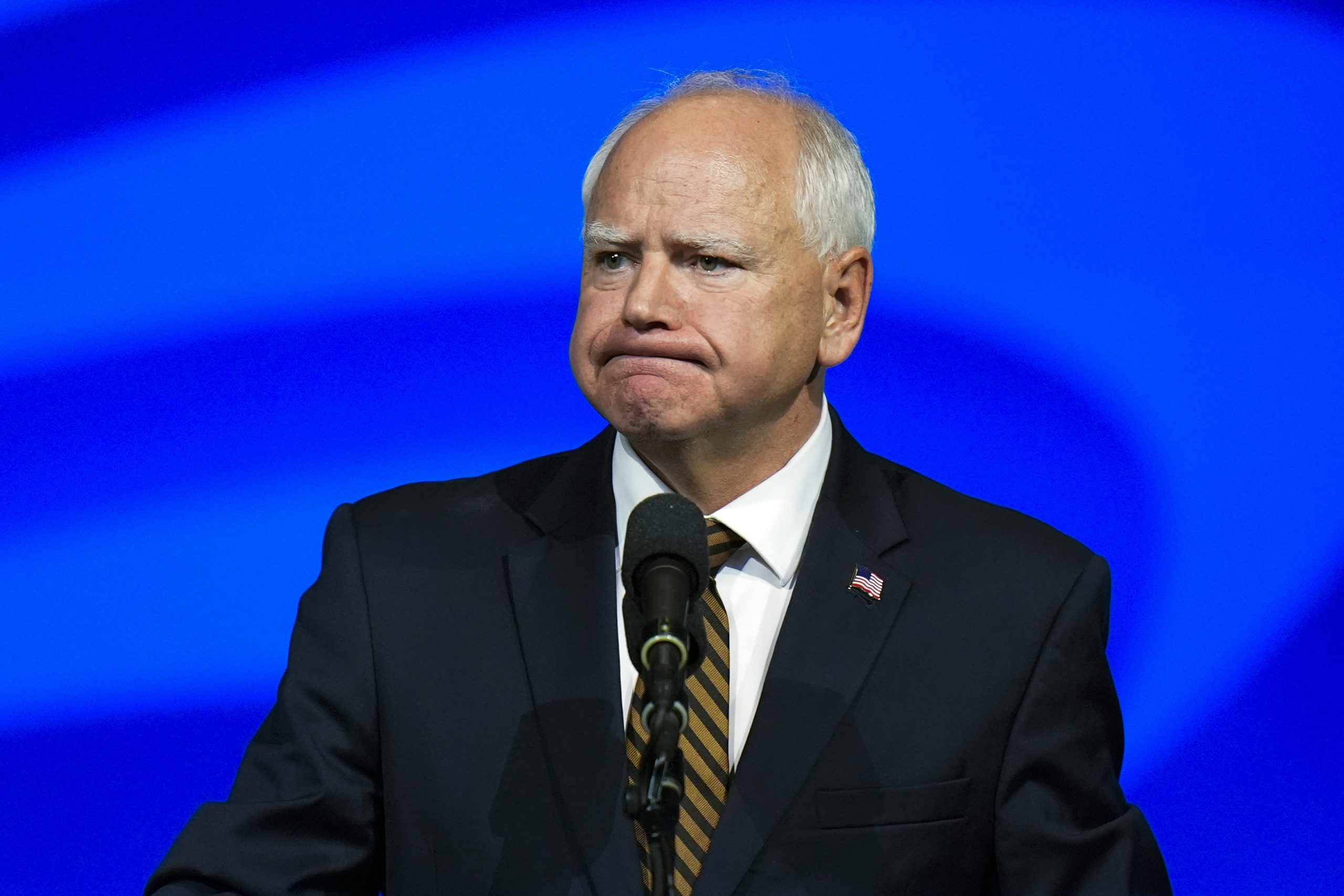
Whistleblower Allegations Ignite a Political Firestorm in Minnesota
Minnesota’s government is facing an escalating scandal after nearly 500 current and former Department of Human Services employees accused Gov. Tim Walz of ignoring repeated internal warnings about widespread fraud within state programs. The workers, many of whom have spent years inside the system, claim Walz not only dismissed their alerts but retaliated against anyone who attempted to report wrongdoing.
The allegations come from a long-running anonymous X account, operated by DHS insiders who say they witnessed patterns of fraud and misuse of funds in Minnesota’s publicly funded aid programs, particularly those connected to the Somali community. Their newest claims paint an alarming picture of political pressure, intimidation, and deep dysfunction inside one of the state’s most important agencies.
The governor’s office has not responded to the latest accusations, but political scrutiny is intensifying as federal officials and watchdog groups demand answers.
Inside the Whistleblowers’ Claims
The DHS employees say they brought concerns directly to Walz years before the fraud became public. Instead of receiving cooperation or support, they allege that they were monitored, threatened, and punished for trying to protect taxpayer dollars.
“Tim Walz is 100% responsible for massive fraud in Minnesota,” the group wrote in a November 29 post. “We let Tim Walz know of fraud early on, hoping for a partnership… but we got the opposite.”
According to the employees, Walz discouraged transparency by weakening oversight mechanisms inside the agency. They say he disempowered the Office of the Legislative Auditor, one of the state’s key watchdogs, in order to allow certain programs to continue without serious scrutiny.
“Tim Walz systematically retaliated against whistleblowers,” the group wrote. “Instead of partnership, we got retaliation by Walz, certain DFL members, and an indifferent mainstream media.”
Their frustration is palpable. They describe feeling isolated, ignored, and targeted — a culture they say allowed unprecedented levels of fraud to take root inside Minnesota’s programs.
Fraud Allegations Reach Beyond State Borders
The whistleblowers’ claims gained national attention after reports suggested that some Minnesota aid money may have been diverted to al-Shabaab, an Islamic terrorist organization based in East Africa. Federal officials stress that the investigation is ongoing, but early findings suggest that millions of Minnesota tax dollars may have been sent overseas through elaborate networks operating inside the state.
These revelations prompted U.S. Treasury Secretary Scott Bessent to announce a formal federal investigation.
“At my direction, the Treasury is investigating whether—under the mismanagement of the Biden Administration and Governor Tim Walz—Minnesotans’ tax dollars were diverted to the terrorist organization al-Shabaab,” Bessent said. “We are acting fast to ensure Americans’ taxes are not funding global terror.”
His statement signals how seriously the federal government is treating the allegations.
https://twitter.com/SecScottBessent/status/1995615377284628908
Feeding Our Future: The First Major Crack in the Wall
The most widely known scandal in Minnesota began with Feeding Our Future, a nonprofit accused of orchestrating one of the largest fraud cases in state history. Federal prosecutors say operators within the group — including individuals from the Somali community — stole approximately $250 million in federal child-nutrition funds.
Investigators say the money was supposed to provide meals for low-income children during the pandemic. Instead, the funds were allegedly laundered through fake meal sites, shell companies, and inflated invoices. Luxury homes, cars, and personal spending followed.
The whistleblowers claim they warned Walz’s administration long before the scheme collapsed. They argue that the governor’s refusal to act allowed the fraud to expand unchecked.
A Pattern of Growing Scandals
Feeding Our Future was only the beginning.
Since then, investigators have identified:
-
Tens of millions in fraud tied to Minnesota’s autism-treatment programs
-
More than $550 million in losses connected to pandemic-related relief efforts
-
Additional schemes involving state housing aid, childcare subsidies, and mental-health services
Altogether, federal and state authorities say the fraud committed under Walz’s watch may total over $1 billion.
Whistleblowers argue that such staggering numbers were possible only because leadership ignored them.
“We were waving red flags for years,” they said. “Walz didn’t just fail to act — he worked against us.”
Political Fallout Intensifies
The growing scandal threatens to damage Walz’s national reputation at a time when he has become a prominent figure within the Democratic Party. Critics say the allegations reveal a pattern of negligence and political interference that extends far beyond Minnesota.
Republicans argue that Walz’s governing philosophy — which includes robust support for refugee communities and expansive welfare programs — created a perfect environment for fraud. Democrats have remained mostly silent, even as federal officials uncover new layers of wrongdoing.
The DHS employees say political pressure influenced decisions inside the agency, creating an atmosphere where staff feared that exposing fraud would damage “favored” groups and therefore must be suppressed.
The Terrorism Connection Raises the Stakes
The possibility that Minnesota’s welfare dollars may have reached a terrorist group has raised public alarm to a new level.
Federal sources say al-Shabaab has long sought funding streams from Western countries through diaspora networks. Minnesota, home to the nation’s largest Somali population, has been of interest to counterterrorism officials for years.
Bessent’s investigation aims to determine whether negligence inside the Walz administration allowed U.S. tax dollars to flow into extremist hands — intentionally or otherwise.
If confirmed, this would represent one of the most severe governance failures in Minnesota history.
Workers Say Leadership Failed the State
The DHS account did not mince words in its assessment of the governor.
“Tim Walz is dishonest, lacks ethics and integrity, has poor leadership abilities, and has never taken accountability for his role in fraud,” the group wrote.
They say that instead of fixing systemic problems, Walz deflected blame, citing national politics and partisan attacks. Meanwhile, the fraud expanded.
For the workers who spoke out anonymously, the experience has been painful.
“It’s scary and isolating,” they wrote. “We wondered who we could turn to.”
What Happens Next
The federal investigation led by Treasury, combined with ongoing criminal cases surrounding Feeding Our Future and related schemes, ensures that Minnesota’s fraud scandal will remain in the spotlight.
Lawmakers in Washington are already calling for hearings. Republicans want to know why whistleblowers were ignored. Democrats remain largely quiet but may face pressure to respond if federal investigators uncover links to terrorism.
As for the governor, the allegations will likely shadow him as more whistleblowers and investigators come forward.
This is no longer a question of mismanagement — but one of accountability, oversight, and the safety of taxpayer dollars.

James Jenkins is a celebrated Pulitzer Prize-winning author whose work has reshaped the way readers think about social justice and human rights in America. Raised in Atlanta, Georgia, James grew up in a community that instilled in him both resilience and a strong sense of responsibility toward others. After studying political science and creative writing at Howard University, he worked as a journalist covering civil rights issues before dedicating himself fully to fiction. His novels are known for their sharp, empathetic portraits of marginalized communities and for weaving personal stories with broader political realities. Jenkins’s breakout novel, Shadows of Freedom, won national acclaim for its unflinching look at systemic inequality, while his more recent works explore themes of identity, resilience, and the fight for dignity in the face of oppression. Beyond his novels, James is an active public speaker, lecturing at universities and participating in nonprofit initiatives that support literacy and community empowerment. He believes that storytelling is a way to preserve history and inspire change. When not writing, James enjoys jazz music, mentoring young writers, and traveling with his family to explore cultures and stories around the world.