




In a major development that has captured the attention of consumers across the United States, federal authorities have announced a significant food recall affecting thousands of pounds of ready-to-eat products. The alert comes after reports of potential contamination, raising questions about food safety protocols, inspection processes, and the risks posed to families nationwide.
The Food Safety and Inspection Service (FSIS), part of the U.S. Department of Agriculture, confirmed that the recall stems from concerns over foreign matter in the affected items. Such contamination has historically accounted for a notable portion of food recalls over the past two decades, with studies suggesting that approximately one in ten incidents involve foreign materials entering consumer products. Experts note that the presence of foreign objects in packaged foods can pose serious health hazards, ranging from internal injuries to infections, and in some extreme cases, may require surgical intervention to remove the material.
Industry analysts point to multiple potential sources of contamination in food manufacturing. Metals, in particular, can find their way into consumer products through production machinery, employee errors, or even routine wear and tear on plant equipment. Manufacturing utensils, sieves, baking trays, and processing machinery are all made of metal, and any damage or misalignment can result in fragments breaking off and entering the production stream. Additionally, inadequate training or improper practices by plant personnel — such as wearing jewelry, failing to use protective clothing, or mishandling tools — can exacerbate the risk.
Studies and industry surveys underscore the prevalence of these issues. A 2023 study published by the National Library of Medicine found that foreign matter contamination has consistently been a leading cause of recalls in the food sector. In a separate industry analysis conducted by Exponent, a scientific consulting firm, poor maintenance of processing equipment was identified as a frequent contributor to contamination events, particularly in sectors producing ready-to-eat meals, proteins, baked goods, and snack foods. FlexXray, a contaminant inspection and retrieval service, reported in 2025 that over 70% of industry professionals encountered foreign matter incidents several times per year, with nearly half seeing them monthly.
The significance of these recalls is heightened by the scale of production and distribution in modern food manufacturing. Products that reach supermarkets and other retail outlets may pass through multiple stages of packaging, handling, and transportation, increasing the chances that contamination could go unnoticed. For consumers, the implications are serious: consuming a product contaminated with foreign material can result in internal injuries, potential infections, and, in severe cases, long-term health consequences.
As the investigation unfolded, authorities urged consumers to exercise caution, especially regarding products that may still be in home freezers or refrigerators. While no injuries have been confirmed so far, FSIS issued a clear advisory emphasizing that the affected items should not be consumed. Consumers are advised to either dispose of the product or return it to the point of purchase.
The specific product at the center of this nationwide alert is produced by a New York-based company, widely known for its family-style, ready-to-eat offerings. The items in question were distributed to major grocery chains across the country and feature prominently in the frozen food aisles. The packaging carries distinct markings that allow consumers to identify the recalled product, including the establishment number and a clearly labeled “Best By” date.
In total, approximately 9,462 pounds of the affected product have been removed from circulation. The FSIS has classified the recall as High-Class I, the agency’s most serious category. This designation indicates a “reasonable probability” that consumption could result in serious, adverse health consequences or even death. Authorities made clear that the recall was initiated following a consumer complaint regarding metal fragments found within the product, underscoring the importance of vigilance among shoppers.
“The problem was discovered after FSIS received a consumer complaint regarding metal fragments found within the product,” the agency said in a statement. “There have been no confirmed reports of injury due to consumption of these products. Anyone concerned about an injury should contact a health care provider.”
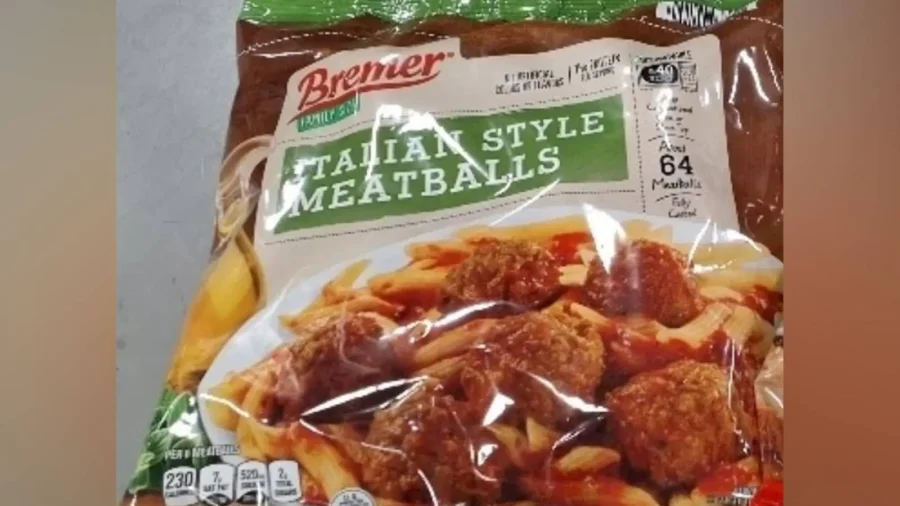
The product itself is the Bremer Family Size Italian Style Meatballs, packaged in 32-ounce bags and produced on July 30 of the previous year. The items carry a “Best By” date of October 30 and were shipped to Aldi supermarket locations nationwide. Each package bears the USDA mark of inspection with establishment number EST. 4286B, allowing consumers to identify potentially affected products.
Authorities and industry experts stress that foreign matter contamination is not necessarily a reflection of negligence alone but often a combination of factors, including equipment failure, insufficient preventive maintenance, and lapses in safety protocols. According to research, equipment failure is the most frequently cited source of such contamination, particularly in sectors that use a wide variety of machinery and processing equipment.
Preventive measures, including routine maintenance, third-party audits, and rigorous inspection protocols, are considered essential in mitigating contamination risks. However, even with robust systems in place, incidents continue to occur. Studies note that introducing new equipment to production lines without thorough testing and safety checks can inadvertently introduce hazards, highlighting the importance of proper setup and ongoing monitoring.
In addition to hardware-related risks, human factors remain critical. Employee practices, including handling methods, hygiene protocols, and adherence to operational standards, play a significant role in preventing foreign materials from entering finished products. Food manufacturers are advised to implement comprehensive training programs and strict safety guidelines to minimize these risks.
The recall also raises broader questions about consumer awareness and the role of public reporting in food safety. Many recalls are initiated only after complaints are filed, highlighting the importance of consumers remaining vigilant and reporting potential hazards. FSIS has made it clear that anyone who purchases or discovers the affected items should refrain from consumption and either discard the product or return it to the retailer.
Industry commentary suggests that while recalls can be alarming for the public, they also demonstrate that safety systems are functioning as intended, identifying potential hazards before they result in widespread harm. Transparency and prompt action by companies and regulatory bodies are critical to maintaining public trust in the food supply.
Rosina Food Products Inc., the company responsible for the recalled items, has not provided a public comment at the time of reporting. Customers seeking guidance or further information have been directed to the company’s customer care line at 1-888-767-4621.
The incident serves as a reminder of the broader challenges inherent in modern food production. Ready-to-eat products, frozen meals, and other convenience foods are manufactured on a massive scale, increasing both the efficiency of supply and the complexity of maintaining safety standards. Contamination risks, though relatively rare, underscore the need for continued vigilance, investment in equipment, and adherence to strict safety protocols.
In conclusion, while no injuries have yet been reported, the recall of nearly 9,500 pounds of meatballs nationwide highlights the ongoing importance of food safety measures, consumer awareness, and regulatory oversight. Authorities continue to monitor the situation and encourage consumers to check their freezers and refrigerators for the affected product. By taking prompt action, both consumers and industry stakeholders can work together to ensure that food remains safe, nutritious, and free from hazards.

Emily Johnson is a critically acclaimed essayist and novelist known for her thought-provoking works centered on feminism, women’s rights, and modern relationships. Born and raised in Portland, Oregon, Emily grew up with a deep love of books, often spending her afternoons at her local library. She went on to study literature and gender studies at UCLA, where she became deeply involved in activism and began publishing essays in campus journals. Her debut essay collection, Voices Unbound, struck a chord with readers nationwide for its fearless exploration of gender dynamics, identity, and the challenges faced by women in contemporary society. Emily later transitioned into fiction, writing novels that balance compelling storytelling with social commentary. Her protagonists are often strong, multidimensional women navigating love, ambition, and the struggles of everyday life, making her a favorite among readers who crave authentic, relatable narratives. Critics praise her ability to merge personal intimacy with universal themes. Off the page, Emily is an advocate for women in publishing, leading workshops that encourage young female writers to embrace their voices. She lives in Seattle with her partner and two rescue cats, where she continues to write, teach, and inspire a new generation of storytellers.