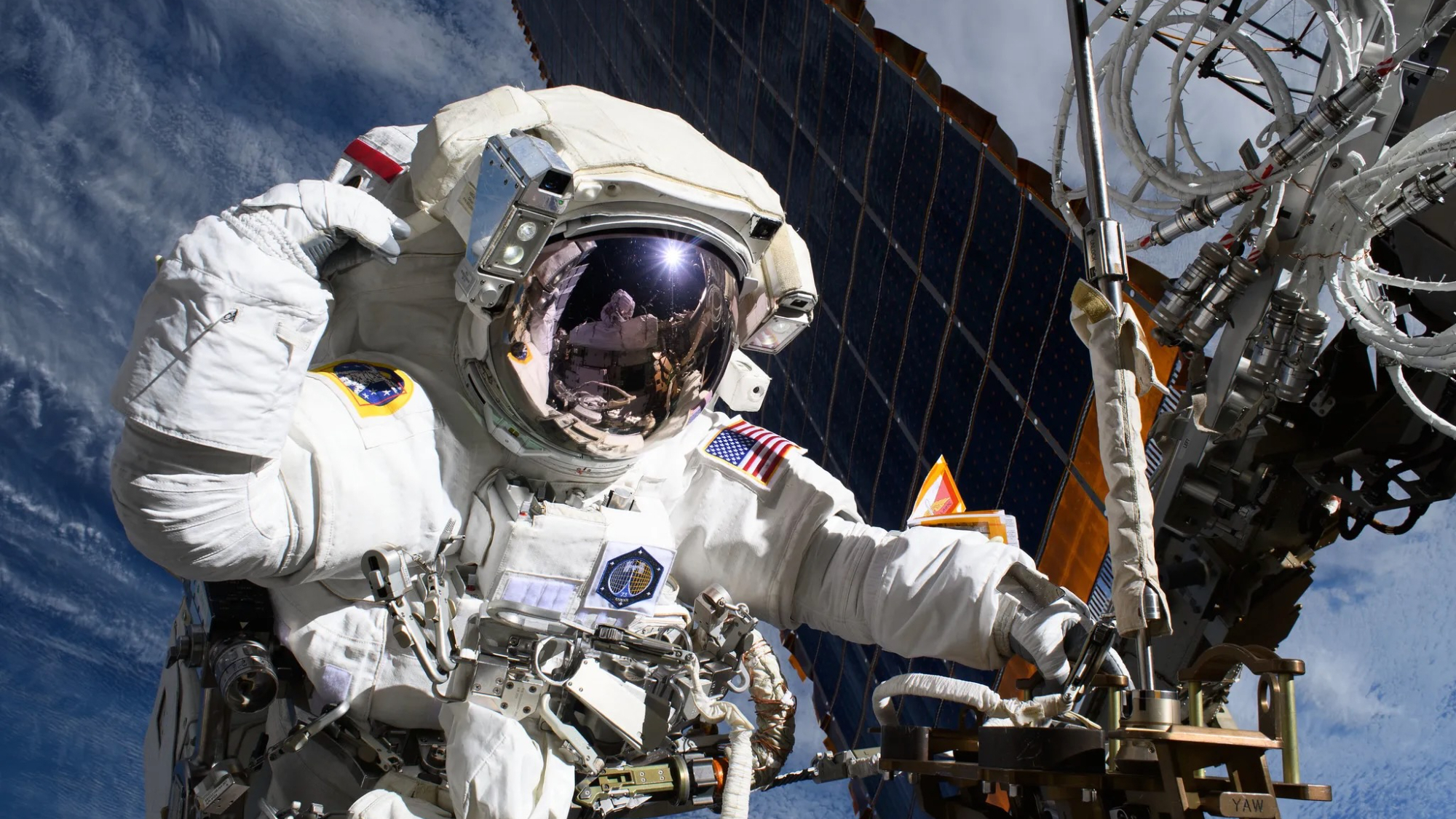
NASA has ordered the first medical evacuation of astronauts from the International Space Station, marking an unprecedented moment in the history of human spaceflight. Agency officials confirmed Thursday that a member of the current ISS crew experienced a medical emergency serious enough to halt mission operations and trigger plans for an early return to Earth.
The decision represents the first time NASA has initiated a medical evacuation from the orbiting laboratory since the station became operational more than two decades ago. While emergency return procedures have always been built into ISS missions, they had never been used for medical reasons until now.
NASA Administrator Jared Isaacman announced the development during a press conference, stating that the four-person Crew-11 mission would no longer remain aboard the station until its originally scheduled return date in late February. Instead, NASA has begun coordinating steps to safely bring the crew home as soon as practical.
“The health and safety of our astronauts is our absolute priority,” Isaacman said. “Based on medical guidance, we’ve determined that returning Crew-11 earlier than planned is the most responsible course of action.”
The announcement came less than 24 hours after NASA abruptly canceled a scheduled spacewalk involving ISS crew members. At the time, the agency cited an unspecified medical issue but provided few additional details. Thursday’s briefing confirmed that the cancellation was directly linked to the medical situation now prompting the evacuation.
Crew-11 consists of four astronauts representing multiple international partners: NASA astronauts Zena Cardman and Mike Fincke, Japan Aerospace Exploration Agency astronaut Kimiya Yui, and Russian cosmonaut Oleg Platonov. The crew arrived at the International Space Station on August 1, 2025, and had been expected to remain on board until the arrival of the next rotation crew in mid-February.
NASA officials declined to identify which astronaut experienced the medical issue, citing privacy concerns. However, Chief Medical Officer Dr. James Polk emphasized that the individual is not in immediate danger and that the decision to return the crew is being made out of an abundance of caution rather than due to a life-threatening emergency.
“The astronaut’s condition is currently stable,” Polk said. “There is no indication of acute deterioration, and no extraordinary medical interventions are required at this time. This is a precautionary return to ensure the best possible care on Earth.”
According to Polk, no special protective measures are needed to safeguard the affected astronaut during the remaining time aboard the station or during reentry. Medical teams on the ground continue to monitor the crew closely through standard health telemetry and consultations.
The International Space Station is continuously staffed by astronauts trained to handle a wide range of medical situations, including trauma and acute illness. However, the station’s medical capabilities are inherently limited by the constraints of microgravity, equipment size, and distance from Earth. While telemedicine allows for real-time consultation with specialists on the ground, certain diagnostic tools and treatments are simply unavailable in orbit.
NASA officials confirmed that evacuation planning is underway but stressed that the return will not involve a dramatic emergency descent. Instead, the agency is evaluating the most appropriate landing window and site using existing return vehicles and recovery infrastructure.
“We are assessing the correct opportunity to use our established landing sites,” Isaacman said when asked whether NASA would attempt an accelerated or unconventional return. “At this point, there is no need for an emergency landing scenario.”
Although Crew-11 will return earlier than planned, NASA emphasized that the United States will maintain a continuous human presence aboard the station. Astronaut Chris Williams, who arrived at the ISS in November 2025 aboard a Russian Soyuz spacecraft alongside Japanese astronaut Koichi Wakata, will remain on board with the Soyuz crew.
Williams’ continued presence ensures that American research operations and station maintenance activities can proceed without interruption, even as Crew-11 prepares for departure.
The evacuation plan underscores the complex international coordination required to operate the ISS. With multiple spacecraft docked to the station—including SpaceX Dragon capsules and Russian Soyuz vehicles—NASA and its partners must carefully manage crew assignments, return seats, and orbital timelines to maintain operational stability.
Crew-11 had originally been scheduled to depart only after Crew-12 arrived aboard a SpaceX Dragon capsule, which is currently expected no earlier than February 15. The change in plans means NASA will need to adjust launch schedules, crew handovers, and mission objectives in response to the medical situation.
NASA officials acknowledged that the decision could have ripple effects across upcoming missions but reiterated that astronaut health takes precedence over operational convenience.
Human spaceflight has always involved medical risk, and astronauts undergo extensive physical screening before launch. However, long-duration missions in microgravity present unique challenges, including bone density loss, muscle atrophy, cardiovascular changes, immune system alterations, and fluid shifts that can affect vision and neurological function.
While NASA conducts continuous health monitoring of astronauts during their missions, not all medical conditions can be predicted or prevented. Agency officials noted that this event demonstrates why contingency planning is a critical component of spaceflight operations.
“Every mission includes the possibility of an early return,” Polk said. “We train for it, we plan for it, and we hope we never need to use it. This time, we do.”
Despite the historic nature of the evacuation, NASA leaders were careful to frame the event as a validation of safety systems rather than a failure.
“This is the system working exactly as designed,” Isaacman said. “We prepared for this scenario, and now we are executing those plans with precision and care.”
NASA has not released a timeline for Crew-11’s return, stating only that the process is still in the planning phase. Officials said more details would be provided once mission planners finalize landing opportunities and coordinate with international partners.
The International Space Station has been continuously occupied since November 2000 and has hosted more than 270 individuals from 21 countries. Over that time, astronauts have dealt with minor illnesses and injuries in orbit, but none have required evacuation for medical reasons.
As NASA looks ahead to future missions—including Artemis lunar flights and eventual crewed missions to Mars—the incident is likely to prompt renewed focus on medical autonomy in space and the development of more advanced in-flight diagnostic and treatment capabilities.
For now, NASA officials emphasized that there is no cause for alarm and that the affected astronaut is expected to make a full recovery once back on Earth.
“This is not a crisis,” Polk said. “It’s a careful, deliberate medical decision made in the best interest of our crew.”
The agency said it will continue to provide updates as additional information becomes available.

Emily Johnson is a critically acclaimed essayist and novelist known for her thought-provoking works centered on feminism, women’s rights, and modern relationships. Born and raised in Portland, Oregon, Emily grew up with a deep love of books, often spending her afternoons at her local library. She went on to study literature and gender studies at UCLA, where she became deeply involved in activism and began publishing essays in campus journals. Her debut essay collection, Voices Unbound, struck a chord with readers nationwide for its fearless exploration of gender dynamics, identity, and the challenges faced by women in contemporary society. Emily later transitioned into fiction, writing novels that balance compelling storytelling with social commentary. Her protagonists are often strong, multidimensional women navigating love, ambition, and the struggles of everyday life, making her a favorite among readers who crave authentic, relatable narratives. Critics praise her ability to merge personal intimacy with universal themes. Off the page, Emily is an advocate for women in publishing, leading workshops that encourage young female writers to embrace their voices. She lives in Seattle with her partner and two rescue cats, where she continues to write, teach, and inspire a new generation of storytellers.