The text message arrived on a Tuesday afternoon while I was folding laundry in the guest room, my hands smoothing wrinkles from towels that still smelled of fabric softener. The notification sound was ordinary, unremarkable—the same digital chirp I’d heard a thousand times before. But some instinct made my stomach tighten even before I picked up the phone, as if my body understood what my mind hadn’t yet processed: that this moment would divide my life into before and after.
My son’s name glowed on the screen. Evan. I felt the automatic smile that mothers never quite lose, that involuntary response to seeing your child’s name regardless of how old that child has become or how complicated the relationship has grown. He’d been talking about our upcoming Caribbean cruise for weeks—seven days of turquoise water, tropical sunsets, and time with my granddaughter Lily. I’d been marking the days off my calendar like a schoolgirl counting down to summer vacation, imagining the three of us watching dolphins from the deck, building sandcastles on pristine beaches, sharing meals while the ocean stretched endlessly around us.
I opened the message, still clutching a towel against my chest.
“Mom, Anita and I talked. We think it’s better if this cruise is just for the three of us. Quality family time, you know? You understand, right?”
I stood completely still as the words rearranged themselves in my mind, hoping somehow I’d misread them, that my aging eyes had scrambled the letters into something they weren’t meant to say. I read them again. Then once more.
Just for the three of us.
The towel slipped from my hands and landed in a soft heap on the hardwood floor. I didn’t pick it up. My eyes remained fixed on that screen, on those neat little letters that had just unmade everything I’d been looking forward to, everything I’d planned and paid for and dreamed about during the long, quiet evenings in this house that felt too big since my husband Robert died a decade ago.
Quality family time.
I wanted to laugh or scream or call him immediately and ask what kind of cruel joke this was, but I did none of those things. I simply stood there in a room full of neatly folded laundry, feeling the afternoon light shift across the yellow walls while the air grew heavier around me, pressing down on my chest like a physical weight.
This guest room had always been my sanctuary. Soft yellow walls that Robert had painted the summer before Evan went to college. White curtains that caught the breeze and made shadows dance across the quilt my mother had sewn forty years ago. This was where Evan used to sleep when he visited during his university years, sprawled across the bed with textbooks scattered around him while I brought him midnight snacks. Where baby Lily had napped in a portable crib, her small chest rising and falling while I watched from the doorway, marveling at the perfection of new life. Where I’d imagined us all gathering before the cruise, laughing over packing lists and arguing about whether seven swimsuits was excessive.
Now it felt like a museum of memories that no longer held any meaning.
I sat down slowly on the edge of the bed, phone still gripped in my hand. The screen had gone dark, but I could still see those words burned into my vision like an afterimage from staring at the sun.
You understand, right?
Did I understand? Did I understand that my own son was uninviting me from a vacation I had funded? That the daughter-in-law I’d welcomed into our family with open arms had convinced him I was somehow what—inconvenient? Embarrassing? Too old and boring to be included in their perfect little trio?
Before I could spiral further into that particular darkness, my phone buzzed again. Another message from Evan.
“We’ll still celebrate when we get back. Maybe dinner or something.”
Dinner or something.
I felt something crack open inside my chest—not quite anger, not quite heartbreak, but some hybrid emotion that tasted like metal and made my hands shake. Twenty-two thousand dollars. That’s what I’d spent on this cruise. The tickets for three. The suite with the balcony that Anita had insisted we needed. The excursion packages she’d researched obsessively, the specialty dining plan she’d declared essential for the “full experience.” I’d put it all on my credit card without a moment’s hesitation because Evan had called me one evening last spring, his voice warm with excitement, telling me how amazing it would be to finally take a real family vacation together.
“Mom, Lily keeps asking when we’re going to see dolphins,” he’d said, and I could hear the smile in his voice. “And Anita found this incredible ship. It has everything we could want. We could finally make some real memories together.”
We. Together. Family.
Apparently, those words had fine print I’d failed to read.
I looked around the guest room at the life I’d carefully rebuilt after Robert died, at the routines and rhythms I’d established to fill the silence his absence had created. I’d tried so hard to stay connected to Evan, to be part of his new life with Anita, to remain relevant in a world that seemed increasingly designed to exclude me.
And all I’d done was make myself smaller and smaller until I’d nearly disappeared.
My mind pulled me backward through the years like pages turning in reverse. I thought about Robert—my husband, gone ten years but still so present in the worn grain of this house’s floors, in the careful lessons he’d tried to teach our son, in the values we’d attempted to pass down like family heirlooms. Robert had been a mechanic, not the kind who owned the shop but the kind who arrived at six in the morning and left after dark, his fingernails permanently rimmed with grease that no amount of scrubbing could entirely remove. He’d smelled like motor oil and honest work, and I’d loved him fiercely for it.
We hadn’t had much in those early years. Our first apartment had paper-thin walls and a refrigerator that hummed so loudly we couldn’t hear the television, but we’d had each other and we’d had dreams for our baby boy. Evan was born in that tiny apartment. I remember Robert holding him for the first time, tears streaming down his weathered face, whispering promises about the life our son would have.
“Better than ours, Linda,” he’d said, his voice thick with emotion. “Easier. Fuller. He won’t have to break his back the way I do. We’ll make sure of that.”
And we had. Every overtime shift Robert picked up, every birthday present I went without, every vacation we skipped—it all went into a jar labeled “Evan’s Future.” We’d saved for years. When Evan got accepted into college, we were ready. Not completely, but enough.
Robert had worked double shifts that entire freshman year, his hands shaking from exhaustion at the dinner table. I’d taken a second job stocking shelves at the grocery store, my feet screaming in protest every night while I smiled through the pain. Evan never knew the full extent of our sacrifice. We’d made sure of that, wanting him to focus on his studies without the weight of guilt holding him back.
He’d graduated with honors. Got a job at a promising tech startup. Within five years, that startup had exploded into something worth millions, and my son had become genuinely, impressively successful. I’d been so proud I could barely contain it, calling all my friends, bragging to anyone who would listen.
But somewhere between his first promotion and his first luxury car, something had shifted. Phone calls became shorter, more perfunctory. Visits became rarer, squeezed between business trips and networking events. The boy who used to sit at this very kitchen table eating my meatloaf and telling me about his dreams had slowly transformed into someone who checked his watch during conversations and talked about things I couldn’t understand—quarterly projections, market disruptions, investment portfolios that meant nothing to me but everything to him.
Then he’d met Anita.
She was beautiful in that polished, practiced way some women master, with perfect hair that never moved in the wind and clothes that looked expensive even when they were casual. When Evan first brought her home for Sunday dinner, she’d complimented my pot roast in a tone that somehow made it sound inadequate.
“This is so homey,” she’d said, pushing carrots around her plate with her fork. “Evan never told me his mother was such a traditional cook.”
I’d smiled and thanked her, uncertain whether I’d been praised or insulted.
Anita came from money—real money, the kind that built hospital wings and had streets named after grandparents. She’d grown up with housekeepers and private schools, European summers and Aspen winters. Everything Evan and I had worked toward our entire lives, she’d simply been born into. I’d tried not to judge. Love finds us in unexpected places, and Evan seemed genuinely smitten with her confidence and sophistication.
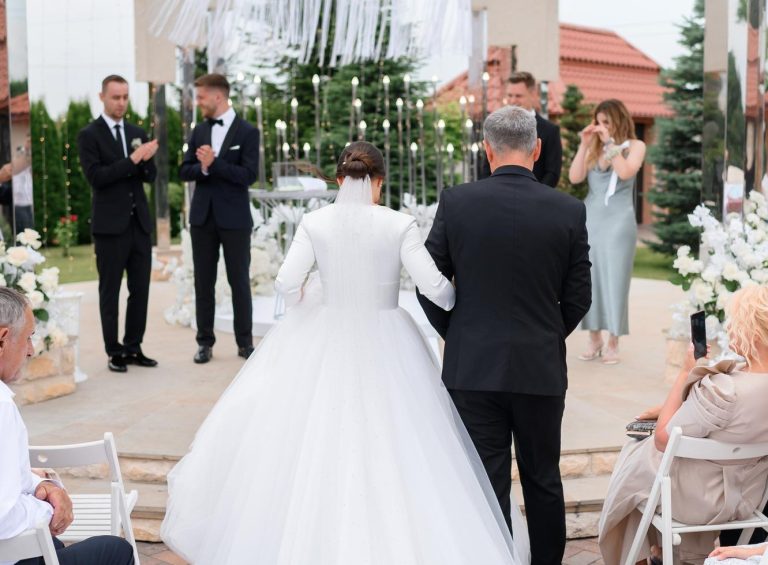
After they married in a wedding that cost more than Robert and I had paid for our first house, the distance between Evan and me had grown exponentially. They’d bought a house in Coral Springs—five bedrooms for three people, a pool that looked like something from a resort magazine, furniture so perfect it seemed designed to be admired rather than used. When Anita had given me the tour, it felt more like a real estate showing than a welcoming.
“The kitchen counters are Italian marble,” she’d said, running her manicured hand along the gleaming surface. “Custom imported. And these fixtures are from a boutique in Milan. We really wanted something that reflected our lifestyle.”
I’d nodded and smiled and pretended to understand why anyone needed a chandelier in their bathroom.
Evan had started missing our Sunday dinners. Too busy. Too tired. Too many networking events where appearance mattered and connections were currency. Anita needed him at functions where the right conversations could lead to the right opportunities. I understood—or at least, I told myself I did.
But standing in their gleaming kitchen that day, watching my son check his phone while his wife discussed thread counts and architectural details, I’d realized something painful: success hadn’t just changed Evan’s circumstances. It had changed his heart.
Now, sitting alone in my guest room with that devastating text message still glowing on my screen, I felt the full weight of that transformation crushing down on me. The boy who’d helped his father change oil in our driveway now paid people to maintain his expensive cars. The young man who’d cried at Robert’s funeral now rarely mentioned his father at all. The son I’d raised to value character over appearance had married someone who seemed to measure worth exclusively by what could be seen and priced.
I made myself tea that night—strong black tea, the way Robert used to drink it before his early morning shifts. The ritual of boiling water and steeping leaves steadied my trembling hands. I sat at my kitchen table with my laptop, something I’d been avoiding for weeks, and opened my online banking portal.
The numbers appeared in neat, accusatory columns, each one representing a choice I’d made, a trust I’d extended, a boundary I’d failed to set.
The cruise charge stared back at me: $22,417 on my credit card from six weeks ago. I remembered that day vividly. Evan had called, excited about a last-minute deal on an upgraded suite. The deadline was midnight. Could I just put it on my card? They’d reimburse me next month once Anita’s bonus came through.
Next month had arrived and departed without a word about repayment. So had the month after that.
I scrolled further, my stomach churning. My emergency credit card—the one I’d given them last year during what Evan had called a “temporary cash flow issue.” The agreement had been simple and explicit: emergencies only. Medical bills, car repairs, actual needs.
Instead, I found charges at luxury hotels and South Beach spas. Online boutiques with names I couldn’t pronounce. A wine bar in Fort Lauderdale. Dinners at steakhouses that apparently charged sixty dollars for a single cut of meat. Multiple charges. Weekly. Sometimes daily.
My hand shook as I calculated the total. Over the past year, they’d spent $43,000 on my emergency card. Forty-three thousand dollars that Robert had earned through decades of backbreaking work, that I’d saved through careful frugality and endless small sacrifices.
This wasn’t helping family through difficult times. This was funding a lifestyle I could never afford for myself while they treated my bank accounts like an unlimited expense account.
My phone chimed—an email notification. I almost deleted it without looking, but something made me pause. The sender was Anita. The subject line read “house options,” and it was addressed to someone named Veronica, probably one of her country club friends. But at the bottom of the email chain, forwarded accidentally, I saw my own email address.
My finger hovered over the delete button. Some deep instinct warned me I didn’t want to read this. But a stronger instinct—the one that had been whispering warnings for months—made me scroll down.
The email was dated three weeks ago, before the cruise cancellation, before that soul-crushing text message. Anita’s words appeared in crisp, condemning black text:
“Once the house is fully in Evan’s name alone, we can finally stop depending on her. It’s honestly embarrassing having your mother-in-law involved in everything. She’s sweet enough, but she’s absolutely not our circle, if you know what I mean. Let’s just get through this cruise and then we can create some real distance. I’m thinking of suggesting to Evan that we spend holidays with my family from now on. His mother still uses paper napkins at dinner parties. Paper napkins! I literally can’t.”
I read it once. Then again. Then a third time, each word landing like a stone in my chest, building a cairn of hurt that threatened to crush me.
Not our circle. Paper napkins. Create some distance.
I thought about every Sunday dinner I’d hosted with my good dishes—the ones I’d received as a wedding gift forty years ago and had cherished ever since. I thought about the paper napkins I’d used because they were practical and I’d been raised not to waste money on things that got thrown away after one use. I thought about how Anita had smiled at those dinners, complimented my cooking with what I’d believed was sincerity, hugged me goodbye at the door while secretly finding me embarrassing.
My eyes burned, but no tears came. I was beyond crying. This was something else entirely—a clarity so sharp it felt almost like relief mixed with rage.
They weren’t just taking my money. They were taking my dignity, my place in my own family, my son. And they’d been planning it methodically, coldly, as casually as someone might plan a vacation or redecorate a room.
I closed the laptop and walked to the kitchen window. Outside, my small garden was blooming—tomatoes I’d planted in spring, roses that had been there since Robert and I first bought this house decades ago. Everything growing in its own time, in its own way, without pretense or apology or concern for what anyone else thought.
I’d built this life with my own hands, with love and sacrifice and patient dedication. And somewhere along the way, I’d let people convince me it wasn’t enough, that I wasn’t enough. The woman who used paper napkins. The mother who was too old, too boring, too beneath their elevated circle to join a cruise she’d fully funded.
I stood at that window for a long time, watching morning light move across my modest garden while a hummingbird visited the feeder I’d hung last week. A neighbor walked past with her dog, waving cheerfully when she spotted me. Normal life continuing its reassuring rhythm while my world rearranged itself into something entirely new.
Something clicked inside me then—not anger exactly, not even hurt anymore. Just a simple, profound understanding that settled over me like a familiar coat.
I walked back to the table, opened my laptop again, and looked at those damning numbers one more time. The cruise I’d been excluded from. The credit card charges funding a lifestyle of pretense. The mortgage I’d co-signed three years ago when they couldn’t qualify on their own income, my name on everything, my money behind everything, my presence systematically erased from everything.
I thought about Robert and the values he’d died still believing in—family first, always family. But he’d also taught me something else, something I’d forgotten in my desperate attempt to stay connected to a son who’d already left me behind.
“Respect yourself, Linda,” he used to say, usually while we were doing dishes together after dinner. “If you don’t respect yourself, nobody else will either.”
I opened a new browser tab and typed in the cruise company’s customer service number. Then I said aloud to my empty kitchen, so quietly the words were barely sound:
“Enough.”
It was the smallest word I’d spoken in days, but it was the most honest thing I’d said in years.
The phone rang three times before a cheerful voice answered: “Thank you for calling Paradise Cruise Lines. This is Jennifer speaking. How may I help you today?”
“Good morning, Jennifer. My name is Linda Matthews. I have a reservation for three passengers departing on the eighteenth of next month, confirmation number P7743521. I need to cancel all three tickets, please.”
There was a pause filled with keyboard clicking.
“I see your reservation here, Mrs. Matthews. Just to confirm—you want to cancel all three passengers, including yourself and the two family members listed as Evan Matthews and Anita Matthews?”
“That’s correct. All three.”
More typing, then a carefully professional tone: “May I ask if there’s been an emergency? If it’s medical-related, we might be able to offer a reschedule option instead of full cancellation.”
“No emergency,” I said calmly, my voice steady despite my racing heart. “Just a change of plans.”
“I understand. I do need to inform you that because we’re within sixty days of departure, there will be a cancellation fee of approximately thirty percent of the total booking cost. That comes to about $6,700. The remaining balance will be refunded to your card within seven to ten business days.”
$6,700 vanishing like smoke. A month ago, that amount would have made me hesitate, would have prompted me to call Evan first, try to work it out, find some compromise that left everyone happy. But that was before I’d discovered how they really saw me. Before I’d understood that I’d been funding my own exclusion.
“That’s acceptable,” I said. “Please proceed with the cancellation.”
“All right, Mrs. Matthews. I’m processing that now. You should receive a confirmation email within the hour. Is there anything else I can help you with today?”
“No, thank you. You’ve been very helpful.”
I hung up and took a deliberate sip of my now-cold tea. My hand was perfectly steady. My breathing was even. I felt strangely lighter than I had in months, as if I’d set down a burden I’d been carrying so long I’d forgotten what it felt like to stand up straight.
Next, I called my bank’s mortgage department. This conversation would be more complicated, but I’d spent my sleepless night researching exactly what I needed to say and do.
“First National Bank Mortgage Services. This is David speaking.”
“Hello, David. My name is Linda Matthews. I’m a co-signer on a mortgage, account number 4782933. I need to request removal of my name from that loan.”
“Certainly, Mrs. Matthews. Let me pull up that account.”
A pause filled with more keyboard clicking.
“I see you co-signed this mortgage three years ago for a property in Coral Springs. Current balance is approximately $420,000. May I ask the reason for the removal request?”
“The primary borrowers are financially stable now and no longer require my assistance.”
It was technically a lie—they should have been stable with their combined incomes, but their spending habits suggested otherwise. But that wasn’t my problem to solve anymore.
“I see,” David said. “In order to remove a co-signer, the primary borrowers will need to refinance the loan independently based on their own income and credit. I can initiate that process, but I should mention that if they don’t qualify for refinancing, the bank may require the loan to be paid in full or call the note due within thirty days.”
“I understand completely.”
“All right then. I’ll send the formal request through our system today. The primary borrowers will receive notification by mail within seventy-two hours. They’ll have thirty days to either refinance or make alternative arrangements.”
“Thank you, David.”
I set the phone down gently on the table and looked out at my garden again. Life continuing its patient rhythm—delivery trucks rumbling past, wind chimes singing next door, birds visiting my feeders. The world turning forward while I dismantled the financial scaffolding I’d built around my son’s unsustainable life.
I wasn’t doing this out of spite or revenge. I was simply stepping back, removing myself from places where I wasn’t welcome, taking my name off obligations that carried my signature but not my respect anymore.
For years, I’d believed that love meant giving everything, sacrificing endlessly, being available always, never setting boundaries because boundaries felt like walls and walls felt like rejection. But perhaps real love meant something different. Perhaps it meant teaching people that actions carry weight, that relationships require reciprocity, that you can’t build a family on the skeleton of someone who’s constantly being asked to disappear.
Three days passed in surprising tranquility. I tended my garden, read a novel I’d been putting off for months, called old friends I’d neglected. The confirmation emails sat in my inbox like closed chapters, and I didn’t reread them. There was no need.
Then Thursday afternoon, I heard a car pull into my driveway with unnecessary speed. The engine cut off abruptly. A door slammed hard enough to rattle.
I was making a sandwich when the doorbell rang—not a polite single press, but three rapid bursts that sounded like panic translated into sound. I wiped my hands slowly on a dish towel, walked to the door, and opened it.
Evan stood on my porch in his work clothes, his face flushed and his hair disheveled as if he’d been running his hands through it repeatedly. His expensive watch caught the afternoon light as he held up his phone like damning evidence.
“Mom,” he said, his voice tight and strained, “did you cancel the cruise?”
“Hello, Evan. Would you like to come inside?”
“Did you cancel it?”
I stepped aside, gesturing toward the living room. “Let’s talk inside.”
He brushed past me, his movements agitated, pacing near the couch rather than sitting. I closed the door gently and returned to the kitchen.
“Would you like some tea?” I called.
“Mom, I don’t want tea. I want to know what’s going on. I got an email from Paradise Cruise Line saying our entire reservation was canceled. All three tickets. They refunded your card, but now the prices have doubled. The same cabin we booked costs fourteen thousand dollars more. What happened?”
I poured water into the kettle anyway and set it on the stove. Then I walked back to the living room, sat in my favorite armchair, and folded my hands in my lap.
“Yes,” I said simply. “I canceled the reservation.”
His mouth opened, closed, then opened again. “Why would you do that? We’ve been planning this for months. Lily’s so excited. I already took time off work. Anita’s been shopping for weeks.”
“You sent me a text message explaining that the cruise would be just for the three of you. ‘Quality family time,’ I believe you called it. Since I wasn’t included in that family time, it seemed logical to remove my financial contribution as well.”
He ran his hand through his hair again—a gesture I recognized from his childhood when he’d been caught doing something wrong and was desperately searching for an explanation that would get him out of trouble.
“Mom, that’s not what Anita meant. She just thought it might be easier, you know? You get tired on long trips. You don’t really enjoy the same activities we do. She was trying to make it less stressful for everyone.”
I let the silence sit between us for a long moment. The kettle began to whistle in the kitchen.
“I walk two miles every morning, Evan. I volunteer at the library twice a week. Last month I helped Mrs. Chen move furniture. I’m not tired. I’m sixty-eight years old and in better health than many people half my age. Your wife isn’t confused about my energy levels. She simply finds me inconvenient and embarrassing.”
His face reddened. “That’s not fair.”
“Isn’t it?” I stood and walked to the kitchen, pouring hot water over a tea bag in my favorite mug. “You’re welcome to one if you change your mind,” I called.
“I don’t want tea!” His voice rose, cracking slightly. “I want to understand why you’re sabotaging our vacation. Everything’s canceled. The prices have doubled. We can’t afford to rebook at that rate. What are you doing?”
I walked back slowly, steam rising from my mug, and sat down again. “I paid $22,000 for that cruise, Evan. Every single penny came from my account. The suite you wanted. The excursions Anita insisted on. The dining packages. All of it. Then you told me I couldn’t come, so I removed my investment from an event I wasn’t invited to attend. That’s not sabotage. That’s common sense.”
“We were going to pay you back.”
“Were you? The same way you’ve been paying back the $43,000 you’ve charged to my emergency credit card this past year?”
His expression shifted—surprise followed quickly by defensiveness. “Those were for emergencies.”
“Was the wine bar in Fort Lauderdale an emergency? The spa treatments? The luxury hotels? I looked at every statement, Evan. I know exactly what my money funded while you told me you were struggling through a ‘rough financial patch.’”
“We needed those things for business. Networking. Client dinners. Maintaining the right image. You don’t understand how my world works.”
“You’re absolutely right,” I said quietly. “I don’t understand a world where you lie to your mother about why you need money, spend it on luxuries, and then exclude her from something she paid for because she doesn’t fit your image.”
He stopped pacing and stood very still. “This is about more than the cruise, isn’t it?”
“Yes.”
“Then what is it about?”
I set my mug down carefully on the side table. “It’s about respect, Evan. It’s about recognizing that I’m not an ATM or a backup plan or someone you tolerate until you can afford to cut me out entirely. It’s about the fact that I raised you better than this, and somewhere along the way, you forgot everything your father and I tried to teach you.”
“I haven’t forgotten anything.”
“Then why did Anita email her friend saying I’m not your circle? That having me involved in things is embarrassing? That you’re planning to create distance after this cruise? She accidentally included me in the forward. I read every word about how you can’t stand my paper napkins.”
His face went pale. “You read that?”
“She was careless with her contempt. But you agreed with it, didn’t you? When she suggested I stay home. When she said I’d be tired or bored or whatever polite excuse she manufactured. You agreed, because part of you believes it too. That I don’t belong in your life anymore.”
“That’s not true,” he said, but his voice lacked conviction.
I reached beside my chair and picked up a manila folder I’d prepared that morning, sliding it across the coffee table toward him. “What’s this?” he asked warily.
“A notice from the bank about the mortgage I co-signed three years ago.”
He opened it slowly, his eyes scanning the page before widening in shock. “You’re removing yourself as co-signer?”
“I am.”
“Mom, we can’t refinance. We already tried last year. We don’t qualify on our own income.”
“Then you’ll need to make some difficult decisions.”
He stood abruptly. “You’re going to let us lose the house?”
“I’m going to let you face the consequences of building a life you can’t actually afford. This isn’t revenge, Evan. This is allowing natural consequences to teach you what I apparently failed to teach you myself.”
“This is revenge,” he said, his voice shaking with anger and fear. “That’s exactly what it is.”
I stood too, meeting his eyes directly. “No. Revenge would be wanting you to suffer. Consequence is simply stepping back and allowing your choices to have their natural results. I’m not your safety net anymore. I’m not your backup funding. I’m not the embarrassing mother you tolerate for holiday cards. I’m just a woman who finally remembered she deserves better than being treated like a wallet with no feelings attached.”
He stared at me as if I were a stranger. “You’ve changed.”
“Maybe I’ve just stopped pretending I haven’t noticed how much you’ve changed.”
He grabbed the folder, his hands trembling, and walked to the door. He paused with his hand on the knob, turning back to look at me with something that might have been genuine confusion or might have been manipulative pleading—I couldn’t tell anymore.
“What do you want me to say, Mom?”
“I don’t want you to say anything. I want you to think. Really think about who you’ve become and whether that’s someone your father would recognize or respect.”
He left without another word. The door closed softly behind him, and I stood in my quiet living room listening to his car start and pull away. My tea had gone cold in its mug. I picked it up anyway and took a sip.
It tasted like clarity.
The weeks that followed unfolded like dominoes falling in slow motion. Evan and Anita couldn’t secure refinancing—their debt-to-income ratio was catastrophic, their spending habits documented in stark financial detail. The house went on the market. They moved into a rental apartment. Anita, who’d built her identity on appearances and status symbols, lasted three months in reduced circumstances before leaving for her parents’ house in Tampa, filing for divorce shortly after.
Evan called one evening, his voice flat and defeated. “Anita’s gone. She says I ruined her life by not being able to maintain our lifestyle.”
I wanted to point out the irony—that she’d helped destroy that lifestyle through her own spending—but he sounded so broken I simply listened.
“Can Lily stay with you?” he asked. “I’m working longer hours to cover bills, and the apartment complex isn’t safe for her to be alone.”
“Of course she can stay.”
And she did. My granddaughter Lily moved into the guest room, bringing light and laughter back into my house. We established routines—breakfast together, homework at the kitchen table, evening walks, weekend projects. She never complained about the change, though sometimes I’d catch her staring out windows with a faraway look, mourning the pool and the big house and the version of normal that no longer existed.
Evan started showing up for Sunday dinners again, sitting at the same table where he’d grown up, eating the same simple food he’d once taken for granted. Over months, I watched humility replace arrogance, watched him slowly remember who he’d been before success had rewritten his values.
One spring evening, he sat on my porch and said the words I’d been waiting to hear: “I’m sorry, Mom. Really sorry. I let success make me arrogant. I treated you like you were less than us because you didn’t live the lifestyle Anita and I created. I excluded you. I used you. I forgot that everything I had came from your sacrifices and Dad’s, and I took it all for granted. I can’t undo what I did, but I want you to know—I see it now. I see how wrong I was.”
“Thank you for saying that,” I told him. “For meaning it.”
We were rebuilding. Slowly. Honestly.
And then one evening while making dinner with Lily, she said something that made me stop mid-stir: “Grandma, do you think we could go on a trip together? Just us? Maybe somewhere with water? I’ve never really seen the ocean.”
I looked at this resilient child who’d weathered so much with such grace, and I made a decision.
I booked us a modest four-day cruise—not the expensive suite Anita had demanded, but a simple interior cabin on an older ship. No excursions or specialty dining. Just passage across water and time together.
When I told Lily, she threw her arms around me with such pure joy I knew I’d made the right choice.
Evan drove us to Port Canaveral on departure day. He hugged Lily tight, then turned to me with genuine gratitude in his eyes. “Thank you, Mom. For everything you do for her. For me.”
“We’re family,” I said simply. “This is what family does.”
As Lily and I walked up the gangway, I glanced back once. Evan stood by his modest car, waving, wearing a genuine smile—something Robert would have recognized.
Our cabin was tiny but cozy. Lily loved it immediately, declaring it felt like a secret fort. That first evening, we stood on the open deck as the ship pulled away from port, watching the sun paint the sky in coral and gold. Lily gripped the railing, her eyes wide as land grew smaller and ocean expanded around us.
“It’s so big,” she whispered in awe. “I didn’t know it would be this big.”
“Pretty amazing, isn’t it?”
“Grandma, are you happy?”
I looked down at her earnest face. “Yes, sweetheart. I really am.”
Over the next three days, we explored the ship together. We ate at the buffet without worrying about appearances. We watched a magic show, played trivia with strangers, read books by the pool. We visited a Bahamian port where Lily bought a shell necklace with her allowance, declaring it the most beautiful thing she’d ever owned.
Everything was simple. Everything was real.
On our last night at sea, we returned to the deck after dinner. The ocean stretched endlessly in all directions, dark water reflecting emerging stars. Lily leaned against the railing and I stood beside her, my arm around her shoulders.
“This was the best trip ever,” she said quietly.
“For me too.”
“Better than the fancy cruise would have been?”
I thought about that suite I’d never slept in, those excursions I’d never taken, all that money spent on something designed to impress rather than connect.
“So much better,” I said honestly. “Because this one is real. And you’re here with me.”
She tilted her head against my side. “I’m glad you came, Grandma.”
Those words—so simple and sincere—meant everything. They echoed the moment a year ago when I’d been excluded, when I’d felt erased and diminished. And here I was now, on the ocean I’d dreamed of seeing, with the person who mattered most, having spent a fraction of the money but gained something infinitely more valuable.
The ship moved through calm water, cutting a path forward into darkness that felt like possibility rather than fear. Behind us, the wake glowed faintly in moonlight, evidence of where we’d been but not where we were going.
I thought about everything I’d lost and everything I’d gained. The relationships that had broken and the ones that had healed. The version of myself I’d surrendered and the woman I’d become.
For the first time in decades, I didn’t feel left behind. I felt free.
The wind lifted my hair, carrying the salt smell of endless ocean. Beside me, Lily hummed contentedly. Above us, stars emerged in ancient patterns, constant and reliable.
And I understood, finally, that this was what I’d been searching for all along. Not perfection or performance or approval from people who’d forgotten how to value what matters. Just this—this moment, this child, this vast honest sea, this life I’d reclaimed by finally choosing myself.
The ship sailed on through gentle waves, carrying us forward into a future I’d built with my own hands. A future where I mattered. Where boundaries weren’t walls but foundations. Where love existed without requiring me to disappear.
It was enough. It was more than enough.
It was everything.

Emily Johnson is a critically acclaimed essayist and novelist known for her thought-provoking works centered on feminism, women’s rights, and modern relationships. Born and raised in Portland, Oregon, Emily grew up with a deep love of books, often spending her afternoons at her local library. She went on to study literature and gender studies at UCLA, where she became deeply involved in activism and began publishing essays in campus journals. Her debut essay collection, Voices Unbound, struck a chord with readers nationwide for its fearless exploration of gender dynamics, identity, and the challenges faced by women in contemporary society. Emily later transitioned into fiction, writing novels that balance compelling storytelling with social commentary. Her protagonists are often strong, multidimensional women navigating love, ambition, and the struggles of everyday life, making her a favorite among readers who crave authentic, relatable narratives. Critics praise her ability to merge personal intimacy with universal themes. Off the page, Emily is an advocate for women in publishing, leading workshops that encourage young female writers to embrace their voices. She lives in Seattle with her partner and two rescue cats, where she continues to write, teach, and inspire a new generation of storytellers.