
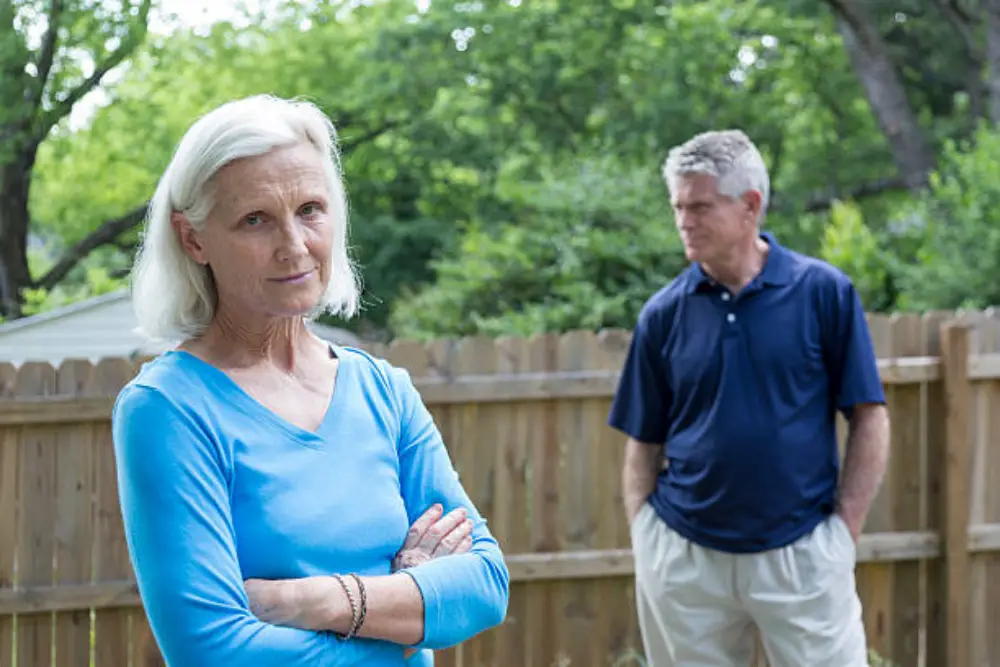
The notification lit up my phone screen as I sat in my sun-filled kitchen, coffee steaming in my favorite mug—the one Robert had given me on our twentieth anniversary. I smiled, expecting a photo of my grandchildren or maybe a question about Sunday dinner. Instead, I read words that felt like ice water down my spine: “Don’t expect me to take care of you when you’re old. I have my own life and family.”
I stared at those words until they blurred. My son David had sent this. No context, no argument beforehand, just this cold declaration delivered like a business memo. We’d had dinner three nights ago. Everything seemed fine. What had changed?
My hands trembled as I set down my phone. At seventy-one years old, I’d survived my husband’s sudden death, built a comfortable life through careful planning, and thought I’d raised a son who valued family. Apparently, I’d been wrong about that last part.
For nearly an hour, I sat motionless at my kitchen table, that message glowing accusingly from my phone. The morning light shifted across the hardwood floors Robert had refinished with his own hands, illuminating three decades of memories in this house. I thought about all the choices that had led to this moment—the sacrifices, the love, the blind trust.
Finally, I picked up my phone. My response was simple: “Okay.”
Just that one word. No pleading, no questions, no emotional appeals. I hit send and felt something shift inside me—a door closing, a spine straightening, a decision crystallizing.
If David wanted to draw this line, I would respect it. But respect works both ways.
That afternoon, I called my attorney, Thomas Chen. We’d worked together after Robert’s death five years ago, handling estate planning and the transfer of assets. “Thomas,” I said when he answered, “I need to revise my will immediately. Can you see me this week?”
“Of course, Margaret. Is everything all right?”
“Everything is perfectly clear for the first time in a long while.”
I spent the next forty-eight hours thinking carefully about what I truly wanted. Who deserved the life Robert and I had spent thirty-two years building? The answer came easier than expected. I made lists, researched charities, and drafted detailed notes about my wishes.
What I didn’t know was that David had access to my bank account activity through an old joint account we’d established years ago for emergencies. What I didn’t know was that he monitored it regularly. What I didn’t know was just how far he would go when he discovered what I’d done.
My meeting with Thomas took less than an hour. I explained the text message, showed him the pattern of financial requests over the years, and outlined my new wishes. Thomas listened without judgment, took careful notes, and promised new documents within the week. Walking out of his office, I felt lighter than I had in months—maybe years.
The freedom to choose my own path, even in death, felt like breathing after being underwater.
I drove home through familiar Portland streets, past the park where I’d pushed David on swings, past the ice cream shop where we’d celebrated his high school graduation. The memories didn’t hurt anymore. They simply existed, separate from present reality. People change. Relationships evolve. Sometimes they reveal foundations less solid than we believed.
That evening, my phone rang. David’s name flashed across the screen. My stomach clenched, but I answered on the third ring.
“We need to talk, Mom.” His voice was tight, anxious.
“About what, sweetheart?”
“About your meeting with your lawyer. What’s going on?”
So he’d been watching my accounts. The violation felt like a physical blow, but I kept my voice steady. “Just updating some documents. Routine estate planning.”
“Routine? Mom, you can’t just change your will without discussing it with me.”
Something cold settled in my chest. “Can’t I? It’s my will, David. My assets to distribute as I see fit.”
“After everything I’ve done for you—”
“What exactly have you done for me?” The question came out sharper than intended. “I live independently. I manage my own home, my own finances, my own life.”
“That’s not—you know what I mean. I’m your son. I’m family.”
“Yes, you are. And family doesn’t send text messages telling their mother not to expect care or support.”
Silence stretched between us. Then: “I was upset. I didn’t mean—”
“You meant every word,” I interrupted. “And I’m respecting your wishes. You have your own life and family. I have mine.”
“Don’t be stupid about this, Mom.”
Stupid. He’d called me stupid. I counted to five, forcing calm. “I have to go, David. Take care.”
I hung up before he could respond.
My hands shook again, but not from fear—from anger, from the realization that I’d spent years being manipulated. How long had my son seen me as nothing more than a bank account with a heartbeat?
I needed more than just a revised will. I needed protection, strategy, documentation. Over the next week, I worked closely with Thomas to establish a living trust. My house, investment portfolio, and savings would be transferred into it—everything except my checking account for daily expenses. The beneficiaries were carefully chosen: a scholarship fund at Robert’s university, the animal shelter where we’d adopted our dog Max, the children’s hospital, and a modest bequest to my niece Emma, who’d stayed in touch over the years without ever asking for anything.
David’s name appeared nowhere in the documents.
“Once the assets are in the trust, they’re protected,” Thomas explained. “You’ll have enough in your checking account to live comfortably, but the bulk of your estate will be locked in and distributed according to your wishes.”
“That’s exactly what I want.”
I also closed the joint account David had been monitoring and opened a new one at a different bank. The manager, Patricia, gave me a concerned look but processed everything efficiently. No more spying. No more violations of my privacy.
When the trust documents were finalized, I felt a weight lift that I hadn’t realized I’d been carrying. These were my choices, my decisions, my legacy.
David called repeatedly over the next few days. I didn’t answer. Finally, on the fifth call, I picked up.
“Where have you been? I’ve been trying to reach you for days!”
“I’ve been busy, David. What do you need?”
“What do I need? Mom, your bank account is gone. I checked and it doesn’t exist anymore.”
“I closed it. I streamlined my banking.”
“Streamlined?” His voice rose. “What’s going on? Are you sick? Is something wrong?”
Was I sick? I heard the fear beneath his concern—fear that his inheritance was slipping away. “I’m perfectly healthy. Just organizing my affairs like any responsible adult.”
“You’re acting paranoid. Has someone been talking to you about me?”
“The only person who told me anything about you was you. Remember your text?”
“I explained that—”
“Good night, David.” I ended the call.
Two days later, on a Saturday morning, I was in my garden pruning roses when tires screeched in my driveway. David burst through the garden gate, his face flushed with fury.
“What the hell have you done?”
I set down my pruning shears carefully. “Lower your voice. The neighbors can hear.”
“I don’t care about the neighbors! I just got off the phone with your bank. You’ve transferred almost everything. Where did it go?”
“Into a trust. It’s none of your concern.”
“None of my concern? That money was supposed to be mine! Dad worked his whole life for that!”
“Dad worked his whole life for us,” I corrected, standing to meet his eyes. “For our family, for our life together. He’s gone now, and it’s my money to do with as I please.”
“You can’t do this. I’ll fight it. I’ll prove you’re not competent.”
“Try it. I have medical records showing perfect health. I have witnesses to my sound mind. I have documentation of every decision. What do you have? A text message telling me you won’t take care of me.”
His face went pale. “We need that money. We’ve been counting on it.”
“For what? What do you need it for so desperately?”
He couldn’t answer. He just stared, and in that moment, I saw the ugly truth—I’d become his retirement plan, not his mother.
“Get out of my house,” I said quietly. “Don’t come back unless you’re invited.”
Over the following weeks, David tried everything. First came the apologies—flowers, cards, phone calls dripping with manufactured remorse. Then Jessica, his wife, wrote a letter about how much the grandchildren missed me, how family should forgive. They even showed up one Sunday with Charlie and Mia, using my six-year-old and four-year-old grandchildren as emotional leverage.
I saw through every manipulation, but God, it hurt to hug those babies and know their parents were weaponizing them.
When guilt didn’t work, they shifted to threats. David hired a lawyer and demanded I submit to a psychiatric evaluation to prove my competency. Fine. Let them waste their money.
Dr. Patricia Hernandez, the forensic psychiatrist they chose from a court-approved list, was thorough and professional. For three hours, she tested my cognitive function, reviewed my medical history, and interviewed my doctor. When she finished, she looked at me with something like respect.
“Mrs. Morrison, I’ll file my formal report with the court, but I can tell you now—there’s absolutely no evidence of cognitive decline or diminished capacity. Your decisions are entirely rational and well-considered.”
The competency hearing was brief. Dr. Hernandez destroyed David’s case in fifteen minutes with her testimony about my perfect cognitive scores and clear reasoning. The judge—a woman in her sixties who’d probably seen this scenario before—looked at David with barely concealed contempt.
“Mr. Morrison, you sent your mother a text saying you wouldn’t care for her in old age, and now you’re upset she’s managing her estate according to her own wishes rather than yours?”
David stammered something about being misunderstood.
The judge banged her gavel. “Petition denied. Mrs. Morrison is clearly of sound mind and has every right to manage her estate as she sees fit.”
As we left the courtroom, David grabbed my arm in the hallway. “This isn’t over.”
Thomas stepped between us. “Mr. Morrison, that’s harassment. Walk away.”
David leaned close, his voice venomous. “When you’re old and sick and alone, don’t come crying to me.”
I looked at this stranger who wore my son’s face. “David, I won’t be alone. I have friends, community, and self-respect. What do you have besides greed?”
He walked away without answering.
I should have felt triumphant, but I just felt empty. “Why does winning hurt so much?” I asked Thomas.
“Because love and betrayal can exist simultaneously. You’re allowed to grieve.”
Two months later, I received notification from David’s mortgage company—I was still listed as an emergency contact. They’d missed three payments. Foreclosure proceedings had begun.
So they were drowning financially. The expensive lifestyle, the private school, the luxury car—all built on debt and anticipated inheritance. When I hired a private investigator, what he found was staggering: over two hundred thousand dollars in debt, loans taken against my expected estate, even emails to lawyers years ago asking about expediting inheritance from “difficult” parents.
My son had been planning this for years.
I could have pressed charges for attempted fraud. Instead, I sent one final letter detailing everything I knew, offering resources for financial counseling and debt management, and making one thing clear: my estate plan was final. They would receive nothing.
But I left one door open—if they ever genuinely apologized and wanted to rebuild a relationship based on respect rather than money, I would listen. Not with my checkbook. With my heart.
That was six months ago.
David and Jessica lost their house, declared bankruptcy, and moved to another state. Through court-ordered grandparent visitation, I now see Charlie and Mia once a month with a supervisor present. It’s not ideal, but I have my grandchildren in my life, and that’s what matters.
As for me? I’m thriving. I joined a book club, started volunteering at the children’s hospital, reconnected with old friends, and grew closer to my niece Emma. My house is filled with laughter, purpose, and genuine relationships. I have season tickets to the symphony, I’ve taken up painting again, and I recently sold two pieces at a local gallery.
The scholarship fund at Robert’s university has already helped three students. I receive thank-you letters from them—heartfelt expressions of gratitude that mean more than any inheritance ever could. This is legacy. This is meaning.
I’ve made peace with my choices. Yes, I grieve the relationship with David I’d hoped we’d have. But I don’t regret protecting myself. I learned that loving someone doesn’t mean allowing them to abuse you, and that family isn’t defined by blood but by mutual respect and care.
When Charlie and Mia turn eighteen, they’ll each receive a letter from me explaining everything, along with support for college and the assurance that they were always loved. Not by a desperate grandmother trying to buy affection, but by a woman who valued herself enough to demand respect.
That text message—”Don’t expect me to take care of you when you’re old”—gave me an unexpected gift: freedom. Freedom to see clearly, to choose myself, to build a life based on dignity rather than obligation.
I’m seventy-two now, and I run three miles every morning. My doctor says I have the cardiovascular health of someone fifteen years younger. I’m healthier, happier, and more fulfilled than I’ve been in decades.
My son wanted me to know he had his own life and family. So I built my own life too—one filled with people who value me for who I am, not what I might leave behind. And you know what? It’s a beautiful life.
Sometimes the cruelest words lead us to the greatest truths. David showed me exactly who he was in that text message. I’m grateful I finally believed him.

Emily Johnson is a critically acclaimed essayist and novelist known for her thought-provoking works centered on feminism, women’s rights, and modern relationships. Born and raised in Portland, Oregon, Emily grew up with a deep love of books, often spending her afternoons at her local library. She went on to study literature and gender studies at UCLA, where she became deeply involved in activism and began publishing essays in campus journals. Her debut essay collection, Voices Unbound, struck a chord with readers nationwide for its fearless exploration of gender dynamics, identity, and the challenges faced by women in contemporary society. Emily later transitioned into fiction, writing novels that balance compelling storytelling with social commentary. Her protagonists are often strong, multidimensional women navigating love, ambition, and the struggles of everyday life, making her a favorite among readers who crave authentic, relatable narratives. Critics praise her ability to merge personal intimacy with universal themes. Off the page, Emily is an advocate for women in publishing, leading workshops that encourage young female writers to embrace their voices. She lives in Seattle with her partner and two rescue cats, where she continues to write, teach, and inspire a new generation of storytellers.