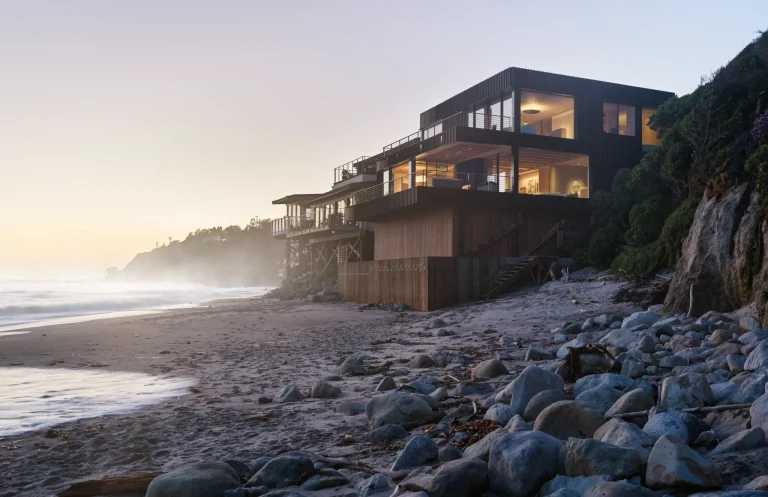
The morning sun caught the sunburst finish of my 1975 Gibson Hummingbird as I tuned it on the deck of my parents’ lakehouse that Labor Day weekend. Five years I’d saved for this guitar—eight thousand dollars of careful budgeting, overtime shifts, and sacrifice. This wasn’t just an instrument. It was my livelihood, my creative partner, the tool I used on over forty professional recording sessions across Nashville.
Then I heard it. The unmistakable sound of wood splintering.
I ran inside, my heart already sinking with dread. Tyler stood in the living room, my nine-year-old nephew holding my guitar by the neck like a baseball bat. The body had been smashed against the stone fireplace. The bridge was ripped completely off, dangling by broken strings. The spruce top—irreplaceable on a vintage instrument—was split down the middle like a broken heart. Strings tangled everywhere like a spiderweb of destruction.
My nephew looked directly at me and laughed. Actually laughed.
“It broke,” he said with a shrug, completely unbothered. “Your guitar was fake anyway.”
I stood frozen, trying to process what I was seeing. My brother-in-law Derek appeared in the doorway, coffee cup suspended halfway to his mouth, his face draining of all color. But Tyler kept talking, filling the shocked silence with words that made everything so much worse.
“Derek said real Gibsons are super tough. I wanted to test if yours was real.”
I turned slowly to look at Derek, feeling something cold and hard settling in my chest. “You told him what?”
Derek stammered something incoherent about craftsmanship and quality control, but Tyler interrupted him with the brutal honesty only children possess.
“You said Uncle Marcus probably has a cheap one. You said it at breakfast this morning. You said he wastes money on fake stuff to look cool.”
I knelt down and carefully gathered the pieces of my destroyed guitar, my hands trembling. This wasn’t just eight thousand dollars in splinters. This was a 1975 vintage instrument now worth ten to twelve thousand dollars on the collector’s market. You couldn’t buy a 1975 Gibson Hummingbird new. You couldn’t repair a split top or reattach a ripped bridge. This guitar was gone forever, and my brother-in-law had deliberately told a nine-year-old child to destroy it.
The commotion brought everyone else running. My sister Claire burst into the room first, took one look at Tyler standing amid the wreckage, and her maternal instincts kicked into overdrive—but not the way I expected.
“What did you do to my son?” she demanded, rushing to Tyler’s side.
I held up the shattered guitar, pieces of wood and broken strings falling from my hands. “Tyler destroyed this. Derek told him to test whether it was real.”
Claire didn’t hesitate. She crouched beside Tyler and pulled him into her arms like I was the threat, like I was the one who’d done something wrong. “He’s nine, Marcus. He didn’t know it was expensive.”
“Eight thousand dollars,” I said quietly.
Claire gasped, but her shock immediately transformed into defensive anger. “You spent eight thousand dollars on a guitar? That’s insane.”
“It’s a vintage instrument from 1975. It’s worth even more now. I use it professionally for recording sessions. It’s how I make my living.”
Derek stepped forward, trying to play peacemaker now that he realized how badly he’d miscalculated. “Look, Marcus, I’ll pay for repairs. I’m sure it can be fixed.”
“It can’t be fixed,” I said, my voice steady despite the rage building inside me. “The top is split completely. The bridge is torn off. This isn’t a scratch or a dent. This guitar is completely destroyed, and you know it. You told a child to destroy it because you were jealous.”
My mother Barbara arrived next, saw Tyler crying in Claire’s arms, and made her choice in an instant. “Marcus, stop scaring the boy. He didn’t mean any harm.”
My father Richard came last, surveyed the scene with his usual detached assessment, and delivered his verdict. “It’s just a guitar, son. You can get another one.”
Those words hung in the air like poison. Just a guitar. Get another one. Nobody asked how I felt. Nobody scolded Tyler for destroying someone else’s property. Nobody demanded that Derek apologize for deliberately inciting a child to commit destruction. All the concern, all the protection, all the comfort went to Tyler—the person who’d actually caused the damage.
I was completely alone in my own family.
Claire stepped forward, her hand protective on Tyler’s shoulder. “Tyler is a child. He doesn’t understand the difference between a two-hundred-dollar guitar and an eight-thousand-dollar one.”
“Then teach him,” I said. “Teach him not to destroy other people’s property regardless of its value.”
“He made a mistake,” Claire insisted, her voice rising defensively.
“Derek made the mistake,” I corrected. “Tyler just followed the instructions of an adult he trusted.”
Barbara moved between us, always the mediator, always protecting Claire from consequences. “Marcus, you’re being unreasonable. These things happen with children.”
Richard crossed his arms, the judge delivering his final ruling. “It’s replaceable. Family isn’t. You need to let this go.”
I looked at each of them—my sister who’d chosen to protect her son’s feelings over acknowledging his actions, my parents who’d instantly sided against me, my brother-in-law who’d started this entire situation with his petty jealousy and was now hiding behind everyone else. The message was crystal clear: I was supposed to absorb this loss, swallow my anger, and pretend everything was fine so they could all stay comfortable.
“You’re supposed to forgive,” Claire said, her tone almost pleading now. “He’s just a child.”
Nobody mentioned compensation. Nobody offered to actually replace the guitar. Nobody suggested any consequences for Tyler or Derek. They just wanted me to forgive and forget, to be the bigger person, to sacrifice my feelings and my financial loss for the sake of family harmony.
I nodded slowly, turned around, and walked out of the living room without saying another word.
Behind me, I heard Barbara sigh with relief. I heard Claire hug Tyler tighter and murmur comforting words. They thought I’d accepted the situation. They thought the crisis was over. They thought I was being mature and reasonable.
They had absolutely no idea what was coming.
I walked through the house with deliberate calm, my mind already calculating, already planning. On the entry table sat a decorative wooden bowl filled with car keys—my parents’, Claire’s, and Derek’s. Derek’s key fob bore the distinctive three-pointed star logo of Mercedes-Benz.
I picked it up, feeling the weight of it in my palm, and walked to the window. Outside in the driveway sat Derek’s pride and joy—a black Mercedes AMG GT with a personalized license plate reading “DR FUNDS.” He’d paid over one hundred thousand dollars for that car, and he never missed an opportunity to brag about it. It was his status symbol, his proof that he was successful despite the rumors I’d heard about his struggling investment firm.
I studied the layout of my parents’ property. The boat ramp sloped at about fifteen degrees down to the lake. The surface was gravel, leading straight into deep water with no barriers. According to the depth markers on the dock, the water was at least twenty feet deep at the end of the ramp.
The Mercedes was parked about thirty feet from the edge, perfectly positioned on a natural roll path. I noticed Derek had left the windows rolled down to combat the afternoon heat. Perfect conditions for what I had in mind.
I looked back at the house where my family was gathering for the planned Labor Day barbecue, acting like nothing had happened, expecting me to join them and pretend my destroyed career tool didn’t matter. Tyler was already running around with a water gun, laughing and playing like he hadn’t just cost me eight thousand dollars.
My decision crystallized.
That evening, the barbecue proceeded as planned. Richard grilled steaks on the back patio while Barbara fussed over her table settings. Tyler ran around spraying everyone with his water gun while Claire praised his “energy and creativity.” Derek approached me while I stood alone by the railing, attempting to smooth things over.
“Look, Marcus, I know you’re upset. I’ll write you a check for ten thousand dollars. That’s more than the guitar cost, right? We can put this behind us.”
I didn’t even look at him. “You can’t fix this with money. Some things can’t be replaced, Derek. But you wouldn’t understand that.”
He walked away frustrated, muttering something under his breath about me being dramatic.
Dinner was a exercise in forced cheerfulness, everyone pretending the earlier incident hadn’t happened. Richard looked at me across the table with poorly concealed disappointment.
“You’re being childish about this, Marcus.”
“Am I?” I asked calmly.
Barbara set down her fork, her tone gentle but firm. “We’re family. Family forgives each other. You need to let this go.”
I met her eyes and kept my voice perfectly level. “You’re right, Mom. Family should forgive each other.”
Claire visibly relaxed, actually smiling at me with relief. “Thank you, Marcus. That’s very mature of you.”
I didn’t smile back. I simply ate in silence, mechanically working through my meal while counting down the hours. Everyone interpreted my calm acceptance as surrender. They had no idea that my composure should have terrified them.
At 6:15 the next morning, while everyone still slept, I took Derek’s keys from the entry table where he’d carelessly left them. I walked outside into the cool dawn air, dew covering the grass, the lake sitting glassy and perfectly calm with early morning mist rising from the surface like ghosts.
I unlocked the Mercedes, and the soft electronic beep was the only sound breaking the stillness. I sat in the driver’s seat, breathing in the smell of expensive leather and Derek’s cologne. Then I shifted the transmission into neutral, climbed out, left the driver’s door open, reached back inside, and released the parking brake.
The car started rolling slowly at first, tires crunching on gravel, then faster as gravity took over. I stood back with my arms crossed and watched.
The Mercedes picked up speed down the incline, gravel spraying from under the wheels. It hit the boat ramp and nosedived forward with a tremendous splash that echoed across the entire lake. Water erupted upward in a massive fountain. The car sank front-first, the trunk rising briefly into the air before disappearing beneath the surface.
I could see the cream leather seats through the open windows as water poured in. Bubbles streamed up violently. The red glow of the taillights shone underwater like dying embers. Within thirty seconds, the car was completely submerged.
Perfect timing.
Derek walked out onto the deck in his pajamas, coffee mug in hand. He saw me standing at the boat ramp with my arms crossed, saw the bubbles still rising from where his car used to be. His coffee mug slipped from his hand and shattered on the deck, brown liquid spreading across the wood.
Then he screamed—a sound that woke the entire household.
Derek ran down to the boat ramp, but it was far too late. There was nothing to save. He stared at the bubbles still breaking the surface, then turned to me with absolute disbelief contorting his features.
“What did you do?” he gasped.
I stayed perfectly calm, using his own words from the day before. “I released the parking brake. Physics did the rest.”
“My car! My fucking car!”
I repeated his dismissive tone from yesterday exactly. “It’s just a car, Derek. You can buy another one.”
Derek lunged at me, hands reaching for my throat. I sidestepped easily, and he fell forward into the gravel. He scrambled back to his feet, his face purple with rage, hands shaking.
Claire ran outside in her robe. “Where’s the Mercedes?”
I pointed calmly at the water where bubbles still rose. “About twenty feet down.”
“You pushed his car into the lake!”
“I didn’t push anything. Gravity did the work. I just released the brake.”
Barbara and Richard arrived next, both in their robes, hair disheveled. Richard’s voice was thunderous. “Marcus, have you lost your mind? What the hell is wrong with you?”
I looked at each of them systematically and used their own logic against them. “Yesterday, Tyler destroyed something I saved five years to buy—something I use professionally to make my living. You said it’s just a guitar, get another one. You said family forgives each other. You said I was being childish for being upset.”
I gestured toward the lake where bubbles continued to surface. “So I let Derek’s car go. I applied your lesson. We’re even now.”
The silence was broken only by the sound of bubbles popping at the lake’s surface.
Derek pulled out his phone with shaking hands. “I’m calling the police right now.”
I didn’t blink. “Go ahead. When they arrive, I’ll file a report about Tyler destroying my eight-thousand-dollar guitar. I’ll explain how you deliberately told a nine-year-old child to test whether it was fake by smashing it against a fireplace. That’s called inciting a minor to commit property destruction, Derek.”
Derek froze, phone halfway to his ear.
“In Kentucky, inciting a minor to commit crimes is a serious offense. Child Protective Services investigates cases where adults manipulate children into illegal activities. You could lose custody of Tyler.”
I let that sink in for a moment while I watched the color drain from Claire’s face.
“You destroyed my car!” Derek shouted again, but his voice had lost its conviction.
“And you destroyed my guitar,” I replied calmly. “So call the police. Let’s both explain our sides. Let’s both face the legal consequences of property destruction. Your choice.”
Derek lowered his phone slowly, his arm falling to his side. He couldn’t risk it. Claire grabbed his phone out of his hand, her face white with terror at the thought of losing her son.
“Don’t call,” she pleaded. “Please don’t call anyone.”
Richard tried to mediate, stepping between us. “Both of you need to calm down. We can fix this.”
“Too late for that, Dad,” I said, my voice still perfectly level. “Way too late.”
Barbara looked at me like she didn’t recognize me. “Marcus, this isn’t you. This isn’t who we raised.”
“You’re right,” I agreed. “The person you raised would have swallowed this insult and paid for his own loss just to keep everyone comfortable. I’m not that person anymore.”
Derek was already on his phone again—calling his insurance company this time, his voice frantic. “It went into the lake. Yes, the entire car. No, I don’t know how it happened.”
I walked to my truck, opened the door, and pulled out my guitar case containing what was left of the Gibson. I held it up so everyone could see.
“Where are you going?” Barbara asked, her voice small.
“Home to Nashville.”
“Marcus, please,” she started.
I cut her off. “Thanks for the lesson about how family handles expensive property destruction. I’m a fast learner.”
Richard drew his line in the sand. “If you leave now, you’re choosing to end this family.”
I looked at my father directly. “No, Dad. You made that choice yesterday when you dismissed my feelings and told me my destroyed career tool didn’t matter. I’m just making sure the lesson you taught me was understood by everyone.”
I climbed into my truck and started the engine.
Claire was crying now, her voice breaking. “We still owe eighty-seven thousand dollars on that car loan!”
I put the truck in reverse and called back through the open window, “It’s just money, Claire. You can earn more. That’s what you all told me, right?”
As I drove away, I could see the scene unfolding in my rearview mirror—Derek screaming into his phone, Claire sobbing with her hands over her face, Barbara standing frozen in shock, Richard looking helpless and defeated. Tyler came outside and looked around at all the adults in distress, confused about why everyone was upset.
Nobody explained it to him. Nobody used this as a teaching moment. They’d wasted the opportunity again.
Two hours later, I was back home in Nashville. My phone wouldn’t stop ringing—Claire, Barbara, Richard, Derek, then the cycle repeating. I blocked every number and sat on my porch with coffee, finally experiencing silence and peace.
An unknown number called. I answered out of curiosity. Derek’s voice came through, shaking but trying to sound authoritative.
“We’re getting the car out of the lake. I called a recovery company.”
“How much is that costing you?” I asked.
“Forty-five hundred for the crane operation and eight hundred for the tow.”
I actually laughed. “What’s funny?” Derek demanded.
“You left all the windows open, remember? I saw them before I released the brake. That means complete water saturation. The engine is flooded, every electrical system is destroyed, that cream leather interior is ruined. Even if you recover it, the car is totaled. You’re paying over five thousand dollars to pull out a worthless piece of metal.”
Silence stretched across the line.
“You knew that would happen,” Derek whispered.
“Yes, I did. Just like you knew Tyler would destroy my guitar when you told him it was fake. We both made informed decisions, Derek. Live with yours.”
I hung up.
That afternoon, a text came through from a blocked number. Claire had written: Insurance denied the claim. They said intentional submersion isn’t covered. Derek still owes $87,000 on a car at the bottom of a lake. We’re financially ruined. Marcus, you have to help fix this.
I read the message without feeling anything, then deleted it and went to my recording session.
Over the following weeks, the fallout spread through my family like wildfire. The extended family group chat exploded with forty-seven messages arguing about what had happened. Some relatives condemned me for destroying a hundred-thousand-dollar car over a guitar. Others pointed out that Derek had deliberately caused the guitar’s destruction first. My cousin Sarah became an unexpected ally, repeatedly pointing out that Derek had incited a child to commit property destruction.
Derek’s lawyer sent a demand letter seeking $123,000 in damages. My attorney Joel Ramos laughed when he read it and explained that Derek had no case. I hadn’t driven the car—I’d simply released a parking brake. Meanwhile, Derek had clearly incited a minor to destroy my property. Joel drafted a countersuit for the guitar, emotional distress, and family alienation, demanding $50,000.
The legal pressure combined with the social consequences began destroying Derek’s carefully constructed facade. Within weeks, the full truth about his financial situation emerged. He was drowning in debt—$392,000 total across mortgages, loans, and credit cards. The Mercedes had been the only thing making him look successful. His entire life was a performance.
Derek lost his investment banking job because he couldn’t commute without a car and refused to accept remote work. Claire filed for divorce after discovering years of financial lies. My parents sent me a formal letter demanding I pay half of Derek’s car loan and apologize to Tyler, threatening to exclude me from all family holidays if I refused.
I didn’t respond to their ultimatum. I just filed the letter in a folder I’d created called “Expected Outcomes.”
Meanwhile, something unexpected happened in Nashville’s music community. When word spread about what had occurred, I received overwhelming support from other musicians who understood the significance of a vintage instrument. Three major recording studios reached out to offer me session work. My professional reputation was enhanced, not damaged.
Six weeks after the incident, Derek called me sobbing, begging me to drop the lawsuit. He and Claire were facing foreclosure. I used his own words back at him: “It’s irreplaceable, Derek. You told me that yourself. Just get another one.”
When Claire showed up at my apartment desperate and crying, I told her the truth she needed to hear: “I wanted an apology when it mattered—before the lawsuit, before the financial collapse. You waited until you lost everything. That’s not remorse. That’s panic.”
The attorneys eventually reached a settlement. Derek agreed to pay for the guitar in monthly installments and signed an affidavit admitting he’d incited Tyler to destroy it. In exchange, both lawsuits were dropped with a two-year mutual no-contact order.
Ten days later, a handwritten letter arrived from Tyler—unscripted this time, genuinely apologetic. He wrote that he was confused about who was really at fault and wished he hadn’t broken the guitar. I kept that letter and taped it to my studio wall as a reminder that Tyler might turn out okay despite his parents.
Over the following months, my life flourished while Derek’s collapsed. I released a successful instrumental EP, bought a new Martin D-28 guitar, started teaching workshops, and met Emma—a music journalist who became my girlfriend. I bought a house in East Nashville and built a life surrounded by chosen family who actually valued me.
Derek, meanwhile, lost everything. He was fired from his job, evicted from his apartment, and ended up living in his childhood bedroom at forty-one years old. Claire divorced him and got primary custody of Tyler. He filed for bankruptcy with his credit ruined and his ego shattered.
My sister Claire began her own journey of accountability. She got a job for the first time in twelve years, moved into a modest apartment, and started therapy with Tyler. She sent me occasional updates showing real change—not just words, but actions demonstrating growth.
My parents eventually reached out to apologize, acknowledging they’d been wrong to dismiss my feelings. The path to rebuilding those relationships was slow and painful, requiring months of careful boundary-setting and gradual trust-building. I agreed to see them monthly, but made it clear that Derek would never be welcome at any family gathering I attended.
Tyler started visiting me once a month. I’d anonymously sent him a child-sized guitar, and he’d taken to it with genuine passion. We’d spend afternoons on my porch while I taught him chords and he practiced diligently. He was learning accountability through music, something his parents had never taught him.
One year after the lakehouse incident, I rented a different lakehouse with my chosen family—Emma and five close musician friends. As I sat on the deck playing my Martin D-18 and watching the sunset, I reflected on how much had changed.
I’d lost the family I thought I had, but gained something more valuable: peace. Not happiness, not victory, not satisfaction—just peace. The peace of knowing I’d stood up for myself, refused to be the family scapegoat, and taught consequences to people who desperately needed to learn them.
My phone buzzed with a text from Sarah: “They finally recovered the Mercedes last week. It was completely corroded and worthless. Derek tried to claim salvage rights but gave up when he learned the tow would cost more than the scrap value. It’s still sitting at the bottom of the lake.”
I smiled at the perfect metaphor. Some things should stay buried.
Family isn’t defined by blood—it’s defined by accountability, respect, and mutual care. Real family doesn’t ask you to shrink so they can stay comfortable. Real family doesn’t protect the guilty and blame the victim. Real family doesn’t demand forgiveness without offering change.
Some relationships can be repaired with time and genuine effort. My mother, father, and sister were slowly rebuilding trust through consistent actions, not just words. Tyler was learning to think for himself and take responsibility. That was enough progress for now.
And Derek? He was living with the consequences of his choices, just like I was living with mine. The difference was that I could look at myself in the mirror with self-respect intact.
As I stood on that deck a year later with Emma beside me and real friends inside laughing, I realized something profound: sometimes the most loving thing you can do is walk away. Sometimes teaching consequences is the only kindness that remains. Sometimes you have to let something sink to discover whether you can swim.
I could swim. And the water was just fine.

Emily Johnson is a critically acclaimed essayist and novelist known for her thought-provoking works centered on feminism, women’s rights, and modern relationships. Born and raised in Portland, Oregon, Emily grew up with a deep love of books, often spending her afternoons at her local library. She went on to study literature and gender studies at UCLA, where she became deeply involved in activism and began publishing essays in campus journals. Her debut essay collection, Voices Unbound, struck a chord with readers nationwide for its fearless exploration of gender dynamics, identity, and the challenges faced by women in contemporary society. Emily later transitioned into fiction, writing novels that balance compelling storytelling with social commentary. Her protagonists are often strong, multidimensional women navigating love, ambition, and the struggles of everyday life, making her a favorite among readers who crave authentic, relatable narratives. Critics praise her ability to merge personal intimacy with universal themes. Off the page, Emily is an advocate for women in publishing, leading workshops that encourage young female writers to embrace their voices. She lives in Seattle with her partner and two rescue cats, where she continues to write, teach, and inspire a new generation of storytellers.