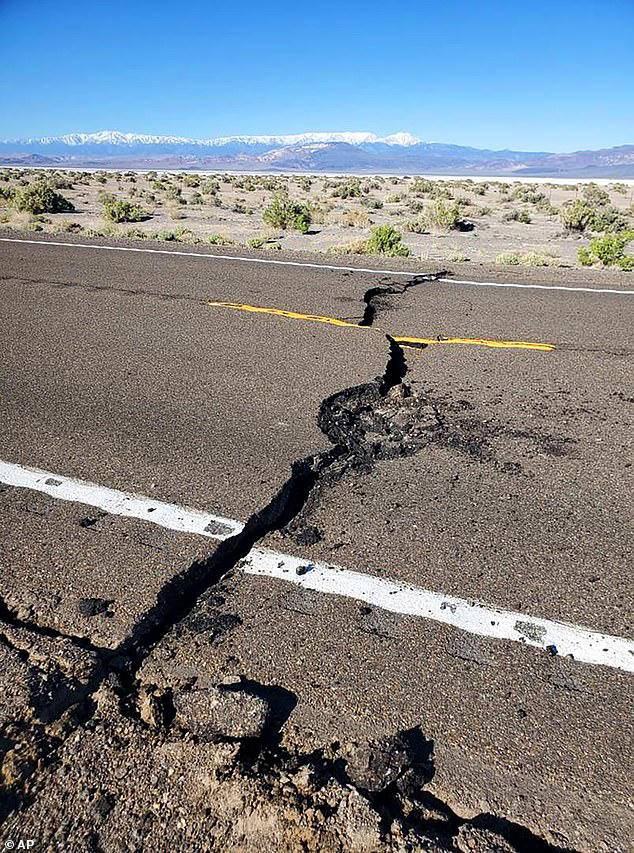
Nevada experienced multiple earthquakes on Monday, highlighting the region’s ongoing seismic activity in an area where the Earth’s crust is gradually pulling apart. The U.S. Geological Survey (USGS) reported two tremors near the town of Empire, measuring 3.5 and 3.8 in magnitude, with the later quake striking at 11:08 a.m. PT (2:08 p.m. ET).
The earthquakes occurred in the Basin and Range Province, a vast geologic region spanning much of the western United States, where the continental crust is slowly stretching and thinning. This ongoing tectonic process produces frequent faulting, and the resulting movement along these faults is responsible for most of the earthquakes in the area.
Experts note that as the crust stretches, fractures known as faults form. When stress accumulates along these faults and is released suddenly, the result is seismic activity, ranging from minor tremors to potentially destructive earthquakes. Empire, a sparsely populated community, lies within one of Nevada’s more seismically active areas, influenced by major fault systems, including the Walker Lane zone—a large strike-slip fault system that accommodates motion between the Pacific and North American tectonic plates.
The magnitude of Monday’s earthquakes was sufficient to be felt in the area, although damage was minimal. Michigan Tech University’s assessment indicates that quakes below magnitude 2.5 are usually imperceptible to people, while those ranging from 2.5 to 5.4 are typically felt but rarely cause significant damage. For Monday’s quakes, the USGS received only two reports of shaking, reflecting the sparse population around Empire.
Although minor by global standards, the tremors are consistent with the region’s history of seismic activity. A larger 6.5-magnitude earthquake struck Nevada in 2020, likely caused by similar stretching and cracking within the Basin and Range Province. That event caused widespread concern, although most damage was limited due to the remote locations of many affected areas.
Understanding Nevada’s Seismic Risk
Nevada ranks as the nation’s third-most seismically active state, after California and Alaska. Earthquakes in the state are largely the result of natural tectonic processes, though human activities such as geothermal energy operations, mining, and underground fluid injection have occasionally triggered smaller tremors. Volcanic or geothermal processes, particularly the movement of underground heat and fluids, can also generate tremors, but these are less common than tectonic causes.
The earthquakes in Empire were generated along existing fault lines in an area where the crust is actively being stretched. This tectonic stress often produces a series of smaller aftershocks following larger quakes, creating clusters of seismic activity over days or weeks. In this context, Monday’s tremors, measuring 3.5 and 3.8, may be part of a continuing series of minor events as the Earth adjusts along the regional fault lines.
Residents in Empire and nearby communities reported feeling the tremors, although there were no immediate reports of damage or injuries. Many locals are accustomed to the occasional tremor and take such events in stride, though the experience can still be unsettling. “It’s always a reminder that we live in an active seismic area,” said one resident. “You feel it, but you also know it’s part of life here.”
False Alarm Highlights Challenges of Earthquake Monitoring
Monday’s tremors are the latest in a series of seismic events that have kept Nevada residents on edge. Just over a month ago, on December 4, 2025, residents were startled when their phones issued an emergency alert for a supposed 5.9-magnitude earthquake near Carson City, Nevada. The alert, part of the USGS ShakeAlert system, instructed people to “Drop, Cover, Hold On!” across a wide area, reaching as far as 200 miles away.
Minutes later, the USGS removed the event from its system, confirming that the reported earthquake had not occurred. MyShake, the app relaying ShakeAlert warnings, verified that it had transmitted a false alarm. The erroneous alert prompted confusion and concern across Nevada and California, illustrating the challenges of real-time earthquake monitoring in seismically active regions. The USGS pledged to provide additional information after reviewing the incident, emphasizing the importance of accurate alerts for public safety.
Despite occasional false alarms, experts agree that Nevada’s natural seismicity is real and ongoing. Earthquakes in the region are primarily linked to the slow, persistent stretching of the Earth’s crust. Over millions of years, this tectonic stretching has created the characteristic topography of the Basin and Range Province, with alternating mountains and valleys. The faults formed in the process remain active, producing quakes of varying magnitude on a regular basis.
The Role of the Walker Lane Zone
The Walker Lane fault system, which runs through western Nevada, plays a significant role in the region’s seismic activity. The zone helps accommodate the motion between the Pacific and North American plates, taking on stress that might otherwise impact the San Andreas Fault system in California. Movement along the Walker Lane system is complex, involving strike-slip and normal faulting, which can produce a variety of earthquake types.
Although much of Nevada’s seismic activity occurs in sparsely populated areas, the potential for damage in more developed zones remains a concern. Modern infrastructure, including high-speed roads, bridges, and buildings, is generally built to withstand moderate earthquakes, but stronger quakes could pose a serious threat to both property and life. Emergency management agencies in the state maintain earthquake response protocols and regularly educate the public on preparedness measures.
Preparedness and Public Awareness
Living in a seismically active state like Nevada requires awareness and readiness. Experts recommend that residents familiarize themselves with earthquake safety practices, such as “Drop, Cover, and Hold On,” and maintain emergency kits with supplies for at least 72 hours. Early warning systems, such as ShakeAlert, provide crucial seconds for people to take protective action, though as the December 2025 incident demonstrated, occasional false alarms can undermine confidence in these systems.
Despite these challenges, the USGS continues to monitor Nevada’s faults closely, using a network of seismometers to track tremors and analyze trends. Data from these instruments inform hazard assessments, guide building codes, and improve emergency preparedness planning.
Looking Ahead
Monday’s earthquakes near Empire serve as a reminder that Nevada’s tectonic activity is ongoing and that even small tremors can impact communities. While no injuries or structural damage were reported, the events underscore the importance of understanding the region’s geology, maintaining infrastructure resilience, and ensuring public readiness.
Residents are encouraged to stay informed about seismic activity, participate in drills, and prepare for potential larger events in the future. Experts emphasize that while minor quakes are frequent, the long-term risk remains real, and careful monitoring, combined with public education, is essential to minimizing the impact of Nevada’s natural seismic hazards.
As the Earth’s crust continues to slowly pull apart across the Basin and Range Province, scientists expect that minor earthquakes will remain common. Larger, more destructive events are less frequent but not impossible, making Nevada a state where both awareness and preparedness are critical for public safety.

Emily Johnson is a critically acclaimed essayist and novelist known for her thought-provoking works centered on feminism, women’s rights, and modern relationships. Born and raised in Portland, Oregon, Emily grew up with a deep love of books, often spending her afternoons at her local library. She went on to study literature and gender studies at UCLA, where she became deeply involved in activism and began publishing essays in campus journals. Her debut essay collection, Voices Unbound, struck a chord with readers nationwide for its fearless exploration of gender dynamics, identity, and the challenges faced by women in contemporary society. Emily later transitioned into fiction, writing novels that balance compelling storytelling with social commentary. Her protagonists are often strong, multidimensional women navigating love, ambition, and the struggles of everyday life, making her a favorite among readers who crave authentic, relatable narratives. Critics praise her ability to merge personal intimacy with universal themes. Off the page, Emily is an advocate for women in publishing, leading workshops that encourage young female writers to embrace their voices. She lives in Seattle with her partner and two rescue cats, where she continues to write, teach, and inspire a new generation of storytellers.