


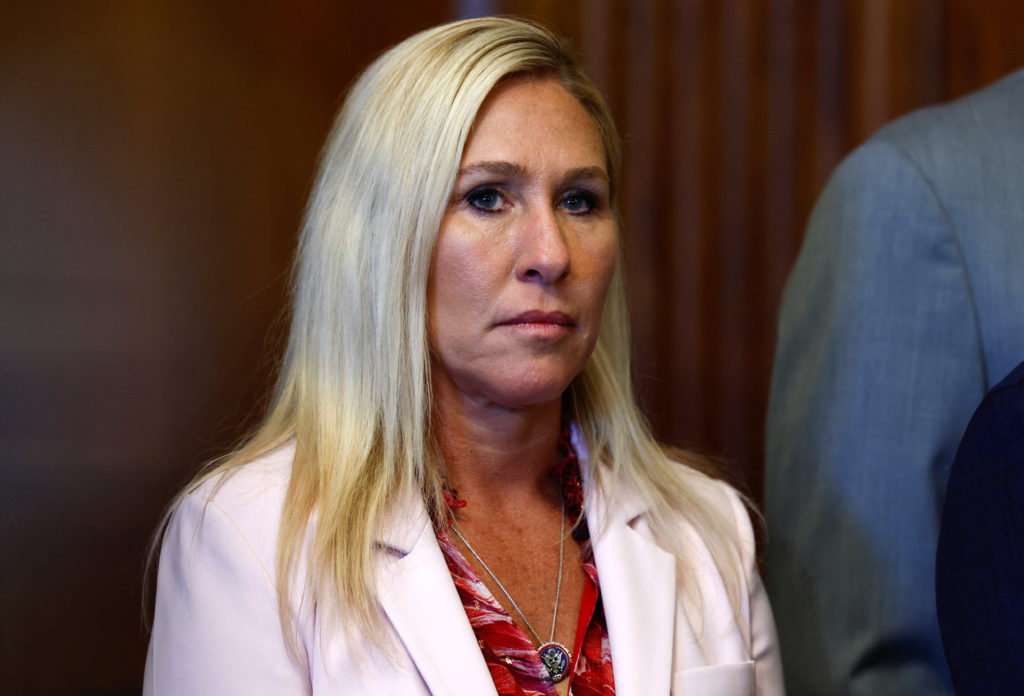
A departing Republican lawmaker from Georgia has escalated her public break with President Donald Trump, claiming that harsh criticism from the former ally triggered a wave of threats against her family and contributed directly to her decision to leave Congress.
In a wide-ranging interview aired Sunday on 60 Minutes, Rep. Marjorie Taylor Greene said that after Trump publicly branded her a “traitor,” she and her family became the target of serious threats, including what she described as direct death threats against her adult son and a pipe bomb threat aimed at her home. Greene framed the alleged threats as a turning point that made continuing her political career untenable.
The interview, conducted by veteran journalist Lesley Stahl, marked one of Greene’s most forceful public denunciations of Trump since their relationship collapsed late this year. It also provided the clearest account yet of Greene’s explanation for why she chose to resign from Congress rather than seek reelection.
A decision to step away
Greene announced on Nov. 21 that she would resign from her House seat effective Jan. 5, 2026, ending a turbulent tenure that made her one of the most polarizing figures in modern Republican politics. Her decision came just one week after Trump confirmed he would no longer support her reelection bid in her heavily Republican district.
During the interview, Stahl challenged Greene’s explanation, suggesting that rather than staying to fight, she chose to walk away. Greene rejected that framing, saying the personal cost had grown too high.
“After President Trump called me a traitor, I got a pipe bomb threat on my house,” Greene said. “And then I got several direct death threats on my son.”
Greene has two sons, ages 22 and 26. She did not identify which son was targeted or provide documentation of the threats during the broadcast, but she emphasized that they were serious enough to involve law enforcement.
The origins of the feud
The rift between Greene and Trump has its roots in several high-profile disagreements, but tensions boiled over in mid-November after Greene publicly accused Trump of fueling threats against her online. In a Nov. 15 post on X, she wrote that there was a “hot bed of threats” being encouraged by the former president’s rhetoric.
At the time, Greene did not explicitly mention death threats against her son or a pipe bomb threat. Stahl pressed her on that discrepancy during the interview, noting that Greene’s earlier post lacked those details.
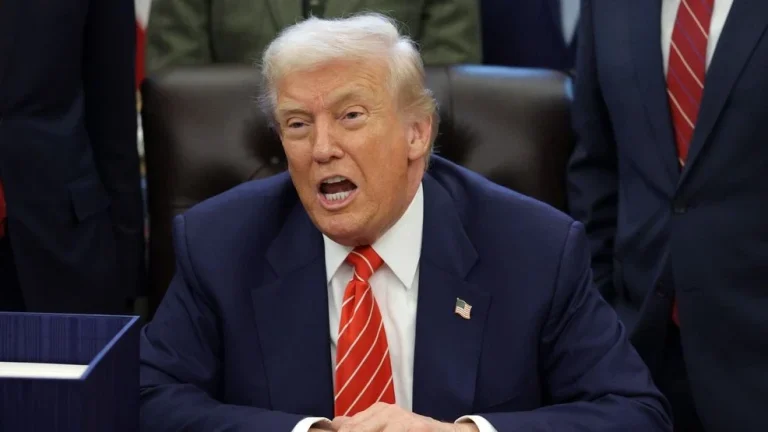
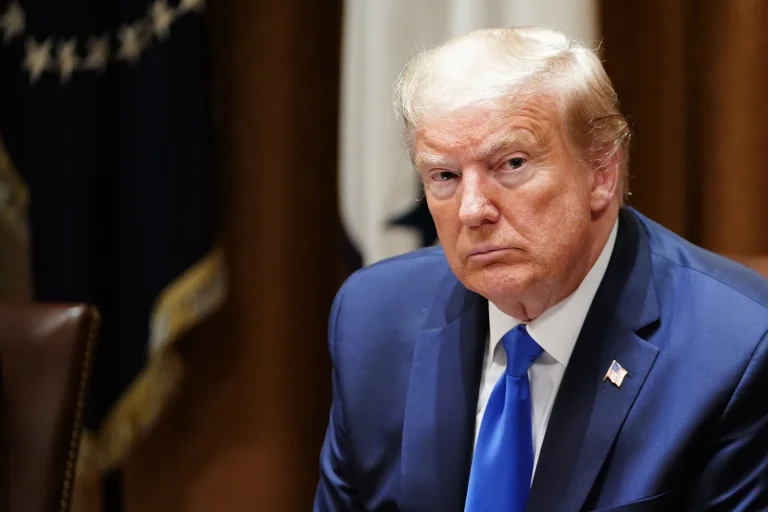
Greene responded by saying the threats escalated rapidly after Trump used the word “traitor” to describe her, a label he applied publicly on Nov. 16 when asked by reporters about Greene’s criticism of him.
“Marjorie ‘Traitor’ Greene,” Trump said at the time. “I don’t think her life is in danger. Frankly, I don’t think anybody cares about her.”
According to Greene, the subject line of the messages threatening her son explicitly echoed Trump’s words, using the phrase “Marjorie Traitor Greene.” She said this convinced her the threats were directly linked to Trump’s remarks.
Private appeals to party leadership
Greene told Stahl that she reached out directly to both Trump and Vice President J.D. Vance after receiving the threats, sending them the messages she said had been directed at her son.
“J.D. Vance replied back to me, ‘We’ll look into it,’” Greene said.
Her account of Trump’s response was notably less conciliatory. Greene said she received a reply but declined to share its contents publicly.
“I got response from President Trump that I will keep private,” she said. “But it wasn’t very nice.”
Pressed for further detail, Greene described the message only as “extremely unkind.”
A climate of fear inside the GOP
Beyond her personal experience, Greene used the interview to make sweeping claims about the internal dynamics of the Republican Party, arguing that fear of Trump’s retaliation keeps many lawmakers in line.
When Stahl asked whether Republicans support Trump out of fear that they, too, could face threats or harassment, Greene said the pressure is real.
“I think they’re terrified to step out of line and get a nasty Truth Social post on them,” she said.
Greene claimed that what Republican lawmakers say about Trump behind closed doors differs sharply from their public posture. According to her, many colleagues privately mocked Trump in the past but quickly shifted once he secured the 2024 nomination.
“I watched many of my colleagues go from making fun of him, making fun of how he talks, making fun of me constantly for supporting him, to when he won the primary in 2024 they all started kissing his a**,” Greene said. “They decided to put on a MAGA hat for the first time.”
She told Stahl that if the public heard how some Republicans speak privately, “it would shock people.”
Epstein files deepen the divide
One of the most consequential disagreements between Greene and Trump involved the release of documents related to Jeffrey Epstein. Greene acknowledged during the interview that the issue played a major role in her falling-out with the president.
She said Trump was furious after she signed a discharge petition designed to force a House vote on releasing the Epstein files. Greene framed her support for the effort as a moral obligation to victims.
“I fully believe that those women deserve everything they’re asking,” Greene said. “They’re asking for all of it to come out. They deserve it.”
Greene described confronting Trump directly about the issue, saying he warned her that releasing the files would hurt people. She said she pushed back, arguing that the people already harmed were the victims themselves.
“These women were raped at 14. They were raped at 16,” Greene said. “I watched them stand in front of the press trembling, their bodies shaking as they were telling their stories, many of them for the first time.”
She said she urged Trump to meet with the victims and hear them directly, though she did not say whether such a meeting ever occurred.
Trump ultimately reversed course and signed the Epstein Files Transparency Act into law on Nov. 19, after overwhelming bipartisan support in Congress. All voting House Republicans except one joined Democrats in backing the bill.
A dramatic political exit
Greene’s interview painted a picture of a lawmaker who believes she paid a personal price for defying the most powerful figure in her party. Whether her claims about threats will be independently substantiated remains unclear, but her allegations underscore the intense emotions and high stakes that now define Republican politics.
Once one of Trump’s most vocal defenders, Greene has become one of his most outspoken critics, accusing him of recklessness, cruelty, and indifference to the consequences of his words. Her decision to leave Congress closes a controversial chapter but also leaves open broader questions about the future of dissent within the GOP.
As Greene prepares to step away from elected office, she framed her departure not as surrender, but as a warning about the cost of crossing Trump in today’s political climate.
“I didn’t give in,” she said. “I protected my family.”
Whether her claims reshape public perceptions of Trump’s influence—or fade into the background of an already volatile political era—remains to be seen.

Emily Johnson is a critically acclaimed essayist and novelist known for her thought-provoking works centered on feminism, women’s rights, and modern relationships. Born and raised in Portland, Oregon, Emily grew up with a deep love of books, often spending her afternoons at her local library. She went on to study literature and gender studies at UCLA, where she became deeply involved in activism and began publishing essays in campus journals. Her debut essay collection, Voices Unbound, struck a chord with readers nationwide for its fearless exploration of gender dynamics, identity, and the challenges faced by women in contemporary society. Emily later transitioned into fiction, writing novels that balance compelling storytelling with social commentary. Her protagonists are often strong, multidimensional women navigating love, ambition, and the struggles of everyday life, making her a favorite among readers who crave authentic, relatable narratives. Critics praise her ability to merge personal intimacy with universal themes. Off the page, Emily is an advocate for women in publishing, leading workshops that encourage young female writers to embrace their voices. She lives in Seattle with her partner and two rescue cats, where she continues to write, teach, and inspire a new generation of storytellers.