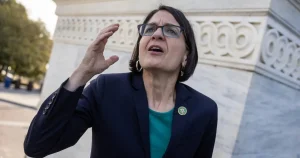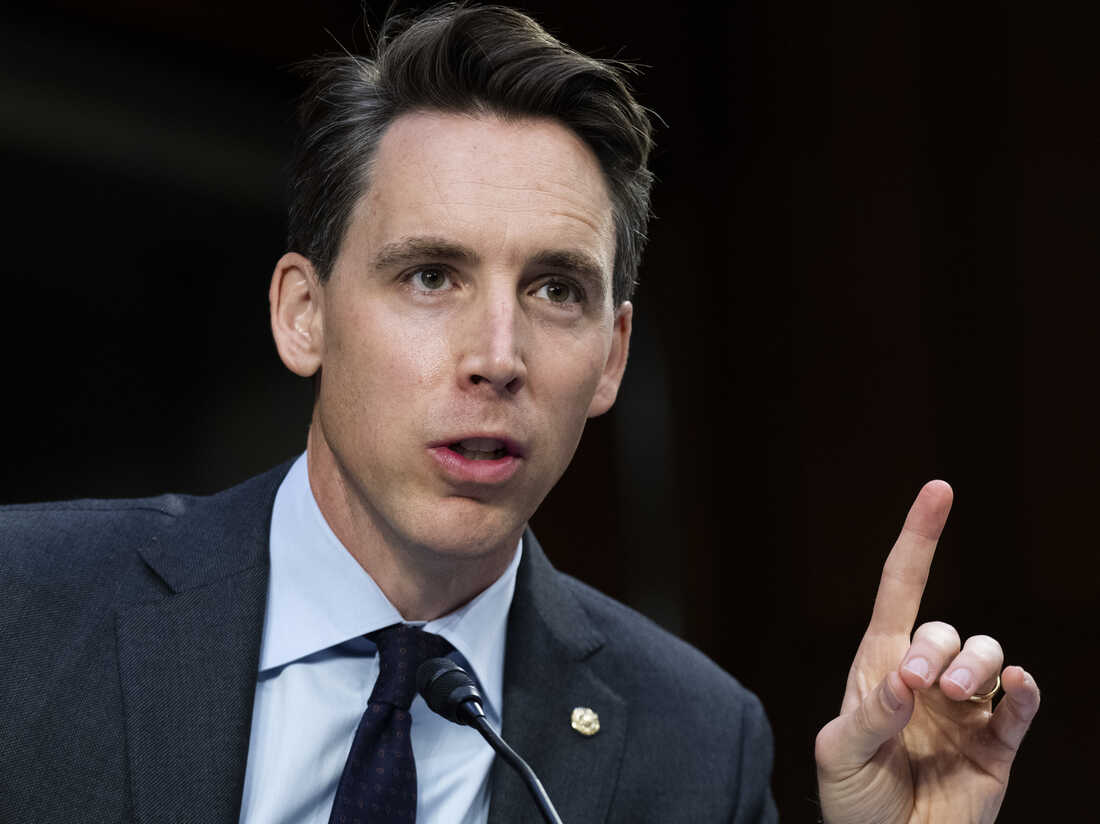
At a Senate Judiciary subcommittee hearing on Tuesday, legal scholar Kate Shaw, a University of Pennsylvania law professor and spouse of MSNBC contributor Chris Hayes, faced pointed questioning from Republican Senators John Kennedy (R-LA) and Josh Hawley (R-MO). The hearing focused on the controversial use of nationwide injunctions—federal court orders that block government policies from being enforced across the entire country—and whether they are being inconsistently applied depending on which political party holds executive power.
Shaw, invited by Democrats as an expert witness, found herself under fire for what the Republican senators alleged was a shift in her legal stance on the issue. Specifically, they referenced her previous criticisms of nationwide injunctions when Republican administrations were in power, and contrasted those statements with her more recent remarks under the administration of President Donald Trump.
Senator Kennedy was especially critical. He referenced past writings and public commentary in which Shaw expressed deep concern over the widespread use of such injunctions, suggesting they undermined judicial norms and created instability. However, Kennedy argued that Shaw now appears more supportive of the same judicial mechanism when it is used to counter Trump-era policies.
“Some of your writings suggest that you were strongly against the use of these injunctions not long ago,” Kennedy stated during the hearing. “But now that there’s been a change in the White House, they suddenly seem to taste like pumpkin pie.”
Kennedy pressed Shaw to explain what he perceived as a political recalibration of her legal views, challenging the consistency and objectivity of her arguments. He suggested that her legal positions might be more influenced by partisan politics than by principle, raising questions about the neutrality of legal scholars in politically charged judicial matters.
Senator Josh Hawley added to the critique, pointing to what he described as a broader trend among liberal legal academics: opposing tools like nationwide injunctions when conservative policies are at stake, but embracing them when the political tables turn. Hawley emphasized the importance of maintaining judicial consistency, regardless of which party controls the presidency.
Shaw attempted to defend her views, arguing that context matters in legal interpretation and that each injunction must be evaluated based on its scope, necessity, and impact on civil rights. She maintained that her legal reasoning has been rooted in constitutional principles rather than political expediency.
Despite her defense, the exchange highlighted the increasing politicization of legal scholarship and the growing scrutiny experts face when testifying before Congress. The confrontation served as a reminder that in today’s hyper-partisan environment, even academic analysis is not immune from political interrogation.
While supporters of Shaw argue she is being unfairly targeted for her legal opinions, critics insist that her shifting stance reflects a broader double standard within elite legal circles—one that conveniently aligns with progressive political goals.
The heated hearing has since circulated widely online, with clips of the exchanges garnering significant attention and fueling further debate about judicial activism and the impartiality of academic experts in the legal arena.

James Jenkins is a celebrated Pulitzer Prize-winning author whose work has reshaped the way readers think about social justice and human rights in America. Raised in Atlanta, Georgia, James grew up in a community that instilled in him both resilience and a strong sense of responsibility toward others. After studying political science and creative writing at Howard University, he worked as a journalist covering civil rights issues before dedicating himself fully to fiction. His novels are known for their sharp, empathetic portraits of marginalized communities and for weaving personal stories with broader political realities. Jenkins’s breakout novel, Shadows of Freedom, won national acclaim for its unflinching look at systemic inequality, while his more recent works explore themes of identity, resilience, and the fight for dignity in the face of oppression. Beyond his novels, James is an active public speaker, lecturing at universities and participating in nonprofit initiatives that support literacy and community empowerment. He believes that storytelling is a way to preserve history and inspire change. When not writing, James enjoys jazz music, mentoring young writers, and traveling with his family to explore cultures and stories around the world.