



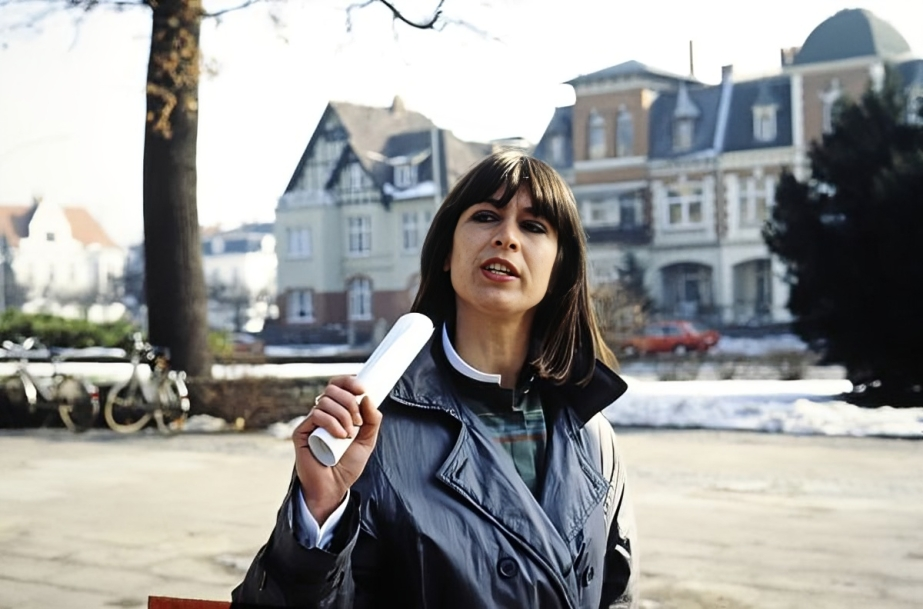
In March 1981, a courtroom in northern Germany became the scene of an act that would reverberate far beyond its walls. What had begun as a murder trial abruptly turned into another killing—this time carried out not in secrecy, but in full view of judges, lawyers, journalists, and members of the public. At the center of the घटना was a grieving mother, a man accused of murdering her young daughter, and a justice system already under intense scrutiny.
The case had begun nearly a year earlier with the death of seven-year-old Anna Bachmeier. On May 5, 1980, the young girl was found dead, a discovery that stunned her community and prompted a swift police investigation. The crime was widely reported, and public outrage grew as details emerged. The man eventually arrested in connection with her death was Klaus Grabowski, who later admitted to killing the child.
Grabowski’s arrest came after his fiancée alerted authorities, a decision that led to his confession. Reports at the time indicated that suspicions also arose regarding possible sexual assault, though Grabowski denied those allegations. What intensified public anger further was his prior criminal record, which included convictions related to child molestation. Many questioned how someone with such a history had been free, and whether the system had failed to prevent a tragedy.
As the trial approached, emotions ran high. For Anna’s mother, the courtroom proceedings were not merely a legal process but a painful reliving of loss. Each hearing required her to sit within sight of the man accused of ending her daughter’s life. Media coverage ensured that the case remained in the public eye, amplifying the grief and anger felt by many.
On March 4, 1981, during one of the trial sessions in Lübeck, events took an extraordinary and violent turn. The mother, Marianne Bachmeier, entered the courtroom carrying a .22-caliber Beretta pistol concealed in her belongings. At a moment when Grabowski was present before the court, Bachmeier drew the weapon and fired eight shots. Six bullets struck Grabowski, who collapsed and later died from his injuries.
Witnesses described a scene of shock and chaos. Court officials and police officers quickly intervened, disarming Bachmeier and taking her into custody. According to reports from those present, she shouted words expressing her hatred and grief as she fired. The killing unfolded in seconds, but its impact would last for decades.
The immediate aftermath was marked by a mixture of horror and sympathy. On one hand, a man had been killed in a courtroom—an environment meant to embody order, due process, and the rule of law. On the other, the shooter was a mother whose child had been brutally murdered. For many observers, the घटना was impossible to view in purely legal terms. It was laden with emotion, pain, and questions about justice.
German media quickly labeled Bachmeier the “Revenge Mother,” a title that captured both the drama and the controversy of her actions. Public opinion was sharply divided. Some citizens expressed understanding, even admiration, for what they saw as a mother driven beyond endurance by grief. Others argued that no matter the circumstances, taking a life in a court of law undermined the very foundations of justice.
Legal proceedings against Bachmeier began soon after. Prosecutors had to determine whether her actions constituted murder or premeditated manslaughter. The fact that she had brought a firearm into the courtroom suggested planning. At the same time, her defense emphasized the intense psychological strain she had endured since her daughter’s death.
In 1983, a court convicted Marianne Bachmeier of premeditated manslaughter. She was sentenced to six years in prison. Ultimately, she served approximately half of that term before being released. The relatively limited sentence reflected, in part, the court’s consideration of mitigating circumstances, including her emotional state and the extraordinary context of the crime.
The case ignited a broader debate in Germany about vigilantism, grief, and the purpose of the criminal justice system. Legal scholars pointed out that the rule of law depends on the principle that justice is administered by impartial institutions, not by individuals acting on personal pain or anger. If courtroom violence were tolerated or excused, they argued, it would erode public trust in the system.
At the same time, many parents and advocacy groups voiced empathy for Bachmeier. They spoke of the unique devastation caused by crimes against children and questioned whether existing laws adequately reflected the gravity of such offenses. While few openly endorsed her actions as lawful, some framed them as an understandable, if tragic, response to unbearable loss.
Over time, the story became part of modern German history, frequently cited in discussions about victims’ rights and emotional trauma. Documentaries, articles, and television programs revisited the events, examining not only the shooting itself but also the societal conditions that shaped public reaction.
Interest in the case resurfaced decades later when footage reconstructing the courtroom shooting circulated online in 2022. A new generation encountered the story, prompting fresh debate on social media platforms. Comments ranged widely in tone. Some users expressed sympathy for the mother’s grief and described her actions as an expression of “feminine rage.” Others cautioned against glorifying violence, emphasizing the importance of due process and the dangers of normalizing revenge.
https://www.youtube.com/watch?v=YnaOvWeiBQw&t=26s
One recurring theme in these discussions was the visible exhaustion on Bachmeier’s face in courtroom images taken before the shooting. Observers remarked on the emotional toll that prolonged legal proceedings can take on victims’ families. Psychologists have long noted that traumatic loss can produce profound anger, despair, and a sense of helplessness—feelings that, if unaddressed, may lead to extreme actions.
Yet the legal system’s role is precisely to channel such emotions into structured, lawful outcomes. Courts are designed to weigh evidence, ensure fairness, and impose sentences according to established statutes. The killing of Grabowski in the courtroom deprived the judicial process of its conclusion and complicated the search for closure.
The case also raised practical questions about courtroom security. How had a firearm been brought into a trial involving a highly emotional and widely publicized child murder case? In the years that followed, many jurisdictions reassessed security protocols to prevent similar incidents.
For Marianne Bachmeier, life after prison remained marked by the events of 1981. Though she found supporters who viewed her with compassion, she also carried the burden of having taken a life. The dual identity imposed upon her—both grieving mother and convicted killer—ensured that her story would remain complex and contested.
Ultimately, the tragedy encompasses more than a single act of violence. It includes the loss of a child, the failures that may have preceded that loss, the public’s struggle to reconcile empathy with legality, and the enduring tension between personal vengeance and institutional justice.
More than four decades later, the courtroom shooting continues to prompt reflection. It forces difficult questions: Can grief ever justify taking the law into one’s own hands? Does understanding an action lessen its moral weight? And how should societies balance compassion for victims with unwavering commitment to the rule of law?
There are no simple answers. What remains undeniable is that the events of March 4, 1981, transformed a murder trial into a defining moment in Germany’s legal and cultural history. The case stands as a stark reminder of the profound depths of parental grief—and of the fragile line between justice sought and justice undone.

Emily Johnson is a critically acclaimed essayist and novelist known for her thought-provoking works centered on feminism, women’s rights, and modern relationships. Born and raised in Portland, Oregon, Emily grew up with a deep love of books, often spending her afternoons at her local library. She went on to study literature and gender studies at UCLA, where she became deeply involved in activism and began publishing essays in campus journals. Her debut essay collection, Voices Unbound, struck a chord with readers nationwide for its fearless exploration of gender dynamics, identity, and the challenges faced by women in contemporary society. Emily later transitioned into fiction, writing novels that balance compelling storytelling with social commentary. Her protagonists are often strong, multidimensional women navigating love, ambition, and the struggles of everyday life, making her a favorite among readers who crave authentic, relatable narratives. Critics praise her ability to merge personal intimacy with universal themes. Off the page, Emily is an advocate for women in publishing, leading workshops that encourage young female writers to embrace their voices. She lives in Seattle with her partner and two rescue cats, where she continues to write, teach, and inspire a new generation of storytellers.