


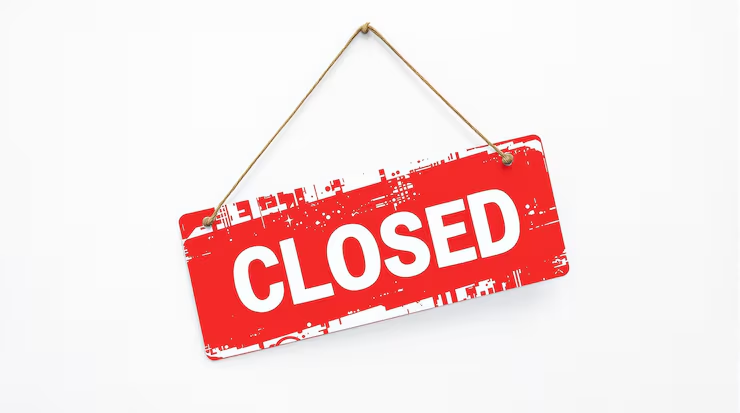
The U.S. retail and restaurant sectors are entering another phase of contraction as chains across the country announce plans to close hundreds of locations this year. Analysts say this reflects a continuation of trends that have reshaped the industry over the past two years, driven by shifting consumer habits, e-commerce growth, and rising operating costs.
After years of expansion, many companies are now strategically reducing their physical footprints to focus on stronger-performing locations and digital channels. Business Insider tracked roughly 4,100 closures in 2025, while consultancy Coresight Research had predicted about 15,000 retail locations would shutter over the course of that year. For 2026, early data show around 870 closures have already been planned.
Fast-Food Chains Lead the Closures
Wendy’s, the U.S.-based burger chain with approximately 6,000 domestic locations, is expected to close roughly 300 underperforming restaurants. The company announced the closures during a November 2025 earnings call, noting that the closures represent a “mid-single-digit percentage” of its total U.S. locations. Wendy’s interim CEO Ken Cook emphasized that this move will allow the company to focus on areas with higher potential for growth.
Pizza Hut is also undergoing a restructuring effort, closing 250 underperforming U.S. locations in the first half of 2026. Yum! Brands, the parent company, said the closures are part of a long-term strategy to accelerate the brand. Although the closures represent just a fraction of Pizza Hut’s global footprint of approximately 20,000 stores, the decision highlights the chain’s ongoing efforts to optimize operations.
Department Stores and Specialty Retailers
Traditional department stores are also significantly reducing their physical presence. Macy’s plans to close 80 stores in 2026 as part of a multiyear strategy that will ultimately see the company operate roughly 350 locations nationwide. These closures are designed to allow Macy’s to focus on its most profitable stores and enhance its online retail platform. The chain had already closed at least 66 stores in 2025.
Carter’s, a leading children’s apparel retailer, plans to shutter 100 stores by the end of 2026. This is part of a broader three-year plan to close 150 locations across North America as leases expire, reflecting a strategic shift toward e-commerce and optimized store operations.
Saks Off 5th, the discount luxury outlet of Saks Fifth Avenue, is set to close 57 stores in early 2026. The closures follow the company’s parent, Saks Global, filing for Chapter 11 bankruptcy in January. Saks Global is also winding down its Last Call locations, which are off-price Neiman Marcus outlets. The closures illustrate challenges faced by higher-end retailers in maintaining profitability amid changing consumer behavior.
Grocery and Specialty Chains
The grocery sector is seeing consolidation as well. Kroger plans to close 60 unprofitable stores over the next 18 months, part of a broader effort to focus on its top-performing supermarkets. As of February 2025, Kroger operated 2,731 stores across 35 states and Washington, D.C.
Yankee Candle, owned by Newell Brands, will shutter 20 U.S. and Canadian stores beginning in early 2026. The closures accompany a workforce reduction of over 900 employees, as the company seeks to streamline operations and sharpen strategic focus. CEO Chris Peterson described the move as a “disciplined step to enhance efficiency and deliver stronger, more consistent performance.”
REI, the outdoor gear retailer, plans to close three stores in 2026, starting with a location in New Jersey in the first quarter. Locations in New York City’s SoHo neighborhood and Boston are expected to close later in the year. The company emphasized that these closures are part of a strategy to adapt to changing market conditions and customer needs.
Trends Driving Closures
Industry analysts point to several factors driving this wave of store reductions. E-commerce growth has accelerated during the past decade, with consumers increasingly preferring online shopping over in-store visits. Rising commercial rents, labor costs, and supply chain pressures have also contributed to decisions to shutter underperforming locations.
Retailers are shifting resources toward digital platforms and smaller, strategically placed stores, aiming to maximize profitability while maintaining brand presence. For restaurant chains, similar trends are at play, with closures concentrated on underperforming units while top locations receive investment for modernization and delivery-focused operations.
Implications for Consumers and Employees
The wave of closures is expected to affect thousands of employees and could reshape local retail landscapes, particularly in smaller towns where chains like Carter’s and Wendy’s often serve as anchor tenants. Consumers may see fewer physical locations but can expect expanded digital shopping options and improved e-commerce services.
The closures also signal broader structural shifts in the U.S. economy. As physical retail spaces contract, landlords and commercial real estate firms may need to repurpose or sell properties to adapt to declining demand. Meanwhile, employees displaced by closures may require retraining or relocation support, highlighting the human cost of retail transformation.
Looking Ahead
Experts anticipate that store closures will remain a feature of the U.S. retail landscape for the foreseeable future. Companies are increasingly prioritizing efficiency and customer experience over sheer scale, and 2026 appears set to be another year of substantial restructuring across both retail and restaurant sectors.
For consumers, this means fewer brick-and-mortar options but potentially more focused, efficient stores and enhanced online experiences. For businesses, it is a reminder that adaptation and strategic resource allocation are key to surviving in a rapidly evolving market environment.
In summary, 2026 will see major brands like Wendy’s, Pizza Hut, Macy’s, Carter’s, Saks Off 5th, Kroger, Yankee Candle, and REI streamline their operations, closing hundreds of locations as part of broader strategic plans to navigate the evolving retail landscape. The closures reflect a continued shift toward e-commerce, efficiency, and market responsiveness, with significant implications for employees, consumers, and the industry as a whole.

Emily Johnson is a critically acclaimed essayist and novelist known for her thought-provoking works centered on feminism, women’s rights, and modern relationships. Born and raised in Portland, Oregon, Emily grew up with a deep love of books, often spending her afternoons at her local library. She went on to study literature and gender studies at UCLA, where she became deeply involved in activism and began publishing essays in campus journals. Her debut essay collection, Voices Unbound, struck a chord with readers nationwide for its fearless exploration of gender dynamics, identity, and the challenges faced by women in contemporary society. Emily later transitioned into fiction, writing novels that balance compelling storytelling with social commentary. Her protagonists are often strong, multidimensional women navigating love, ambition, and the struggles of everyday life, making her a favorite among readers who crave authentic, relatable narratives. Critics praise her ability to merge personal intimacy with universal themes. Off the page, Emily is an advocate for women in publishing, leading workshops that encourage young female writers to embrace their voices. She lives in Seattle with her partner and two rescue cats, where she continues to write, teach, and inspire a new generation of storytellers.