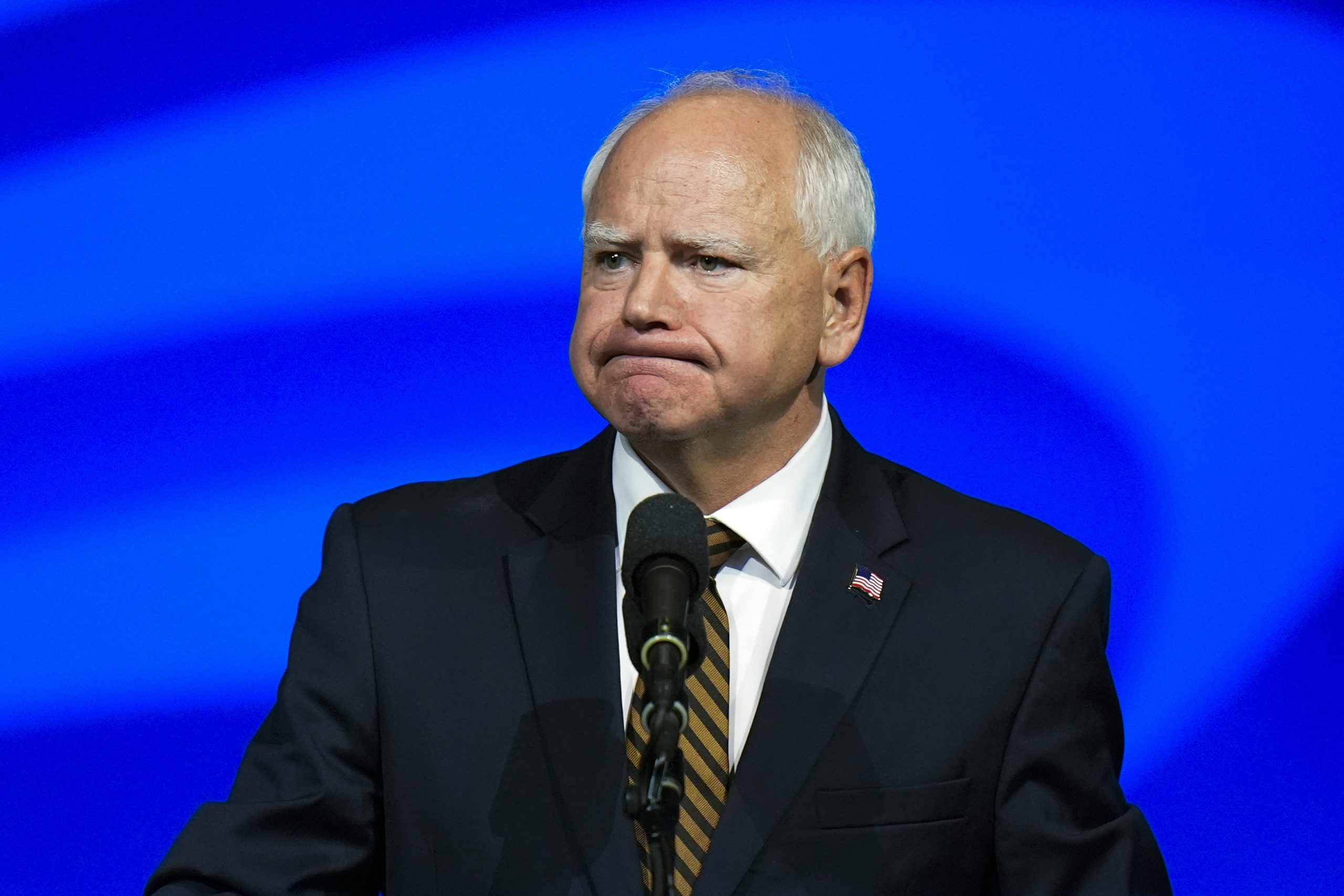
In a development that has reshaped Minnesota’s political landscape, Governor Tim Walz announced that he will not seek reelection and has suggested that his time in electoral politics is coming to a close. The decision marks a significant turning point in the career of a prominent Democratic leader who has held public office for more than a decade and recently rose to national visibility as a vice presidential nominee.
Walz’s announcement, delivered amid mounting public scrutiny and political pressure, brings an end to what had been a planned campaign for a third term as governor. Minnesota’s governorship has been held by Democrats for several years, and Walz’s exit is likely to have far‑reaching implications for both state and national politics heading into 2026.
A Shifting Political Landscape in Minnesota
The governor officially declared his intention earlier in the year to pursue another term, appearing to be setting up a campaign for reelection. However, after months of contentious political battles and sustained criticism of his administration’s handling of major issues, Walz reversed course and formally ended his campaign.
In White House parlance, Walz was thrust into the national spotlight in 2024 as the Democratic vice presidential nominee alongside Vice President Kamala Harris, representing a broader national profile than many governors typically attain. Despite that elevated platform, his political fortunes in Minnesota took an unexpected turn as events unfolded through late 2025 and early 2026.
Reasons Cited for the Decision
Walz has explained that his decision to step away from the reelection contest largely stems from intense political scrutiny and the realities of governing amid controversy. He stated in an interview that he does not have the capacity to fully commit to a political campaign while also handling the pressing responsibilities and challenges Minnesota faces.
“I will never run for an elected office again. Never again,” he said in a recent interview, using strong language to close the door on future political campaigns. He noted that his energy and focus are better devoted to public service outside of electoral competition, particularly given the fraught political environment and the ongoing demands of state governance.
Walz framed his decision as a choice dictated by priorities rather than political retreat. By emphasizing his commitment to Minnesota’s needs over political aspirations, he underlined a desire to contribute in ways that do not involve campaigning or seeking another term in office.
The Context: Controversies and Challenges
Walz’s decision did not emerge in a vacuum. Over recent months, his administration has faced heightened criticism over its handling of a sweeping fraud scandal involving state assistance programs. Investigations into alleged misuse of funds, including reports of billions of dollars in questionable claims related to childcare and other support services, have put Walz and his administration under intense political and public scrutiny.
Republican opponents have seized on the fraud investigations as evidence of administrative mismanagement. Some state lawmakers and federal Republicans have called for increased accountability, suggesting that the governor’s leadership be held to account for the fallout from these scandals.
For his part, Walz has defended his administration’s efforts and insisted that focusing on governance, rather than electoral politics, is the best way to address ongoing problems. He framed his decision not to run again as a pragmatic response to the political context, asserting that devoting attention to governance would better serve Minnesotans.
In his remarks, Walz also pointed to what he described as “political gamesmanship” from opponents that has made it harder to tackle core issues. In particular, he has criticized former President Donald Trump and Republican allies for their rhetoric and political attacks, which Walz argues have further polarized the state and complicated efforts to focus on governance.
Public and Political Reactions
The reaction to Walz’s announcement has been mixed, reflecting the deep political divisions within Minnesota and across the national political scene.
Supporters and fellow Democrats have acknowledged Walz’s service, highlighting his contributions to state policies such as expanded social programs and educational initiatives. Statements from state and local leaders have celebrated his leadership and expressed gratitude for his years of public service, even as they recognize the difficult political context in which his decision was made.
By contrast, critics have framed the decision as overdue, emphasizing dissatisfaction with the governor’s handling of the fraud investigations and broader political strategy. Some Republican lawmakers have suggested that Walz’s decision not to run is the result of pressure and declining political capital, while continuing to call for additional oversight and accountability measures.
The spectrum of responses illustrates how Walz’s tenure and abrupt shift from reelection front‑runner to political exit have become emblematic of broader partisan battles in Minnesota. The state, known for a closely divided electorate and intense political competition, now faces a key election without an incumbent seeking another term.
Implications for the 2026 Gubernatorial Race
Walz’s announcement has immediately reshaped the 2026 governor’s race in Minnesota. Without an incumbent on the ballot, the race is now open and competitive, inviting interest from both parties. Among potential Democratic contenders considering a bid is U.S. Senator Amy Klobuchar, a seasoned lawmaker with statewide name recognition and a strong electoral track record.
Klobuchar’s entry into the race could signal an effort by Democrats to retain control of the governor’s office amid a politically charged environment. Other candidates—both Democratic and Republican—will likely emerge as the campaign season progresses, setting the stage for a highly contested campaign.
On the Republican side, a competitive field of challengers is also expected to vie for the open seat. Recent GOP primaries have drawn interest from figures across the state’s political spectrum, though no candidate has yet secured a clear frontrunner position. The absence of an incumbent provides Republicans with an opportunity to make gains in a state that has historically seen tight electoral margins.
Given Minnesota’s political dynamics, the open seat will likely draw national attention. Political analysts view the governor’s race as a bellwether for shifts in party strength and public sentiment, particularly in the Midwest—a region often viewed as a political battleground in state and national elections.
Walz’s Legacy and Post‑Political Plans
As the state looks ahead to its next governor, attention has also turned to how Walz will be remembered and what he plans to do beyond elected office. Having served in federal and state roles for more than a decade—including multiple terms in the U.S. House of Representatives followed by two terms as governor—Walz’s career has included both policymaking accomplishments and periods of intense criticism.
Walz has made clear that, while he is stepping away from electoral politics, he intends to continue serving the public in other ways. Though he did not specify his future path, he emphasized that there are “other ways to serve” outside of campaigning or holding elected office.
Whether through nonprofit work, civic engagement, or other forms of public service, Walz’s post‑electoral career may shape his broader legacy, particularly if he uses his experience to advocate for issues important to Minnesota and to communities across the nation.
For now, his decision not to seek reelection marks the end of one chapter and the beginning of another both for him and for Minnesota politics.

Emily Johnson is a critically acclaimed essayist and novelist known for her thought-provoking works centered on feminism, women’s rights, and modern relationships. Born and raised in Portland, Oregon, Emily grew up with a deep love of books, often spending her afternoons at her local library. She went on to study literature and gender studies at UCLA, where she became deeply involved in activism and began publishing essays in campus journals. Her debut essay collection, Voices Unbound, struck a chord with readers nationwide for its fearless exploration of gender dynamics, identity, and the challenges faced by women in contemporary society. Emily later transitioned into fiction, writing novels that balance compelling storytelling with social commentary. Her protagonists are often strong, multidimensional women navigating love, ambition, and the struggles of everyday life, making her a favorite among readers who crave authentic, relatable narratives. Critics praise her ability to merge personal intimacy with universal themes. Off the page, Emily is an advocate for women in publishing, leading workshops that encourage young female writers to embrace their voices. She lives in Seattle with her partner and two rescue cats, where she continues to write, teach, and inspire a new generation of storytellers.