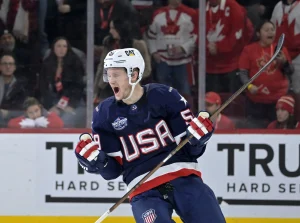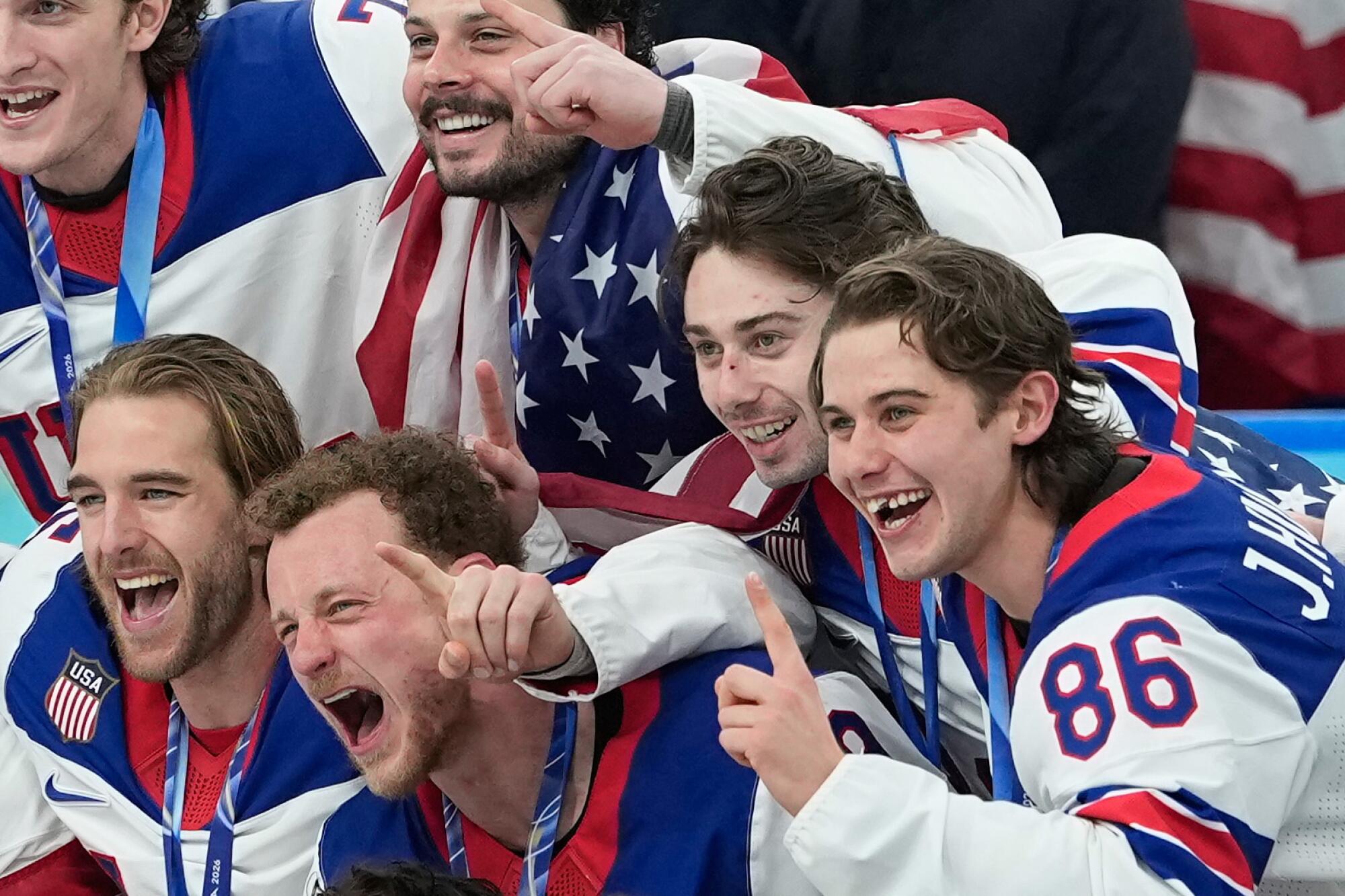
Olympic victory is supposed to be a moment of pure celebration. Gold medals, international acclaim, and the culmination of years of grueling training all make the months and years of preparation worthwhile. For the U.S. men’s hockey team, this year’s Winter Olympics delivered a historic triumph: a 2-1 overtime victory against Canada that brought home the first men’s Olympic gold since the famed Miracle on Ice in 1980.
Meanwhile, the U.S. women’s hockey team also celebrated their own 2-1 victory over Canada just days prior, further cementing their legacy as one of the most consistently dominant teams in international competition. Yet the celebrations were soon overshadowed by controversy — not over the wins themselves, but over a series of high-profile invitations to attend the President’s upcoming State of the Union address.
Both teams were formally invited to Washington for the nationally televised event, a gesture designed to honor their Olympic achievements and showcase American athletic excellence. While some expected the invitation to be an uncontroversial ceremonial opportunity, the reality proved far more complicated. Social media quickly erupted with speculation over how each team would respond, with particular attention focused on the women’s squad, who have out-medaled the men in three consecutive Winter Olympics.
The women’s team ultimately declined the invitation, citing prior commitments to academic and professional responsibilities following the Games. A team spokesperson issued a statement emphasizing gratitude for the recognition while explaining that scheduling conflicts prevented them from attending. “We are sincerely grateful for the invitation extended to our gold medal-winning U.S. Women’s Hockey Team and deeply appreciate the recognition of their extraordinary achievement,” the statement read. “Due to the timing and previously scheduled academic and professional commitments following the Games, the athletes are unable to participate. They were honored to be included and are grateful for the acknowledgement.”
The women’s decision quickly made headlines and dominated social media feeds. Supporters applauded the team’s prioritization of personal and professional obligations, highlighting the pressures athletes face beyond the rink. Critics, however, questioned whether declining the invitation might be interpreted as a political statement, sparking debate over the intersection of sports, politics, and public appearances.
While the media and the public debated the implications, attention naturally shifted to the U.S. men’s team. As the first gold medal-winning men’s team in over four decades, they too were invited to attend the White House. Analysts and fans wondered how the men would respond to the women’s decision — whether they would voice support, critique, or remain neutral. For a group whose camaraderie and unity have been central to their success, the question posed a delicate balancing act: how to respect their fellow athletes while managing public perception.
Reports indicate that, behind the scenes, the men’s team had lengthy conversations about the optics of their response. Coaches, team leaders, and individual athletes weighed the implications of speaking out versus maintaining silence. Several players reportedly expressed admiration for the women’s team’s accomplishments, emphasizing that their own victories were inseparable from the shared experience of representing Team USA on the world stage.
For much of the early week following the Games, the men’s team maintained a public focus on their own achievements, declining to comment on the women’s decision. Speculation continued to swirl on social media, with fans posting polls, memes, and opinion pieces debating how the men should respond — and whether their response would be supportive, dismissive, or neutral. Analysts noted that in high-profile sports, silence can be interpreted in multiple ways, adding pressure for athletes to carefully craft their public statements.
Finally, around midweek, the men’s team made their position known. Jake Guentzel, one of the squad’s standout forwards and a key contributor to the gold medal win, addressed the situation publicly. The team expressed full support and respect for the women’s decision, emphasizing understanding of the pressures the female athletes faced in balancing post-Olympic obligations.
Guentzel commented: “We have so much respect for our women’s team. They’ve had an incredible run, and we understand they have commitments outside the rink that can’t be shifted. We’re proud of them, just as we hope they’re proud of us. At the end of the day, we’re all Team USA, and we celebrate each other’s achievements, no matter what.”
Other team members echoed the sentiment. Defenseman and alternate captain noted, “Everyone knows how hard they work and how much they’ve sacrificed. Their decision doesn’t take away from what they’ve accomplished. We support them 100 percent, and we hope everyone sees that it’s about mutual respect, not politics.”
The men’s response was widely praised as thoughtful, measured, and respectful. Sports commentators and analysts lauded the team for handling a potentially divisive issue with grace. By emphasizing unity and mutual admiration, the team navigated the controversy without politicizing their own victory or undermining their female counterparts.
Social media, which had been awash with speculation and heated debate, quickly shifted to highlight the men’s respectful reaction. Clips of Guentzel and his teammates speaking about the women’s team circulated widely, garnering support from fans, former Olympians, and fellow athletes. The message was clear: victory on the ice does not necessitate division off it, and the men were eager to show that athletic excellence and team spirit transcend political optics.
The incident has sparked a broader conversation about the pressures faced by Olympic athletes, particularly in the United States. Both men’s and women’s teams operate under intense scrutiny, balancing performance expectations, media obligations, sponsorship commitments, and public attention. Invitations to high-profile political events add yet another layer of complexity, as athletes must navigate potential political interpretations, media coverage, and public perception — all while recovering from the physical and emotional toll of international competition.
Experts in sports management noted that the men’s team response highlights a critical aspect of professional athletics: leadership. In situations where teammates, peers, and the public look to athletes for guidance, measured statements can defuse controversy and maintain focus on shared accomplishments. By publicly supporting the women’s decision, the men’s team underscored their commitment to mutual respect and the values of sportsmanship.
Moreover, the episode has drawn attention to the ongoing debate about recognition for female athletes. While the women’s hockey team has consistently outperformed the men in recent Winter Olympics, public awareness and media coverage often disproportionately focus on men’s victories. Analysts argue that both teams’ success should be celebrated equally, and that mutual support between male and female athletes is essential to promoting fairness and visibility in sports.
Beyond the political and media attention, the teams have returned to what truly matters: the sport itself. Training schedules, upcoming professional commitments, and future competitions remain at the forefront of their priorities. Players emphasize that while public appearances and accolades are meaningful, the dedication required to compete at the Olympic level is constant, and their focus remains on preparation, teamwork, and performance.
In the end, the men’s hockey team’s response has been hailed as a model of professionalism and solidarity. By expressing support for their female counterparts, the team not only reinforced the principle that athletes should respect and celebrate each other’s achievements, but also demonstrated maturity in navigating the complex interplay between sports, politics, and public perception.
As discussions continue across media platforms, the overarching narrative remains one of unity and shared accomplishment. The U.S. men’s and women’s hockey teams both brought home Olympic gold, showcasing exceptional talent, resilience, and determination. Their respective decisions regarding ceremonial appearances and invitations reflect personal priorities and professional obligations — not divisions — and offer a glimpse into the pressures elite athletes face in the modern public arena.
Ultimately, the controversy serves as a reminder that athletic excellence is about more than wins and losses. It is about leadership, respect, and the ability to navigate public scrutiny with grace. In choosing to support their female teammates, the U.S. men’s hockey team demonstrated that their Olympic success extends beyond the scoreboard, encompassing the values of camaraderie, integrity, and shared pride in representing their country.

Emily Johnson is a critically acclaimed essayist and novelist known for her thought-provoking works centered on feminism, women’s rights, and modern relationships. Born and raised in Portland, Oregon, Emily grew up with a deep love of books, often spending her afternoons at her local library. She went on to study literature and gender studies at UCLA, where she became deeply involved in activism and began publishing essays in campus journals. Her debut essay collection, Voices Unbound, struck a chord with readers nationwide for its fearless exploration of gender dynamics, identity, and the challenges faced by women in contemporary society. Emily later transitioned into fiction, writing novels that balance compelling storytelling with social commentary. Her protagonists are often strong, multidimensional women navigating love, ambition, and the struggles of everyday life, making her a favorite among readers who crave authentic, relatable narratives. Critics praise her ability to merge personal intimacy with universal themes. Off the page, Emily is an advocate for women in publishing, leading workshops that encourage young female writers to embrace their voices. She lives in Seattle with her partner and two rescue cats, where she continues to write, teach, and inspire a new generation of storytellers.