

NOTE: VIDEO INSIDE THE ARTICLE.
A House Financial Services Committee hearing featuring Treasury Secretary Scott Bessent descended into chaos on Wednesday as Democrats and the cabinet official clashed repeatedly, turning what was intended to be a discussion of financial stability into a series of shouting matches, procedural disputes, and personal rebukes.
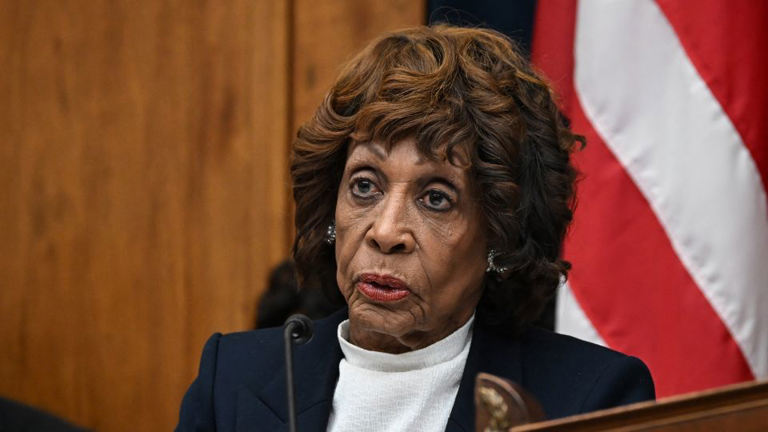
The hearing, held on Capitol Hill and formally focused on the annual report of the Financial Stability Oversight Council (FSOC), was marked by constant interruptions, raised voices, and mounting frustration from lawmakers on both sides of the aisle. At the center of the most heated moments was an ongoing confrontation between Bessent and the committee’s top Democrat, Rep. Maxine Waters of California.
Tensions boiled over early when Waters attempted to question Bessent about the economic effects of President Donald Trump’s tariff policies, particularly as they relate to housing affordability and the cost of homebuilding materials. As Bessent repeatedly spoke over her and ignored her attempts to reclaim her time, Waters turned to Committee Chair Rep. French Hill of Arkansas.
“Can you shut him up?” Waters asked bluntly, referring to the Treasury secretary.
Bessent fired back immediately. “Can you maintain some level of dignity,” he replied, drawing audible reactions in the hearing room.
The exchange set the tone for much of the session. Democrats repeatedly invoked the parliamentary phrase “reclaiming my time” as Bessent continued to elaborate on answers after lawmakers attempted to move on. On several occasions, Hill was forced to intervene, reminding the secretary that members control their allotted questioning time under committee rules.
Throughout the hearing, Bessent argued that Americans “should be worried about affordability,” but he placed responsibility for rising costs squarely on the Biden administration, citing what he described as regulatory overreach and fiscal mismanagement. Democrats, in turn, pressed him to address the Trump administration’s current policies, including tariffs and enforcement priorities, rather than deflecting blame to the prior administration.
Another contentious moment unfolded during questioning by Rep. Stephen Lynch of Massachusetts, who asked whether Bessent was concerned about what Lynch described as a slowdown in federal investigations into corporate misconduct. As Bessent began to pivot toward criticism of the Biden administration, Lynch cut in.
“Please be responsive to my question,” Lynch said.
“I am, sir,” Bessent replied. “And this back and forth is just eating into your time.”
Lynch appealed to Chair Hill, arguing that meaningful oversight required direct answers. “Mr. Chairman, the answers have to be responsive if we’re going to have a serious hearing here,” he said.
“Well, the questions have to be serious,” Bessent shot back, prompting further objections from Democrats seated nearby.
The confrontations continued during a line of questioning from Rep. Joyce Beatty of Ohio regarding whether the Treasury Department planned to use the Community Development Financial Institutions (CDFI) Fund to support housing projects in underserved communities. Beatty repeatedly pressed Bessent for a clear yes-or-no answer.
“I’m trying to be respectful, but you’re not going—you’re not going to do what you want to do on my time,” Beatty said. “Yes or no, or you can say, ‘I’m not going to answer it,’ and I’ll move on.”
“Uh, number three,” Bessent replied, drawing confusion and frustration.
Beatty immediately responded, “OK, so let the record show that he refuses to answer a question.”
When Bessent attempted to interject again, Beatty cut him off. “No, no, we’re not going to do that with me. We are not going to do that with me,” she said sharply.
Perhaps the most explosive exchange came during questioning from Rep. Gregory Meeks of New York, who asked Bessent about reports that President Trump’s cryptocurrency firm sold a $500 million stake to a member of the Emirati royal family shortly before Trump’s inauguration. Meeks asked whether Treasury would halt the deal and conduct a full investigation into the licensing application involved.
Bessent responded that oversight of the matter would fall to an independent agency, then abruptly pivoted to Meeks himself.
“You traveled to Venezuela to lobby Hugo Chávez on behalf of your donor…” Bessent began, referencing a trip Meeks reportedly took in 2006.
“I take that as a no,” Meeks replied forcefully. “You do not want to answer that question. I take that as a no.”
As Bessent continued speaking, Hill informed Meeks that his time had expired. Meeks, visibly angry, shouted at the secretary.
“Stop covering for the president. Don’t be a flunky. Work for the American people. Work for the American people. Don’t be a cover-up for a mob,” Meeks said as Hill attempted to restore order.
At one point, Hill reminded participants of the House’s rules of decorum, urging both lawmakers and the witness to lower the temperature. The admonition did little to calm the proceedings.
Republicans on the committee largely defended Bessent’s conduct, framing the clashes as partisan theatrics rather than legitimate oversight. Rep. Andy Barr of Kentucky apologized to the secretary on behalf of the committee.
“I think what we’re learning from this hearing, Mr. Secretary, is how much Trump derangement syndrome is a threat to emotional stability,” Barr said. “There’s been a lot of lectures directed at you today.”
Democrats, however, condemned both the tone of the hearing and what they described as Bessent’s evasiveness. Rep. Emanuel Cleaver of Missouri called the session “embarrassing” and questioned whether the committee had accomplished anything substantive.
“I’ve learned that you can’t make honey and sting at the same time,” Cleaver said. “The question is whether we came here today to sting or whether we came here to talk about issues that are of importance to the nation.”
PLAY:
Rep. Juan Vargas of California said the disorder prompted him to abandon his prepared questions altogether. Turning directly to Chair Hill, Vargas delivered a pointed rebuke.
“Mr. Chairman, we’ve had some very good hearings recently. This was not one of them,” Vargas said. “This is not your finest day, and it’s too bad, because I think you’re a very competent person.”
The hearing concluded without major policy revelations, but it underscored the increasingly combative nature of congressional oversight in a deeply polarized political climate. What was intended to be a technical review of financial stability instead became a vivid illustration of how partisan tensions—and personal animosity—can overwhelm substantive debate.
As lawmakers filed out of the room, the lingering impression was less about the state of the U.S. financial system and more about the deteriorating norms of congressional discourse, leaving questions about whether future hearings will fare any better.

Emily Johnson is a critically acclaimed essayist and novelist known for her thought-provoking works centered on feminism, women’s rights, and modern relationships. Born and raised in Portland, Oregon, Emily grew up with a deep love of books, often spending her afternoons at her local library. She went on to study literature and gender studies at UCLA, where she became deeply involved in activism and began publishing essays in campus journals. Her debut essay collection, Voices Unbound, struck a chord with readers nationwide for its fearless exploration of gender dynamics, identity, and the challenges faced by women in contemporary society. Emily later transitioned into fiction, writing novels that balance compelling storytelling with social commentary. Her protagonists are often strong, multidimensional women navigating love, ambition, and the struggles of everyday life, making her a favorite among readers who crave authentic, relatable narratives. Critics praise her ability to merge personal intimacy with universal themes. Off the page, Emily is an advocate for women in publishing, leading workshops that encourage young female writers to embrace their voices. She lives in Seattle with her partner and two rescue cats, where she continues to write, teach, and inspire a new generation of storytellers.