A Widespread Recall Sparks National Alarm
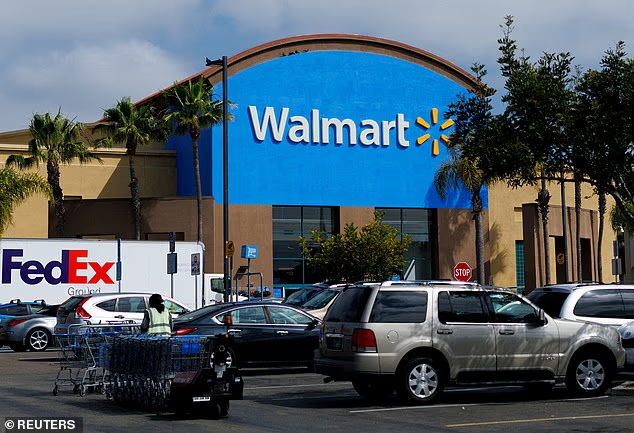
A massive food recall has expanded again, prompting concern from families across the country who recently bought shredded cheese from major retailers. On December 1, the U.S. Food and Drug Administration escalated a previous recall to a Class II designation, one step below the most serious classification. The update affects more than 1.5 million pounds of shredded cheese, including dozens of products sold at Walmart, Target, Aldi, Publix, H-E-B, and other large chains.
The upgraded warning signals that the recalled products could cause “temporary or medically reversible adverse health consequences,” though officials note that more severe outcomes remain possible depending on the circumstances.
The cheese, produced by The Great Lakes Cheese Co. of Hiram, Ohio, was originally pulled from shelves in October after the company identified small metal fragments in the product. Now, the FDA’s heightened alert indicates a broader concern that the contamination may be more widespread than initially believed.
How the Contamination Was Discovered
Great Lakes Cheese traced the problem back to raw materials supplied to its facility. While the company has not disclosed the specific source, the FDA advisory confirms that fragments of metal were detected during internal quality checks.
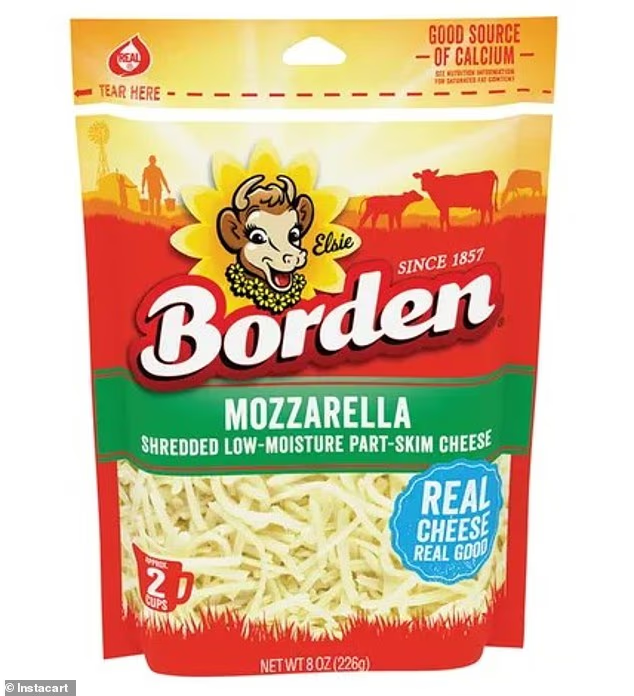
The company’s initial voluntary recall included 64 shredded cheese products, primarily mozzarella and blended Italian-style cheeses. These items were widely distributed across 31 states and Puerto Rico, reaching millions of shoppers through major grocery chains.
After investigating the October recall, the FDA determined that the risk warranted a stronger classification and renewed warning to consumers. The agency now urges anyone who purchased shredded cheese under one of the listed brands to stop consuming it immediately and either return it or discard it.
Why Metal Fragments Are So Dangerous
Metal contamination in food can cause a wide spectrum of injuries. Even a tiny shard can inflict significant internal damage as it moves through the digestive tract.
The FDA warns that swallowed metal can:
-
Lacerate the throat
-
Cut or puncture the esophagus
-
Tear the stomach lining
-
Perforate the intestines
Once perforation occurs, bacteria can leak into the abdomen and trigger peritonitis, a severe infection that may progress rapidly into sepsis if not treated immediately. In extreme cases, this chain of events can become life-threatening.
Even fragments that do not puncture tissue can still cause harm. A metal piece may become lodged in the intestines, causing an obstruction that often requires emergency surgery. Depending on the type of metal, long-term health risks may also include toxic exposure if certain heavy metals slowly leach into the bloodstream.
Doctors recommend that anyone who believes they may have consumed contaminated cheese seek medical attention at once. Imaging scans such as X-rays or CT scans can help locate metal fragments before they cause severe damage.
How Metal Ends Up in Cheese Production
While food manufacturing facilities follow strict safety standards, metal contamination can occur at multiple points in the production chain.
Factories may use:
-
Wire cutters to slice cheese blocks
-
Guillotine-style blades to portion large wheels
-
Stainless steel strainers and screens to separate curds and whey
Each of these tools can suffer wear and tear over time. Wire strands may break, blades may chip, and screens may shed microscopic pieces under the stress of repeated use. A single weakened component can contaminate an entire production run before the defect is discovered.
In this case, Great Lakes Cheese said the problem originated with materials supplied to its facility, though it did not clarify whether the source involved machine parts, food additives, or packaging components.
Where the Products Were Sold
The recalled items were distributed widely, making this one of the most far-reaching cheese recalls in recent years. Retailers that received the contaminated products include:
-
Walmart
-
Target
-
Aldi
-
Publix
-
H-E-B
-
Brookshire’s
-
Sprouts Farmers Market
-
Food Lion
-
And many regional grocery chains
Because shredded cheese is a staple in many households and often stored in both refrigerators and freezers, the FDA emphasized that consumers should check any unopened or frozen bags as well.
Consumers Asked to Take Immediate Action
The FDA has urged people not to taste or use any of the affected cheeses. Instead, shoppers should discard them or return them to the store for a refund.
Food safety experts stress that contamination events like this strike at a basic expectation: that everyday grocery items should be trustworthy. Even though Class II recalls do not always involve extreme threats, the potential for serious internal injury makes this case especially concerning.
A Pattern of Recent Food Safety Alerts
This recall comes on the heels of several others that raised national attention. In October, the FDA elevated its recall of eggs from Milo’s Poultry Farms to a Class I designation after multiple salmonella outbreaks. That situation led to 65 confirmed infections across nine states and required hospitalization for nearly half of those affected.
Those incidents, combined with the newest cheese recall, have put renewed focus on supply-chain vulnerabilities and the importance of rapid detection systems.
Will More Products Be Added to the Recall?
At this stage, the FDA has not indicated whether additional brands or products will be included. However, because Great Lakes Cheese is a major supplier for private-label and store-brand cheeses, food safety experts expect ongoing monitoring.
The company says it removed all affected products from distribution, but it remains unclear whether future investigations will reveal related issues in other production runs.
A Reminder of Food Traceability Challenges
The recall highlights a major challenge within the U.S. food system: when contamination occurs at the ingredient level, it can move rapidly through dozens of downstream brands before detection.
Even though retailers sell cheese under different names, many rely on the same handful of manufacturers. This interconnectedness means a single equipment failure or contaminated ingredient can carry national consequences almost overnight.
What Consumers Should Do Now
The FDA recommends the following steps for anyone who purchased shredded cheese from major retailers in recent months:
-
Check the brand and UPC against the recall list.
-
Do not consume the product under any circumstances.
-
Throw it away or return it for a refund.
-
If you think you ingested metal fragments, contact a medical professional immediately.
Food safety officials say staying vigilant helps prevent injuries and ensures companies maintain strict accountability for manufacturing practices.

James Jenkins is a celebrated Pulitzer Prize-winning author whose work has reshaped the way readers think about social justice and human rights in America. Raised in Atlanta, Georgia, James grew up in a community that instilled in him both resilience and a strong sense of responsibility toward others. After studying political science and creative writing at Howard University, he worked as a journalist covering civil rights issues before dedicating himself fully to fiction. His novels are known for their sharp, empathetic portraits of marginalized communities and for weaving personal stories with broader political realities. Jenkins’s breakout novel, Shadows of Freedom, won national acclaim for its unflinching look at systemic inequality, while his more recent works explore themes of identity, resilience, and the fight for dignity in the face of oppression. Beyond his novels, James is an active public speaker, lecturing at universities and participating in nonprofit initiatives that support literacy and community empowerment. He believes that storytelling is a way to preserve history and inspire change. When not writing, James enjoys jazz music, mentoring young writers, and traveling with his family to explore cultures and stories around the world.