



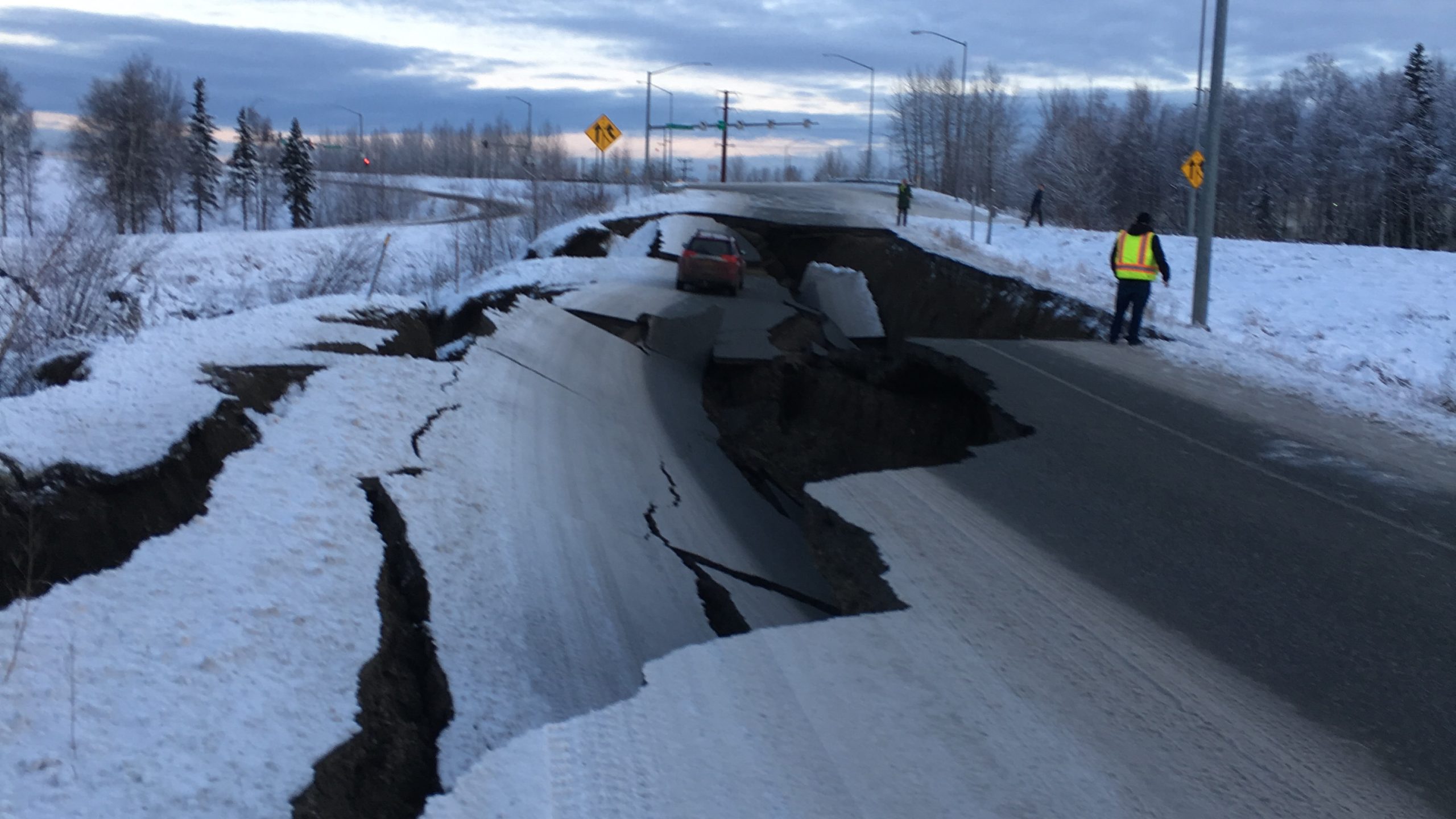
A powerful earthquake measuring 7.0 shook a remote region of North America on Saturday. Tremors were felt across the continent, with residents reporting rattling homes and objects falling from shelves.
The United States Geological Survey (USGS) reported the quake occurred at a shallow depth of approximately 6.2 miles. Its magnitude classifies it as a major earthquake, capable of causing serious structural damage in populated areas. Initial reports indicate no injuries or widespread damage.
Following the initial tremor, several aftershocks were recorded, including quakes of 5.3 and 5.0 magnitude. Aftershocks are common after major earthquakes and can continue for days or weeks.
Seismologists note that earthquakes of this magnitude, while rare, are not unprecedented. NASA data shows the Earth experiences 18 major earthquakes annually with magnitudes between 7.0 and 7.9, along with one or more catastrophic events above 8.0.
Tremors Felt Across Borders
Communities far from the epicenter reported shaking. In northern Canada, residents called emergency services and shared accounts on social media. People described objects rattling, windows vibrating, and temporary power flickers. The Royal Canadian Mounted Police confirmed receiving multiple calls but reported no injuries or property damage.
Alison Bird, a researcher with Natural Resources Canada, said most damage was minor. “People have reported things falling off shelves and walls. It doesn’t seem like we’ve seen structural damage,” she said. The affected region is sparsely populated, with mountains and few residents near the epicenter.
Location Revealed: Remote Alaskan Region
Authorities later identified the epicenter near Yakutat, Alaska, a town with a population of 657 in 2020. Tremors were also felt as far south as Anchorage, about 300 miles away. The area features glaciers, fjords, and rugged terrain, which likely helped limit injuries.
The Alaska Department of Transportation and Public Facilities (DOT&PF) said post-quake inspections were underway for highways, bridges, airports, and transportation infrastructure. No major travel disruptions have been reported.
Aftershocks and Regional Activity
The main 7.0 quake was followed by several smaller aftershocks. These quakes, though lower in magnitude, can still cause minor damage or hazards like landslides.
Alaska is part of the Pacific Ring of Fire, a zone of frequent earthquakes and volcanic activity. Large-scale quakes, including magnitude 7.5 or higher, have occurred in the state throughout history.
In September, a 7.8 earthquake off Russia’s east coast triggered tsunami alerts in Alaska. Following that, USGS recorded more than a dozen aftershocks ranging from 4.8 to 5.6.
Canadian Impact
Northern communities in the Yukon reported tremors. One small town near the epicenter, with a population just over 1,000, experienced shaking and minor falling objects. Emergency services confirmed no structural damage.
Officials urged residents to remain cautious, secure heavy objects, and be prepared for aftershocks.
Understanding Earthquake Magnitudes
A quake measuring 7.0 to 7.9 is classified as major. It can cause serious damage, particularly in urban areas or regions with older buildings. The intensity felt depends on distance from the epicenter, depth, and local geology.
The Alaska DOT emphasized that even minor tremors in remote areas can disrupt travel, damage roads, or temporarily halt airport operations.
Glacial and Coastal Considerations
The epicentral area is home to glaciers and fjords. Landmarks like the Hubbard Glacier at Yakutat Bay are closely monitored by scientists studying geological activity.
Seismologists note that glacial movements can interact with tectonic forces, influencing tremor patterns and aftershock behavior. Coastal regions, though sparsely populated, remain alert for landslides or local tsunami risks.
Comparisons with Recent U.S. Seismic Activity
This quake follows recent seismic activity in the U.S. Last month, the Central Coast of California experienced a swarm of tremors, with magnitudes ranging from 2.0 to 4.1. Tremors were reported over a 60-mile stretch along the coast.
Such events illustrate that earthquakes occur in diverse regions, not just Alaska or the West Coast, and emphasize the importance of preparedness.
Preparedness and Response
Authorities stress the importance of earthquake preparedness:
- Keep emergency kits with water, food, and medical supplies.
- Secure heavy furniture and appliances.
- Establish family communication plans.
- Be aware of aftershocks and avoid hazardous areas.
DOT&PF confirmed inspections will continue, and updates will be shared through official channels. Roads and airports remain operational, though caution is advised.
Seismological Perspective
Experts say Alaska earthquakes provide valuable data for understanding tectonics. Dr. Alison Bird explained that sparsely populated events allow scientists to study seismic energy propagation without urban interference.
“These events let us examine how energy moves through different terrains, from glaciers to mountains,” she said. “The immediate human impact is low, but the data improves earthquake prediction and hazard mitigation.”
Looking Ahead
Although the 7.0 quake caused no injuries or major damage, it is a reminder of the geological volatility of northern North America. Residents and authorities remain on alert for aftershocks.
Experts encourage all residents in seismically active areas to review emergency plans, stay informed through official channels, and prepare for potential hazards.
The USGS and Canadian authorities continue monitoring the region. Updates will be provided on aftershocks, infrastructure safety, and any emerging risks.

Emily Johnson is a critically acclaimed essayist and novelist known for her thought-provoking works centered on feminism, women’s rights, and modern relationships. Born and raised in Portland, Oregon, Emily grew up with a deep love of books, often spending her afternoons at her local library. She went on to study literature and gender studies at UCLA, where she became deeply involved in activism and began publishing essays in campus journals. Her debut essay collection, Voices Unbound, struck a chord with readers nationwide for its fearless exploration of gender dynamics, identity, and the challenges faced by women in contemporary society. Emily later transitioned into fiction, writing novels that balance compelling storytelling with social commentary. Her protagonists are often strong, multidimensional women navigating love, ambition, and the struggles of everyday life, making her a favorite among readers who crave authentic, relatable narratives. Critics praise her ability to merge personal intimacy with universal themes. Off the page, Emily is an advocate for women in publishing, leading workshops that encourage young female writers to embrace their voices. She lives in Seattle with her partner and two rescue cats, where she continues to write, teach, and inspire a new generation of storytellers.