



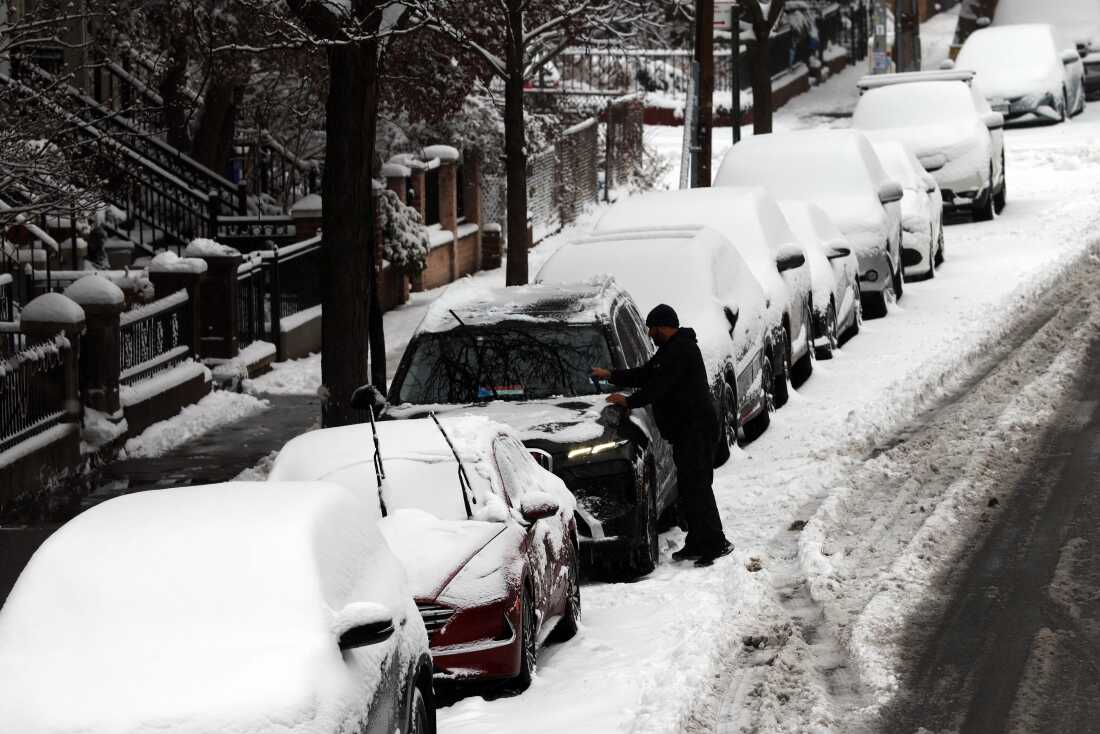
A powerful winter storm rapidly intensifying across the United States is placing millions of Americans under threat as meteorologists warn of dangerous snowfall totals, hurricane-force wind gusts, and rapidly deteriorating travel conditions. The storm system, classified as a bomb cyclone, is sweeping from the Midwest toward the Great Lakes and Northeast, with impacts expected to intensify over the next 48 hours.
Weather agencies across the country issued urgent alerts as the storm strengthened at an unusually fast pace, signaling a high-risk weather event capable of producing extreme conditions across multiple regions. From whiteout snowstorms to power outages and treacherous roadways, officials are urging residents to prepare for significant disruptions.
A bomb cyclone—also known as bombogenesis—occurs when a storm’s central pressure drops dramatically within a 24-hour period, causing it to intensify at an explosive rate. According to meteorologists, this storm meets that threshold, making it one of the most dangerous types of winter systems to impact the United States.
The system has already begun affecting large portions of the Midwest, where heavy snow, freezing rain, and powerful winds have combined to create hazardous conditions. As colder air pours in behind the storm, areas that initially experienced rain or a wintry mix are quickly transitioning to heavy snowfall, significantly reducing visibility and increasing the risk of accidents.
Meteorologists warn that snowfall totals in the hardest-hit areas could reach up to two feet, particularly in parts of the Great Lakes region, New York, New Hampshire, and Maine. Even major metropolitan areas are not expected to be spared, with cities such as Chicago, Detroit, Pittsburgh, Washington, D.C., Philadelphia, New York City, and Boston lying directly in the storm’s projected path.
Forecast models indicate that many of these urban centers could see between six and ten inches of snow, while localized bands may produce significantly higher accumulations. Combined with wind gusts exceeding 40 to 60 miles per hour, these conditions could lead to near-blizzard scenarios, especially during peak travel periods.
AccuWeather meteorologists say the storm will continue strengthening as it moves eastward, driven by sharp temperature contrasts and strong upper-level atmospheric dynamics. The result is a volatile mix of heavy snow, ice, severe thunderstorms in southern regions, and intense winds across a broad swath of the country.
“These conditions will make travel extremely difficult and dangerous, if not impossible, for a time,” forecasters warned, emphasizing that rapidly changing weather could catch drivers off guard. Airline disruptions are also expected, with major airports facing delays and cancellations as wind shear, icing, and reduced visibility impact operations.
Power outages are already being reported in several Midwestern states, where heavy snow accumulation on power lines and falling trees have knocked out electricity for tens of thousands of residents. Utility crews are racing to restore service, but officials caution that continued high winds may complicate repair efforts.
The storm’s reach extends beyond snow alone. Wind advisories now cover a massive portion of the eastern United States, with more than 100 million people under some form of high-wind alert. In some areas, gusts could rival those of a tropical storm, increasing the risk of structural damage and prolonged outages.
Meteorologists also warn that even regions receiving lighter precipitation could still face dangerous conditions due to rapid pressure changes near the storm’s core. These pressure gradients generate widespread strong winds that can cause damage even in areas with minimal snowfall.
The National Weather Service reports that over 30 million Americans are currently under winter weather alerts, a number expected to rise as the storm continues eastward. Officials urge residents to monitor forecasts closely and heed local advisories, particularly in regions prone to lake-effect snow enhancement.
The same storm system previously brought heavy rain and flooding to California during the Christmas holiday, underscoring its масштаб and destructive potential. As it transitioned eastward, the storm tapped into colder air masses, transforming from a rainmaker into a high-impact winter event.
Freezing rain remains an additional concern, especially in parts of New England and upstate New York. Even light ice accumulation can make roads and sidewalks dangerously slick, increasing the risk of crashes and injuries.
Emergency management officials advise residents to avoid unnecessary travel, stock emergency supplies, and ensure mobile devices are charged in case of power outages. Drivers caught on highways during peak storm conditions could face hours-long delays or become stranded if conditions worsen suddenly.
As the bomb cyclone continues to intensify, forecasters stress that its impacts will be felt far beyond snowfall totals alone. The combination of wind, ice, snow, and rapidly falling temperatures creates a multi-hazard scenario that demands heightened awareness and preparation.
While winter storms are not uncommon this time of year, meteorologists emphasize that the speed and strength of this system set it apart. Its rapid intensification leaves little room for error, making early preparation critical for minimizing risk.
With millions in its path and conditions expected to evolve quickly, this powerful bomb cyclone stands as a stark reminder of winter’s ability to disrupt daily life on a massive scale. Authorities continue to monitor the situation closely as the storm barrels toward the Northeast, urging the public to stay informed and prioritize safety above all else.

Emily Johnson is a critically acclaimed essayist and novelist known for her thought-provoking works centered on feminism, women’s rights, and modern relationships. Born and raised in Portland, Oregon, Emily grew up with a deep love of books, often spending her afternoons at her local library. She went on to study literature and gender studies at UCLA, where she became deeply involved in activism and began publishing essays in campus journals. Her debut essay collection, Voices Unbound, struck a chord with readers nationwide for its fearless exploration of gender dynamics, identity, and the challenges faced by women in contemporary society. Emily later transitioned into fiction, writing novels that balance compelling storytelling with social commentary. Her protagonists are often strong, multidimensional women navigating love, ambition, and the struggles of everyday life, making her a favorite among readers who crave authentic, relatable narratives. Critics praise her ability to merge personal intimacy with universal themes. Off the page, Emily is an advocate for women in publishing, leading workshops that encourage young female writers to embrace their voices. She lives in Seattle with her partner and two rescue cats, where she continues to write, teach, and inspire a new generation of storytellers.