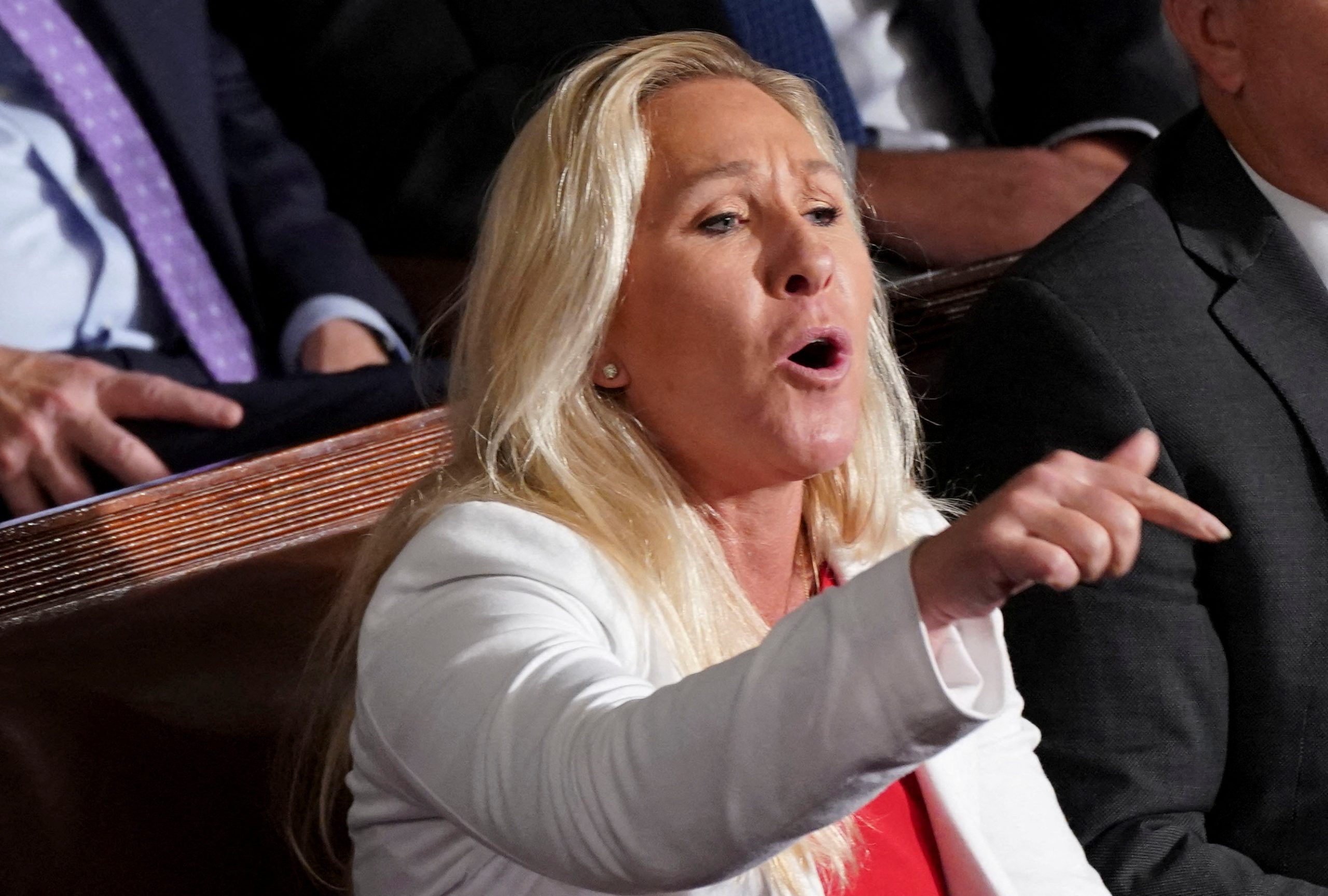
In the wake of a deeply polarizing incident in Minneapolis that resulted in the fatal shooting of a civilian by federal immigration agents, former U.S. Representative Marjorie Taylor Greene has made a striking series of public remarks urging Americans to remove their political “blinders” and confront the deeper dangers of partisan escalation. Her comments — issued notably on social media platform X — have drawn attention not only because of the substance of the message, but also because they represent a marked shift in tone from the combative political style that made her a flashpoint in national politics.
The Incident That Sparked Renewed Debate
On January 24, 2026, Minneapolis became the focus of national controversy after federal immigration agents, part of a broadly expanded enforcement presence, shot and killed a man named Alex Pretti during a protest. Video evidence later published and verified by news outlets showed Pretti recording the actions of federal officers and indicated he was unarmed at the moment he was shot — a detail that contradicted early official statements and quickly fueled public outrage.
The incident did not occur in isolation. Earlier in the month, another Minneapolis resident, Renée Nicole Good, was also fatally shot by a federal agent under disputed circumstances. Together, these events ignited protests, bipartisan political backlash, and calls for independent investigations, with lawmakers across the ideological spectrum expressing alarm at what many saw as excessive use of force by federal authorities.
As public debate escalated — ranging from calls to defund or abolish Immigration and Customs Enforcement (ICE) to demands for deeper oversight from members of Congress — Marjorie Taylor Greene entered the conversation with a warning that transcended traditional partisan arguments.
Greene’s Message: A Warning Against Political “Blinders”
In a post on X discussing the shooting of Pretti, Greene acknowledged her long-standing support for border security, enforcement of immigration laws, and the principle of law and order. But she pivoted sharply in her broader message: urging Americans, including her political base, to critically reassess how partisan narratives can distort responses to real-world events.
Greene likened the public reaction to the Pretti shooting to the outcry surrounding law enforcement actions during the January 6 Capitol breach, suggesting that Americans on both sides have been drawn into a cycle of selective outrage. She wrote:
“Both sides need to take off their political blinders. You are all being incited into civil war, yet none of it solves any of the real problems that we all face, and tragically people are dying.”
Her post argued that while she supports constitutional rights — including the right to peaceful protest and the right to bear arms — Americans should reject oversimplified, partisan framing that encourages tribal conflict. Greene invoked emotionally charged comparisons to law enforcement actions against January 6 participants, asserting that the public’s responses in both cases reflect a deeper problem: a willingness to distort facts to defend preferred narratives.
Why Her Words Matter
Even though Greene’s political career has been defined by combative rhetoric and fierce partisanship, her recent comments signal a rare moment of cross-cutting critique. For years, she was one of the most conspicuous voices in the Republican Party’s right wing — known for harsh denunciations of Democrats, conspiratorial commentary, and aggressive social media engagement that intensified divisions within American politics. Some of her past positions and public statements were so controversial that they drew condemnation across the political spectrum.
That context makes her recent appeal notable. In urging Americans to confront the role of partisan bias in shaping public perception, Greene appears to be challenging not just opposing political factions, but also emphasizing the responsibility of her own supporters to engage critically with events that might otherwise be interpreted through a narrow ideological lens.
Her message resonates against a backdrop of intense national debate about immigration enforcement, federal authority, and the proper limits of protest and civil disobedience. Around the same time Greene issued her appeal, lawmakers from both parties publicly called for transparent investigations into the Minneapolis shooting and for greater accountability from federal agencies.
Moreover, lawmakers such as Senator Jacky Rosen were advocating for potential impeachment proceedings against Homeland Security Secretary Kristi Noem over her response to the shootings, framing the controversy as one of mismanagement and misrepresentation by senior officials. This broader political environment — where both Republican and Democratic leaders condemned the use of lethal force — underscores the complexity of public discourse that Greene was addressing in her commentary.
The Broader Political Climate
The Minneapolis shootings have become more than a local tragedy; they have become a national flashpoint in an already polarized political climate. Calls from some political figures for drastic measures — such as blocking funding for ICE or reducing federal enforcement presence in Minnesota — reflect deep mistrust of federal power structures.
Meanwhile, prominent Republicans and Democrats alike have emphasized the need for careful inquiry and restraint. Bipartisan calls for independent investigations into the shootings highlight a rare moment of cross-party alignment on basic principles of accountability and transparency.
Within this heated environment, Greene’s appeal to remove political blinders seeks to push beyond simplistic factionalism. Whether or not one agrees with her broader political ideology, the core of her message — that entrenched partisan narratives can blind citizens to nuance and complicate efforts to find common ground — is a concept that touches on deeper challenges facing contemporary American civic life.
Reactions and Controversy
Unsurprisingly, Greene’s statements have elicited mixed reactions. Supporters of her broader political views may interpret her comments as a call to recognize bias in how events are framed in the media and by political elites. Critics, on the other hand, may view her appeal with skepticism, questioning whether a figure with a long record of polarizing rhetoric can genuinely encourage the kind of reflective dialogue she calls for.
Even within her own political circle, Greene’s tone represents a divergence from the more conventional partisan messaging that currently characterizes national debates. That divergence may be strategic, reflecting a broader frustration with how political conflict distracts from substantive policy issues facing many Americans, such as economic inequality, healthcare affordability, or public safety concerns — issues that commentators have argued are too often swept aside in favor of sensational political battles.
A Call for Deeper Dialogue
At its heart, Greene’s recent message urges something that political analysts, scholars, and civic leaders have long warned about: the dangers of echo chambers and rigid ideological thinking. When citizens view events exclusively through the lens of pre-existing political loyalty, they risk missing critical information, misinterpreting actions by public officials, and polarizing their communities further. Removing political blinders — engaging with facts honestly, listening to diverse perspectives, and critically evaluating assumptions — may be difficult, but it is essential for a healthy democratic society.
Whether or not individuals agree with Greene’s politics, her recent statements serve as a moment to reflect on how partisanship shapes public reactions to events that matter profoundly. As the Minneapolis case continues to unfold — with legal inquiries, public protests, and political debates yet to conclude — Americans are being reminded that the way they interpret such moments has consequences not just for political victories, but for civic trust and national unity.

Emily Johnson is a critically acclaimed essayist and novelist known for her thought-provoking works centered on feminism, women’s rights, and modern relationships. Born and raised in Portland, Oregon, Emily grew up with a deep love of books, often spending her afternoons at her local library. She went on to study literature and gender studies at UCLA, where she became deeply involved in activism and began publishing essays in campus journals. Her debut essay collection, Voices Unbound, struck a chord with readers nationwide for its fearless exploration of gender dynamics, identity, and the challenges faced by women in contemporary society. Emily later transitioned into fiction, writing novels that balance compelling storytelling with social commentary. Her protagonists are often strong, multidimensional women navigating love, ambition, and the struggles of everyday life, making her a favorite among readers who crave authentic, relatable narratives. Critics praise her ability to merge personal intimacy with universal themes. Off the page, Emily is an advocate for women in publishing, leading workshops that encourage young female writers to embrace their voices. She lives in Seattle with her partner and two rescue cats, where she continues to write, teach, and inspire a new generation of storytellers.