

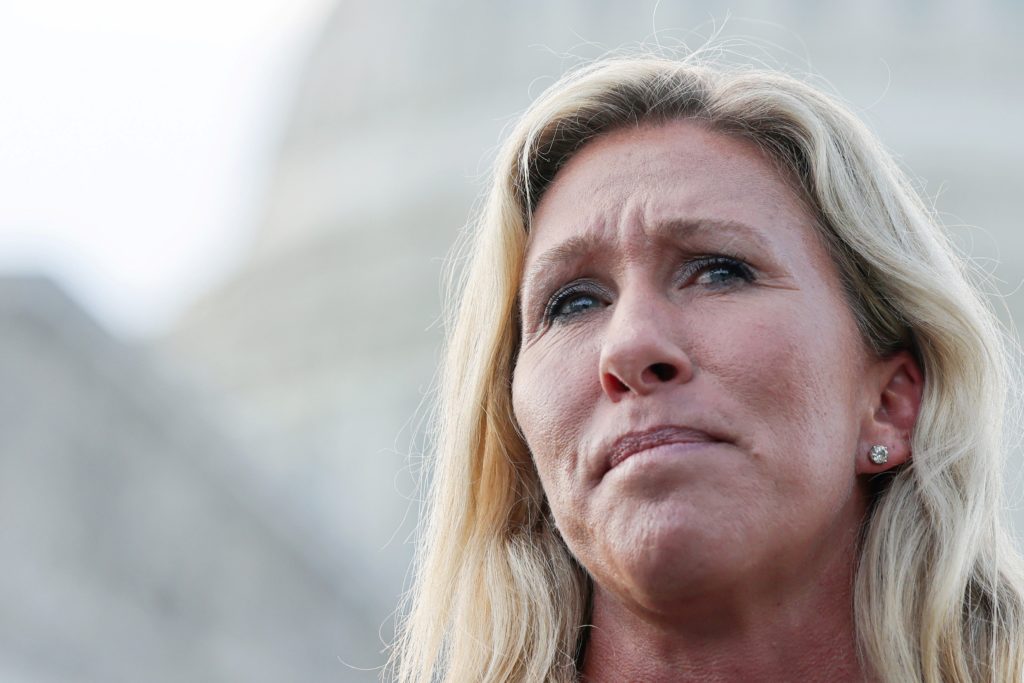
Georgia Republican Rep. Marjorie Taylor Greene sparked renewed debate over U.S. policy toward Venezuela on Monday after publicly contrasting President Nicolás Maduro’s stance on Israel with that of his chief political rival, opposition leader Maria Corina Machado.
In a series of posts on social media, Greene argued that Maduro’s rhetoric toward Israel sharply differs from the position taken by the Venezuelan opposition, framing the divide as part of a broader ideological contrast that she said is often overlooked in U.S. foreign policy discussions.
Greene noted that Venezuela remains a predominantly Catholic country with strict abortion laws, which allow the procedure only when the life of the mother is at risk. She suggested that these cultural and legal foundations shape the political landscape in ways that complicate the traditional left-right framework often applied to Latin American politics by U.S. observers.
According to Greene, Maduro has taken an openly hostile tone toward Israel in recent months, accusing the Israeli government of committing genocide in Gaza and criticizing what he has described as Zionist ideology. She contrasted those remarks with the views of Machado, who has positioned herself as a strong supporter of Israel and has called for renewed diplomatic ties between Caracas and Jerusalem.
Greene argued that Machado’s positions align more closely with progressive stances on social issues, particularly abortion rights and LGBTQ policies, despite her opposition to Maduro’s socialist government. In Greene’s telling, this ideological split complicates the narrative that the Venezuelan opposition represents a clear conservative alternative to the current regime.
The congresswoman also questioned the prevailing justification for heightened U.S. pressure on Venezuela, suggesting that many Americans are skeptical of official explanations centered on narcotics trafficking or oil-related disputes. She said voters she has spoken with do not believe tensions between Washington and Caracas are primarily driven by drugs or energy concerns.
Instead, Greene framed the issue as part of a broader public rejection of foreign intervention and regime-change policies, pointing to the 2024 election as evidence of voter fatigue with U.S. involvement abroad. She argued that Americans have grown increasingly wary of overseas political interference after decades of military and diplomatic interventions that produced mixed or negative outcomes.
“People voted against foreign intervention and foreign regime change,” Greene said in her post, arguing that repeated attempts to reshape governments abroad have often led to instability rather than lasting improvements.
Her comments come as the Trump administration has intensified its focus on narcotics trafficking in the Caribbean, including strikes on vessels suspected of transporting illegal drugs. Administration officials have said these actions are part of a broader effort to dismantle narcoterrorist networks, including those allegedly linked to senior figures within the Venezuelan government.
The U.S. government has accused Maduro and members of his inner circle of involvement in drug trafficking, allegations that Caracas has repeatedly denied. Earlier this year, Washington formally designated the so-called “Cartel of the Suns” as a foreign terrorist organization, a group U.S. officials claim is embedded within Venezuela’s military and political leadership.
Maduro, who has remained in power despite years of international pressure and sanctions, has used the accusations to reinforce his claims that Venezuela is the target of foreign aggression. He has repeatedly framed U.S. actions as attempts to undermine national sovereignty and control the country’s vast natural resources.
Greene’s remarks also highlight her continued divergence from much of her party on Israel. While the Republican Party has traditionally been one of Israel’s strongest supporters in Washington, Greene has emerged as one of the GOP’s most vocal critics of Israeli military operations in Gaza. She has previously condemned the scale of civilian casualties and questioned U.S. military and financial support for Israel during the conflict.
That position has drawn sharp criticism from fellow Republicans and pro-Israel advocacy groups, while earning praise from some anti-interventionist conservatives and progressive activists who oppose U.S. involvement in the war.
By contrasting Maduro and Machado on Israel and social issues, Greene appeared to challenge what she sees as simplistic narratives surrounding Venezuela’s political crisis. Her comments suggest that she views the push to back the opposition as another example of Washington favoring regime change without fully grappling with the ideological and cultural complexities on the ground.
As U.S.-Venezuela relations remain tense, Greene’s remarks underscore growing divisions within American politics over foreign policy priorities, the role of military force abroad, and the extent to which the United States should involve itself in the internal affairs of other nations.
Whether her views gain traction within the broader GOP remains unclear, but they reflect a broader shift among some voters and lawmakers who are increasingly skeptical of long-standing interventionist strategies and more willing to question traditional alliances.

Emily Johnson is a critically acclaimed essayist and novelist known for her thought-provoking works centered on feminism, women’s rights, and modern relationships. Born and raised in Portland, Oregon, Emily grew up with a deep love of books, often spending her afternoons at her local library. She went on to study literature and gender studies at UCLA, where she became deeply involved in activism and began publishing essays in campus journals. Her debut essay collection, Voices Unbound, struck a chord with readers nationwide for its fearless exploration of gender dynamics, identity, and the challenges faced by women in contemporary society. Emily later transitioned into fiction, writing novels that balance compelling storytelling with social commentary. Her protagonists are often strong, multidimensional women navigating love, ambition, and the struggles of everyday life, making her a favorite among readers who crave authentic, relatable narratives. Critics praise her ability to merge personal intimacy with universal themes. Off the page, Emily is an advocate for women in publishing, leading workshops that encourage young female writers to embrace their voices. She lives in Seattle with her partner and two rescue cats, where she continues to write, teach, and inspire a new generation of storytellers.