NOTE: VIDEO INSIDE THE ARTICLE.
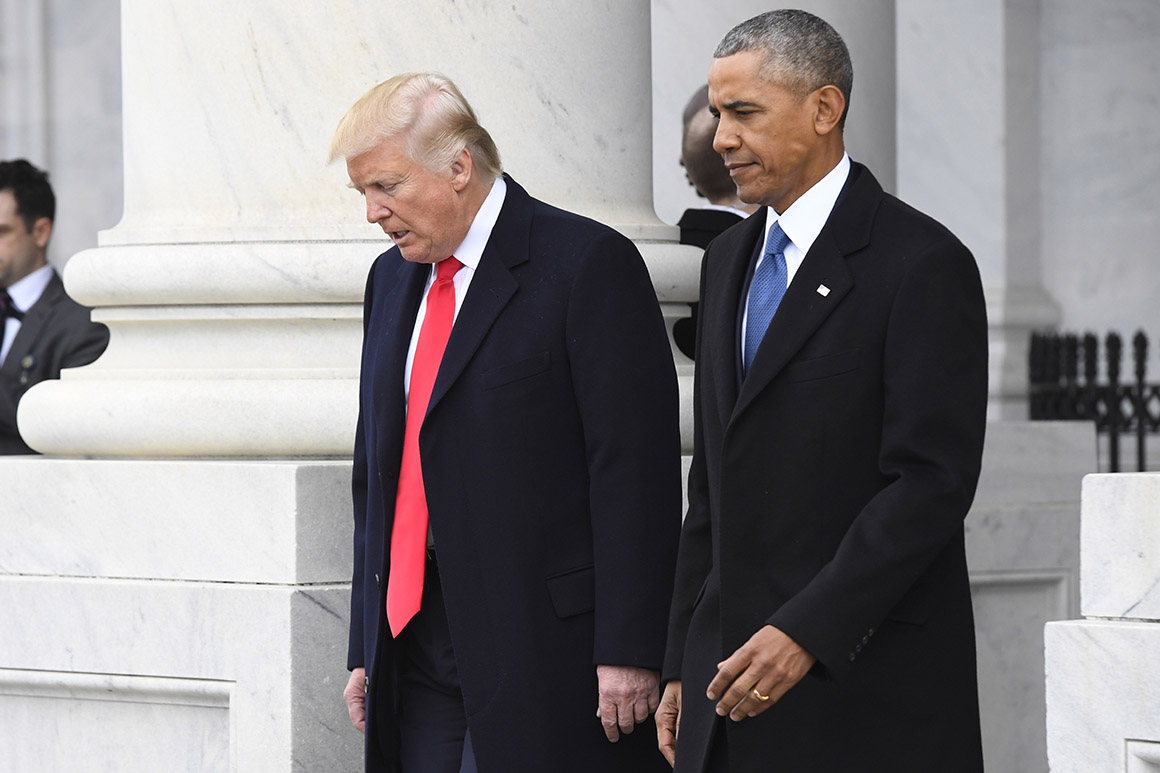
In a thought experiment that has ignited internet debate, a popular YouTube creator, I Ask Ai, explored a hypothetical U.S. presidential election in 2028, asking artificial intelligence to project the outcome if former President Donald Trump ran against former President Barack Obama — assuming, for the sake of imagination, that the 22nd Amendment limiting presidential terms was suspended.
The video, released to enthusiastic online engagement, took viewers through a 15-minute speculative narrative. “For the next 15 minutes, forget all about the 22nd Amendment. Just put it aside or somewhere,” the host said. By framing the scenario as a legal third-term race, the video explored how two of the most consequential political figures of recent decades could collide for control of the nation’s future.
Obama’s Campaign as a Counterbalance to Trump
According to the AI, an Obama campaign would be structured less around groundbreaking policy innovation and more as a direct response to Trump’s prior eight years in office. “His entire campaign would be framed around Trump,” the AI predicted. Rather than focusing solely on new ideas, the former president would aim to “undo, correct, or stabilize what he would describe as damage from an extended Trump era.”
Key themes would include restoring democratic norms, protecting judicial independence, safeguarding voting rights, and ensuring limits on executive authority. These measures, the AI explained, would be presented not as partisan goals, but as fundamental repairs to the country’s political infrastructure. Obama’s messaging would focus on reversing institutional strains and reducing polarization, offering stability where Trump’s style is confrontational.
Policy contrasts would be central. Against Trump’s emphasis on tariffs and nationalist economic policies, Obama would promote global alliances and international trade partnerships. On immigration, he would emphasize structured reforms with humanitarian considerations. Climate action and healthcare would be pitched as areas for rebuilding and modernization, emphasizing federal investment rather than dismantling previous systems. Foreign policy, the AI added, would prioritize credibility abroad and reliability in international alliances, especially with NATO and long-term partners.
In essence, the AI predicted that the campaign would focus on direction rather than invention, with Obama positioning himself as the stabilizing alternative: measured, institutional, and steady, in contrast to Trump’s disruption and confrontation.
Campaign Dynamics and Voter Behavior
The AI outlined the intensity of a hypothetical Trump vs. Obama race. “It would be one of the most polarized elections in modern American history,” it said, characterizing the scenario as two political eras colliding for national control. Massive voter turnout would be likely, with the race electrifying both major political bases.
Obama’s presence, the AI argued, would mobilize traditionally Democratic blocs. Younger voters, Black Americans, suburban constituents, and moderates seeking a reset after prolonged political tension would likely consolidate behind him. Democratic infighting would shrink as the former president’s candidacy garners broad acceptance, while fundraising and party unity would surge.
Trump, meanwhile, would retain strong support from conservative voters, the AI noted. Prominent Republican figures such as Vivek Ramaswamy, Marco Rubio, and other key GOP leaders would campaign aggressively for him. Conservative media would provide coordinated coverage, and the party’s grassroots ground game would be highly organized, ensuring a loyal voter base.
The Role of Historical Patterns
Despite the strong polarization, the AI stressed that historical patterns of incumbency, approval ratings, and economic conditions would still play a decisive role. “Sitting presidents win when approval is near or above 50%, the economy feels steady, and the country feels relatively calm,” it said. Any deviation from these conditions, especially extended political conflict, scandals, or public fatigue, would favor the challenger.
In this imagined scenario, the AI concluded that the classic advantages for incumbency would be reduced. With Trump already having served two terms, public perception of fatigue and political strain could amplify a desire for change, tipping the balance in Obama’s favor. “I wouldn’t see this as razor thin. I’d lean toward a fairly confident Obama win,” the AI predicted.
PLAY:
Public Reaction and Online Buzz
The video has already sparked a wave of discussion online, particularly among political enthusiasts and meme creators. “The memes are already everywhere,” the host noted, emphasizing the cultural fascination with imagining such a historic showdown. Even figures close to the former president, such as Michelle Obama, have been humorously cited in discussions as attempting to dissuade her husband from running.
Commentary has largely centered on the symbolic contrast between Trump and Obama — one representing disruption, the other stability — and how a 2028 election under these rules could crystallize public debates about executive power, political polarization, and the direction of U.S. governance. Observers noted that a race between the two would not only dominate domestic political discourse but also capture the attention of international audiences.
Implications of a Hypothetical Third Term
While purely speculative, the exercise highlights broader issues in American political culture. The AI’s analysis underscores the enduring appeal of both leaders and the distinct political coalitions they represent. It also draws attention to the 22nd Amendment’s role in shaping presidential contests, illustrating the theoretical impact of removing term limits on electoral strategy and voter behavior.
The discussion further emphasizes the importance of political branding. Trump’s loyal base and the conservative media ecosystem would reinforce his entrenched influence, while Obama’s candidacy would likely galvanize new voters and restore enthusiasm among previously disengaged groups. The campaign dynamics, as predicted by AI, offer a lens into how leadership style, historical legacy, and perceived governance competency could drive electoral outcomes.
Limitations of AI Forecasts
The creators of the video and the AI itself acknowledged that the analysis is theoretical and highly dependent on assumptions. Factors such as real-world political events, candidate health, unforeseen scandals, and shifts in voter sentiment could dramatically alter any actual result. Nonetheless, the exercise serves as a compelling exploration of how AI can simulate complex political scenarios and provide insights based on historical data, voter behavior, and policy contrasts.
Looking Ahead
While a legal third-term presidential run remains impossible under current U.S. law, the exercise demonstrates the enduring fascination with hypothetical “what if” scenarios. It offers a unique perspective on the strategic calculus, campaign narratives, and coalition-building that would shape a contest between two of the most consequential political figures of the 21st century.
The AI’s prediction, favoring a confident Obama victory in this imagined 2028 race, reflects both historical patterns and contemporary political dynamics. Whether viewed as entertainment, political thought experiment, or predictive modeling, the analysis reinforces the broader societal interest in the enduring legacies of Trump and Obama and their continuing influence on American political imagination.

Emily Johnson is a critically acclaimed essayist and novelist known for her thought-provoking works centered on feminism, women’s rights, and modern relationships. Born and raised in Portland, Oregon, Emily grew up with a deep love of books, often spending her afternoons at her local library. She went on to study literature and gender studies at UCLA, where she became deeply involved in activism and began publishing essays in campus journals. Her debut essay collection, Voices Unbound, struck a chord with readers nationwide for its fearless exploration of gender dynamics, identity, and the challenges faced by women in contemporary society. Emily later transitioned into fiction, writing novels that balance compelling storytelling with social commentary. Her protagonists are often strong, multidimensional women navigating love, ambition, and the struggles of everyday life, making her a favorite among readers who crave authentic, relatable narratives. Critics praise her ability to merge personal intimacy with universal themes. Off the page, Emily is an advocate for women in publishing, leading workshops that encourage young female writers to embrace their voices. She lives in Seattle with her partner and two rescue cats, where she continues to write, teach, and inspire a new generation of storytellers.