



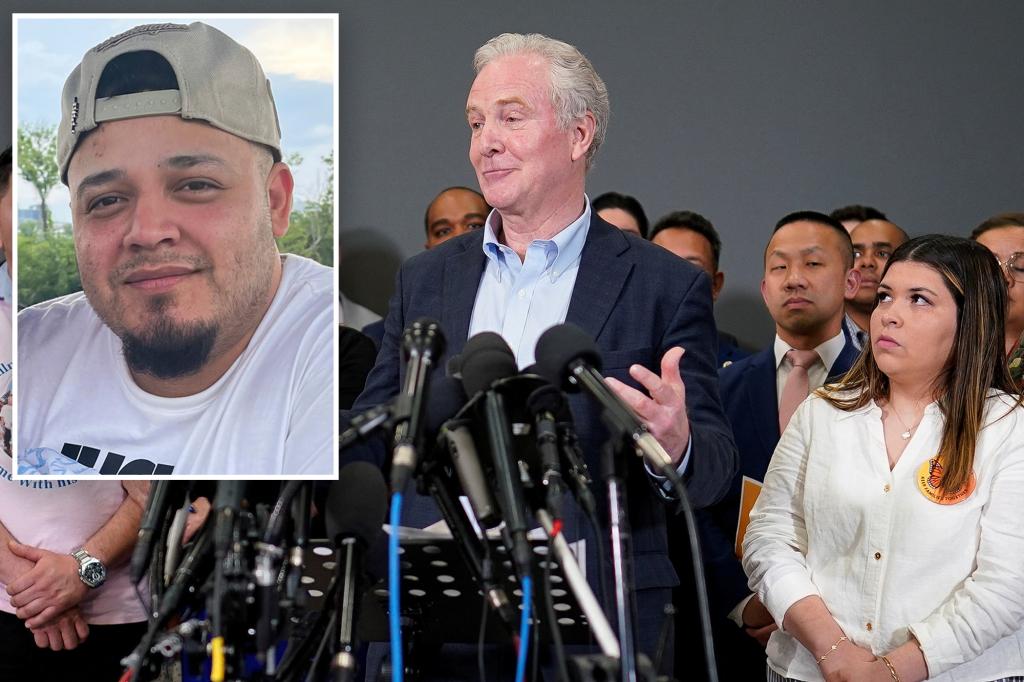
Kilmar Abrego Garcia, a Salvadoran national recently deported from the United States, is now facing federal charges after being brought back to the country in connection with an alleged human smuggling operation. Garcia, who had been deported nearly three months ago by the Trump administration, is being prosecuted for transporting illegal immigrants across state lines.
The charges originate from a 2022 traffic stop conducted by the Tennessee Highway Patrol. Officers pulled over Garcia for speeding and quickly grew suspicious after noticing he was traveling with eight other men, none of whom had any luggage. All nine individuals in the vehicle listed the same residential address in Maryland—Garcia’s—raising immediate red flags.
According to a report from the Department of Homeland Security (DHS) released in April, Garcia claimed he was transporting the men from Texas to Maryland by way of Missouri for construction work. Despite the suspicious circumstances, officers only issued Garcia a warning for an expired driver’s license and allowed him to continue his journey. No arrests were made at the time.
Bodycam footage later obtained by Fox News Digital showed troopers voicing serious concerns. “He’s hauling these people for money,” one officer is heard saying. The video also revealed Garcia was carrying $1,400 in cash. A background check conducted during the stop reportedly returned a gang and terrorism alert through the National Crime Information Center. Immigration and Customs Enforcement (ICE) was contacted but failed to respond to the scene—an incident critics blame on the Biden administration’s immigration enforcement policies.
The case returned to the spotlight in March when Garcia was mistakenly deported to El Salvador. His removal sparked criticism from progressive politicians, who argued that due process had not been followed and that the deportation may have been a violation of his rights. However, critics of the administration contend the initial failure to prosecute Garcia and the eventual deportation demonstrate systemic breakdowns in border enforcement and criminal accountability.
Now that Garcia has been returned to the U.S., he will face formal federal charges for transporting individuals unlawfully present in the country. The incident has reignited debate over immigration enforcement, with conservatives arguing it reflects the dangerous consequences of lax border policies and lack of coordination among federal agencies.
Supporters of tighter immigration enforcement point to Garcia’s case as emblematic of larger structural issues within the current system, including poor communication between local law enforcement, ICE, and the Department of Homeland Security. They argue this failure allowed a potentially dangerous individual with known gang ties to avoid legal consequences for nearly three years.
Garcia’s prosecution is expected to proceed in federal court in the coming weeks. In the meantime, his case continues to be a political flashpoint, drawing national attention amid an already contentious debate over illegal immigration and public safety.

James Jenkins is a celebrated Pulitzer Prize-winning author whose work has reshaped the way readers think about social justice and human rights in America. Raised in Atlanta, Georgia, James grew up in a community that instilled in him both resilience and a strong sense of responsibility toward others. After studying political science and creative writing at Howard University, he worked as a journalist covering civil rights issues before dedicating himself fully to fiction. His novels are known for their sharp, empathetic portraits of marginalized communities and for weaving personal stories with broader political realities. Jenkins’s breakout novel, Shadows of Freedom, won national acclaim for its unflinching look at systemic inequality, while his more recent works explore themes of identity, resilience, and the fight for dignity in the face of oppression. Beyond his novels, James is an active public speaker, lecturing at universities and participating in nonprofit initiatives that support literacy and community empowerment. He believes that storytelling is a way to preserve history and inspire change. When not writing, James enjoys jazz music, mentoring young writers, and traveling with his family to explore cultures and stories around the world.