



The retail landscape is undergoing one of its most dramatic transitions in decades, as brick-and-mortar stores around the world confront intensifying pressure from digital competitors, shifting consumer habits, and macroeconomic uncertainty. Over the past year, major apparel groups have been quietly pulling back their physical footprints, signaling a structural shift in how fashion brands intend to operate in the coming decade. What once seemed like a temporary post-pandemic recalibration has now evolved into a decisive realignment across the industry.
The scale of physical contraction is striking. Analysts who track retail presence across North America and Europe have noted that leading fashion conglomerates are reducing stores at a pace not seen since the early 2000s. The underlying drivers are numerous: inflationary pressures, rising labor and real-estate costs, tighter consumer budgets, and a dramatic acceleration in online purchasing behavior. At the same time, growing competition from ultra-fast-fashion platforms has diluted the relevance of traditional retail formats whose business models depend heavily on foot traffic.
Market intelligence from Coresight Research, a firm that closely monitors retail openings and closures, shows the United States alone is on pace for approximately 15,000 store closures this year. This figure nearly doubles last year’s already-troubling tally and highlights just how much strain legacy retailers are facing. The contraction is not limited to struggling brands. Even companies reporting robust earnings are reassessing how many physical locations they need—and whether store fleets that were once strategic assets are now liabilities.
Inditex, the world’s largest fashion group by revenue and the parent company of several globally recognized labels, has become one of the most prominent examples of this recalibration. In the past 12 months, the company has quietly shuttered more than one hundred locations across multiple chains in its portfolio. The reduction includes store closures involving Zara Home, Pull&Bear, and Massimo Dutti. In total, 132 storefronts were removed worldwide, while only 14 new shops opened in the same period—far too few to counterbalance the widespread cuts.
Despite the drastic footprint reduction, the company’s financial performance remains strong. Inditex reported a 10.6 percent surge in sales for November, exceeding projections and reinforcing its position as a bellwether for the fast-fashion segment. Between August and November, the conglomerate generated an estimated $11.5 billion in revenue, a figure that would typically signal expansion rather than contraction. Yet leadership maintains that the closures are part of a deliberate global strategy aimed at reshaping the company’s physical-digital mix.
Executives have emphasized an ongoing multiyear plan to modernize stores, enhance online fulfillment, strengthen logistics, and upgrade technology systems. This transformation program, estimated at roughly $1 billion worldwide, focuses on improving agility between in-store and online channels. During the company’s most recent earnings call, CEO Óscar García Maceiras stressed that the objective is to create a unified experience in which digital and physical retail operate seamlessly across multiple formats. The ultimate goal, he said, is not fewer stores but more efficient and strategically located ones.
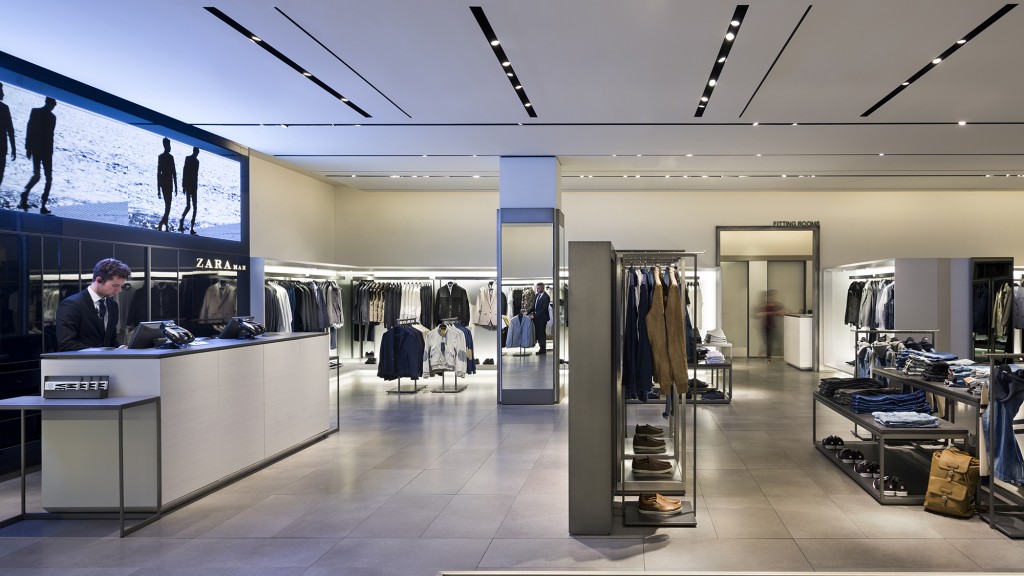
It is within this broader restructuring effort that Zara, Inditex’s flagship brand and one of the most influential forces in contemporary fashion, has executed its own substantial round of closures—60 stores worldwide in the past year. Known for its agile production cycles, mid-range price points, and trend-responsive collections, the brand has long been regarded as a barometer for global fashion retail performance. That such a prominent chain is tightening its brick-and-mortar footprint underscores the magnitude of the shift enveloping the industry.
Inditex has not disclosed which of the chain’s approximately 100 U.S. stores were affected, leaving consumers guessing which regions saw the largest reductions. Industry analysts believe the closures likely targeted older or underperforming sites, especially in malls where foot traffic has slipped below pre-pandemic levels. The company insists the move is less a retreat and more a strategic optimization designed to support a stronger omnichannel model. Executives have even suggested that the U.S. market may see additional store openings in 2026, though they also indicated these will be highly selective and technology-driven.
The broader context in which these decisions are occurring offers a clearer picture of the pressures facing fashion retailers. The U.S. market, long considered the world’s most competitive retail environment, has seen a wave of companies—both legacy and specialty—downsize aggressively or enter bankruptcy protection. Factors vary by company but share common roots in shifting customer expectations, rising operational costs, and the disruptive influence of online-only players.
Saks Global, the parent company of Saks Off Fifth, recently announced plans to close nine stores by early January as it struggles with mounting debt concerns. The brand, once dominant in the off-price luxury segment, will have only 79 locations remaining after the closures. Torrid, a brand once celebrated for its leadership in plus-size fashion and embraced by celebrities such as Rebel Wilson, outlined plans to shutter 180 stores this year. Meanwhile, Claire’s, the tween jewelry and accessories chain famous for its ear-piercing services, was forced to declare bankruptcy for the second time in its history. Although the company later emerged from bankruptcy protection after being taken private, the initial restructuring plan included the potential wind-down of hundreds of stores.
Even iconic names are not immune. JCPenney, one of the oldest continually operating department store chains in the United States, has also reduced its presence by placing seven mall locations on the closure list this year. For a retailer with deep roots in American shopping culture, the move is symbolic of the larger decline of traditional anchor stores that once defined the mall ecosystem.
These closures reflect more than financial hardship; they reveal a fundamental transformation in consumer behavior. A record number of Americans now shop online through platforms like Amazon, Walmart.com, Temu, and Shein—competitors that offer vast assortments, aggressive pricing, and lightning-fast delivery. Younger shoppers in particular gravitate toward these digital destinations, where trends move at viral speed and the friction of in-store browsing is replaced by algorithm-driven recommendations.
At the same time, inflation and consumer uncertainty have created an environment in which discretionary spending fluctuates dramatically. Even households with stable incomes are more cautious about fashion purchases, often opting for lower-priced alternatives or waiting for deep promotions. These pressures are not evenly distributed; some retailers thrive, while others struggle to adapt.
For fashion companies navigating this landscape, the crucial question is not whether to operate physical stores but how to maximize their relevance. Industry experts note that stores now serve multiple purposes beyond sales: they function as brand showcases, fulfillment hubs, return centers, and experiential environments intended to deepen consumer engagement. In this sense, downsizing is not inherently negative; it is often part of a broader effort to modernize networks and reprioritize capital allocation.
This is precisely the strategy Inditex has communicated. While reducing store counts, the company has invested heavily in expanding square footage at key flagship locations and incorporating advanced technology such as RFID inventory systems, real-time stock integration, and self-checkout tools. Executives argue that the future of fashion retail lies in highly curated stores supplemented by sophisticated online ecosystems—a model that requires fewer but more powerful physical presences.
The turbulence unfolding across the retail sector is likely far from over. Analysts expect additional closures into 2026 as brands continue to reevaluate their portfolios and adapt to digital-first consumption. Still, industry leaders remain cautiously optimistic. Companies that can streamline operations, harness technology, and accurately read evolving consumer demands may emerge stronger as the market stabilizes.
For now, the contraction of store networks—whether among specialty chains, legacy giants, or fast-fashion titans—represents a pivotal chapter in the ongoing reinvention of global retail. The brands that succeed will be those that recognize physical stores are no longer the default foundation of commercial strategy but one component of an integrated, omnichannel future.

Emily Johnson is a critically acclaimed essayist and novelist known for her thought-provoking works centered on feminism, women’s rights, and modern relationships. Born and raised in Portland, Oregon, Emily grew up with a deep love of books, often spending her afternoons at her local library. She went on to study literature and gender studies at UCLA, where she became deeply involved in activism and began publishing essays in campus journals. Her debut essay collection, Voices Unbound, struck a chord with readers nationwide for its fearless exploration of gender dynamics, identity, and the challenges faced by women in contemporary society. Emily later transitioned into fiction, writing novels that balance compelling storytelling with social commentary. Her protagonists are often strong, multidimensional women navigating love, ambition, and the struggles of everyday life, making her a favorite among readers who crave authentic, relatable narratives. Critics praise her ability to merge personal intimacy with universal themes. Off the page, Emily is an advocate for women in publishing, leading workshops that encourage young female writers to embrace their voices. She lives in Seattle with her partner and two rescue cats, where she continues to write, teach, and inspire a new generation of storytellers.