LIVE VIDEO AT THE END OF THE ARTICLE
President Donald Trump on Tuesday unveiled one of his administration’s most consequential regulatory shifts to date, announcing a sweeping rollback of federal vehicle fuel-efficiency standards. The move immediately ignited sharp debate among automakers, environmental groups, and economic analysts as the White House framed the decision as a victory for consumers and American manufacturing.
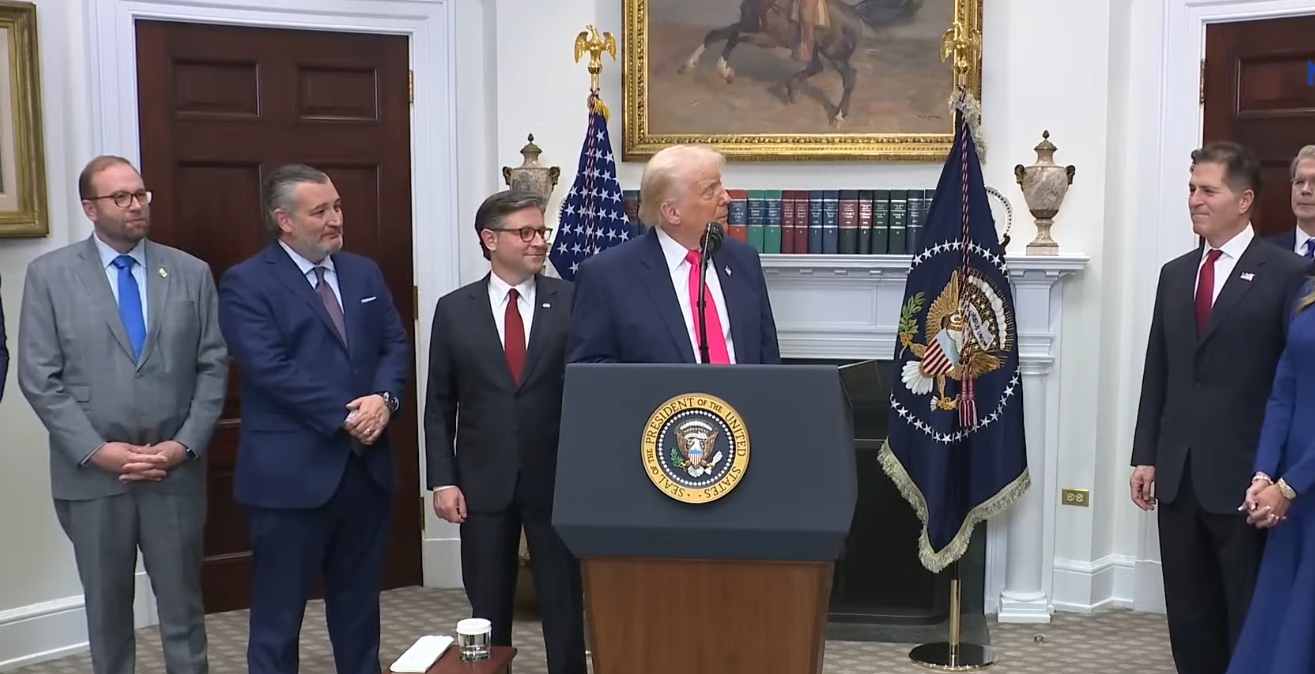
Speaking during an afternoon appearance at the White House, Trump declared that the existing fuel-efficiency rules—often referred to as CAFE standards—were “unreasonable, unrealistic, and harmful to American workers.” The administration’s new proposal would significantly relax the requirements that automakers gradually increase average fuel economy across cars and light trucks over the remainder of the decade.
According to Trump, the rollback is designed to “restore choice, affordability, and freedom” for American buyers. “Families should not be forced into vehicles they don’t want, can’t afford, or that don’t fit their lives,” he said. “We are ending the mandates that made cars more expensive while doing little for the environment. Today we put American workers and American consumers first.”
A Major Shift From Previous Standards
The previous administration’s rules had aimed for more aggressive increases in fuel efficiency, pushing car manufacturers toward hybrid, electric, and low-emission technologies. Those standards required year-over-year improvements in the miles-per-gallon averages across vehicle fleets.
Under Trump’s new proposal, the pace of those increases would slow dramatically. Officials argued that the cost of meeting the earlier standards raised vehicle prices by thousands of dollars and placed strain on both automakers and consumers. By reducing regulatory pressure, Trump claimed, automakers would regain flexibility, production costs would fall, and new-car prices would stabilize or even decline.
Industry reactions were mixed. Some automakers welcomed the relaxation as a business-friendly shift that could reduce manufacturing complexity, especially for companies that sell a large volume of SUVs and trucks. Others expressed concern that the patchwork of federal and state rules—particularly states that maintain their own stricter standards—could complicate compliance strategies rather than simplify them.
Environmental Groups Warn of Consequences
Environmental organizations reacted swiftly and critically, warning that the rollback could result in higher emissions and slower progress toward reducing national carbon output. Several groups signaled plans to challenge the rule in court, saying the administration was ignoring climate data and public-health considerations.
Climate advocates argued that weaker standards would lock the country into higher fuel consumption for years, noting that transportation remains one of the largest contributors to U.S. greenhouse-gas emissions. “This is a step backwards at the exact moment the world needs to accelerate toward cleaner energy,” one advocacy spokesperson said following the announcement.
Trump dismissed these criticisms, saying previous standards were “extreme regulations written by people with no understanding of the auto industry.” He argued that technological innovation should arise from market forces, not federal mandates, and insisted that consumer demand—not regulation—would continue driving growth in electric vehicles.
Impact on Consumers and the Economy
White House officials emphasized that the new rules would lower average vehicle costs by hundreds to thousands of dollars over the coming years. Trump said the rollback would “protect American jobs,” warning that stringent regulations risked pushing manufacturers to shift production overseas.
Supporters of the move echoed that sentiment, pointing to concerns that the earlier standards disproportionately benefited foreign EV manufacturers and placed domestic producers at a competitive disadvantage. Some conservative economists argued that loosening the standards could boost auto sales, expand consumer choice, and provide short-term relief for lower-income families who rely heavily on older, less-efficient vehicles.
Critics countered that long-term fuel costs would increase for consumers who purchase less efficient vehicles, ultimately outweighing any upfront savings. They also noted that automakers are already investing heavily in electric and hybrid technology due to global market pressures, raising questions about how much practical effect the rollback will have.
A Politically Charged Decision
The announcement underscores the broader political philosophy of Trump’s second term: reducing federal regulatory power and reshaping environmental and industrial policy around economic priorities. Supporters view the shift as a necessary correction to overreaching rules, while opponents see it as a dangerous reversal of climate policy.
With the rule now moving into a public‐comment and review period, the debate is likely to intensify in the months ahead. Legal challenges, congressional criticism, and pushback from state governments are all expected as the administration seeks to implement the new standards.
Still, Trump celebrated the move as a decisive win. “This is common-sense policy,” he said. “We’re giving Americans the freedom to choose and giving our auto industry the breathing room it needs to innovate, compete, and thrive.”

Emily Johnson is a critically acclaimed essayist and novelist known for her thought-provoking works centered on feminism, women’s rights, and modern relationships. Born and raised in Portland, Oregon, Emily grew up with a deep love of books, often spending her afternoons at her local library. She went on to study literature and gender studies at UCLA, where she became deeply involved in activism and began publishing essays in campus journals. Her debut essay collection, Voices Unbound, struck a chord with readers nationwide for its fearless exploration of gender dynamics, identity, and the challenges faced by women in contemporary society. Emily later transitioned into fiction, writing novels that balance compelling storytelling with social commentary. Her protagonists are often strong, multidimensional women navigating love, ambition, and the struggles of everyday life, making her a favorite among readers who crave authentic, relatable narratives. Critics praise her ability to merge personal intimacy with universal themes. Off the page, Emily is an advocate for women in publishing, leading workshops that encourage young female writers to embrace their voices. She lives in Seattle with her partner and two rescue cats, where she continues to write, teach, and inspire a new generation of storytellers.