
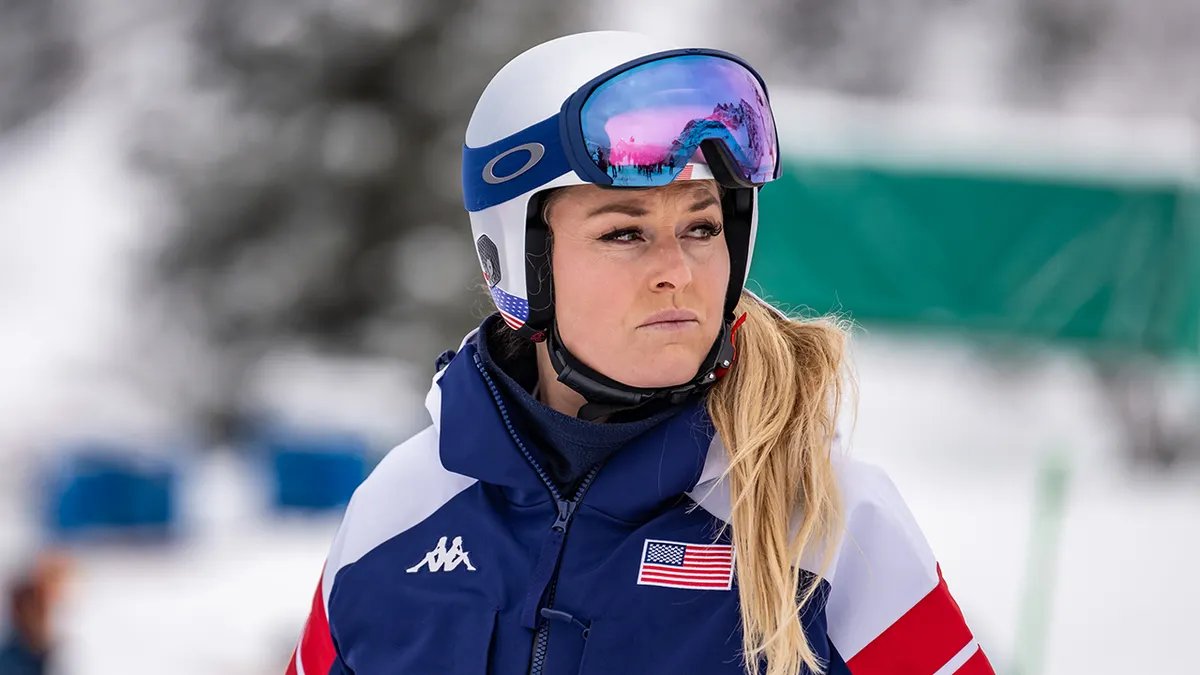
American alpine skiing legend Lindsey Vonn has found herself back in the spotlight—not just for her dramatic crash at the 2026 Winter Olympics, but for a carefully worded response she gave when asked whether she would accept an invitation to the White House from President Donald Trump.
The resurfaced remarks have sparked renewed debate about the intersection of sports and politics, particularly as Team USA prepares to conclude a Winter Games filled with both triumph and controversy.
A Devastating Crash in Cortina
Vonn arrived at the 2026 Games in Cortina d’Ampezzo chasing history. At 41 years old, she was aiming to become the oldest alpine skier—male or female—to win an Olympic medal. It was an audacious goal, especially considering she had suffered a “100 percent” ruptured ACL just nine days before the competition began.
Still, true to the resilience that defined her career, she chose to compete.
During the women’s downhill final, a split-second miscalculation changed everything. As Vonn launched off a jump, her right ski pole clipped a timing gate. The contact destabilized her mid-air, sending her careening off course before crashing violently into the snow.
The impact left her with a complex tibia fracture in her left leg—an injury that immediately ended her Olympic run and required urgent medical intervention.
She was transported to Ca’ Foncello Hospital in Treviso, where surgeons have already performed four operations. According to her team, she will require at least two additional procedures once she returns to the United States for long-term rehabilitation.
Team USA’s Success Continues
Despite the shock of Vonn’s crash, Team USA’s downhill program still delivered a standout performance. Fellow American skier Breezy Johnson claimed the gold medal in the same event, marking one of the country’s most significant alpine achievements of the Games.
Johnson later revealed she watched Vonn’s fall unfold in real time after completing her own run—an emotional moment that underscored both the risk and camaraderie inherent in elite alpine skiing.
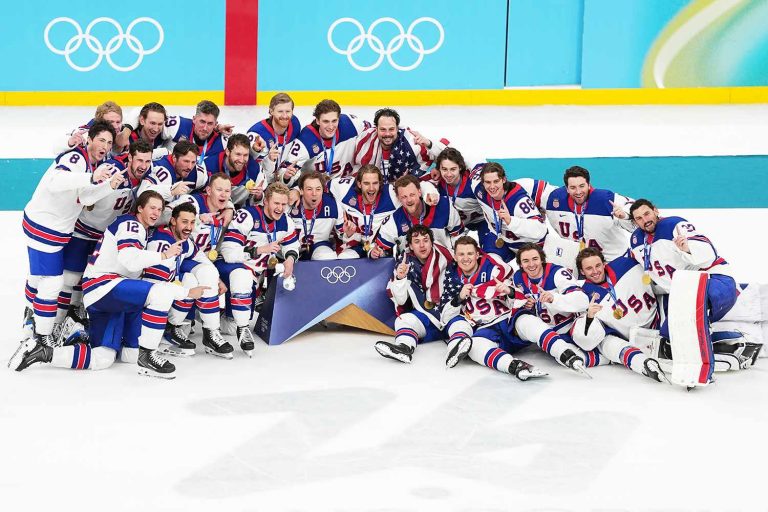
As tradition dictates, members of Team USA—regardless of medal results—are typically invited to visit the White House following the Olympic Games. That long-standing custom has once again raised the question: which athletes will attend?
The Question That Won’t Go Away
Vonn’s previously recorded response to that question has now returned to public attention.
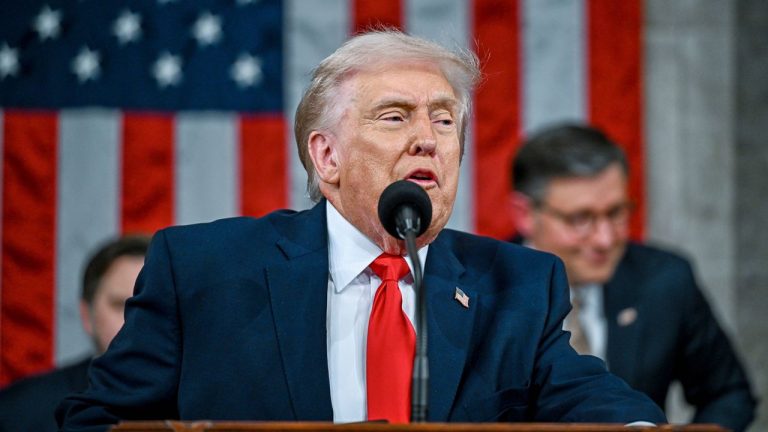
In a 2025 interview, she was asked directly whether she would accept a White House invitation from Trump. Her reply was cautious and deliberately noncommittal.
She began by noting that every Olympic athlete is usually invited to the White House, not just medal winners. But when pressed to say whether she would personally attend, she declined to give a straightforward answer.
“I’m not going to answer that question,” she said. “I want to keep my passport.”
The remark was widely interpreted as a subtle way of avoiding a politically charged statement while still signaling discomfort with the idea.
A Clearer Position in the Past
While her 2025 answer was measured, Vonn has been far more direct in the past.
Ahead of the 2018 Winter Olympics in Pyeongchang—her final Games before her initial retirement—she made it clear that she would not visit the White House during Trump’s first term as president.
“Absolutely not,” she said at the time. “I hope to represent the people of the United States, not the president.”
She also emphasized the broader meaning of the Olympics, describing the honor of competing under the American flag and representing citizens rather than political leadership.
Those earlier comments, combined with her more recent refusal to engage directly with the question, have fueled ongoing speculation about whether her position has evolved—or remained consistent.
Athletes, Politics, and Public Expectations
The renewed attention on Vonn’s remarks reflects a broader cultural shift in how elite athletes engage with political issues.
For decades, White House visits were largely ceremonial, viewed as a neutral celebration of national achievement. But in recent years, athletes across multiple sports have used such invitations as opportunities to express personal beliefs—or to decline participation as a form of protest.
This shift has turned what was once a routine tradition into a visible barometer of the relationship between sports and politics.
Some argue that representing one’s country includes engaging with its leadership, regardless of political differences. Others contend that athletes have the right—if not the responsibility—to act in accordance with their values, especially when they feel those values are not reflected by the administration in power.
Vonn’s comments sit squarely in the middle of that tension: respectful of the Olympic tradition, but mindful of the broader political implications.
Focus on Recovery and the Future
For now, the White House debate remains secondary to Vonn’s recovery.
Her injury is severe, and at 41, returning to elite competition would be an extraordinary challenge even by her own high standards. Throughout her career, she has battled—and overcome—multiple major injuries, but this latest setback raises legitimate questions about whether she will compete again.
Her medical team has indicated that rehabilitation will be extensive, involving months of physical therapy and careful monitoring after her additional surgeries.
Still, if her career has demonstrated anything, it is that writing off Lindsey Vonn has rarely been a wise prediction.
A Legacy Beyond Medals
Regardless of what the future holds, Vonn’s place in skiing history is secure. She is one of the most decorated alpine skiers of all time, with Olympic medals, World Championship titles, and a record-breaking number of World Cup victories.
More than that, she has become a prominent voice in discussions about athlete advocacy, gender equality in sport, and the evolving role of athletes in public life.
Her response to the White House question—measured, careful, and open to interpretation—reflects that broader role. She is no longer just an athlete competing for medals, but a public figure navigating complex expectations about identity, representation, and personal belief.
The Conversation Will Continue
As the 2026 Winter Olympics draw to a close and attention turns toward post-Games traditions, it is likely that the conversation around White House invitations—and which athletes accept them—will continue.
Whether Vonn ultimately chooses to attend or decline may never be definitively known. But her remarks have already ensured that the question remains part of a much larger discussion.
In today’s sports landscape, Olympic achievements no longer exist in isolation. They are intertwined with the personalities, values, and voices of the athletes themselves.
And in that sense, Lindsey Vonn’s legacy—like her response—goes far beyond the slopes.

Emily Johnson is a critically acclaimed essayist and novelist known for her thought-provoking works centered on feminism, women’s rights, and modern relationships. Born and raised in Portland, Oregon, Emily grew up with a deep love of books, often spending her afternoons at her local library. She went on to study literature and gender studies at UCLA, where she became deeply involved in activism and began publishing essays in campus journals. Her debut essay collection, Voices Unbound, struck a chord with readers nationwide for its fearless exploration of gender dynamics, identity, and the challenges faced by women in contemporary society. Emily later transitioned into fiction, writing novels that balance compelling storytelling with social commentary. Her protagonists are often strong, multidimensional women navigating love, ambition, and the struggles of everyday life, making her a favorite among readers who crave authentic, relatable narratives. Critics praise her ability to merge personal intimacy with universal themes. Off the page, Emily is an advocate for women in publishing, leading workshops that encourage young female writers to embrace their voices. She lives in Seattle with her partner and two rescue cats, where she continues to write, teach, and inspire a new generation of storytellers.