One of the most recognizable faces of postwar European cinema has died at the age of 91, marking the end of an era that helped define France’s cultural identity in the second half of the twentieth century. The news was confirmed Sunday by her foundation. No immediate cause of death was disclosed.
Rising from a reserved childhood into global stardom, the actress became a defining symbol of beauty, rebellion, and sensuality during the 1950s and 1960s. Her influence stretched well beyond the screen, shaping fashion, music, and popular culture at a time when France was redefining itself on the world stage.
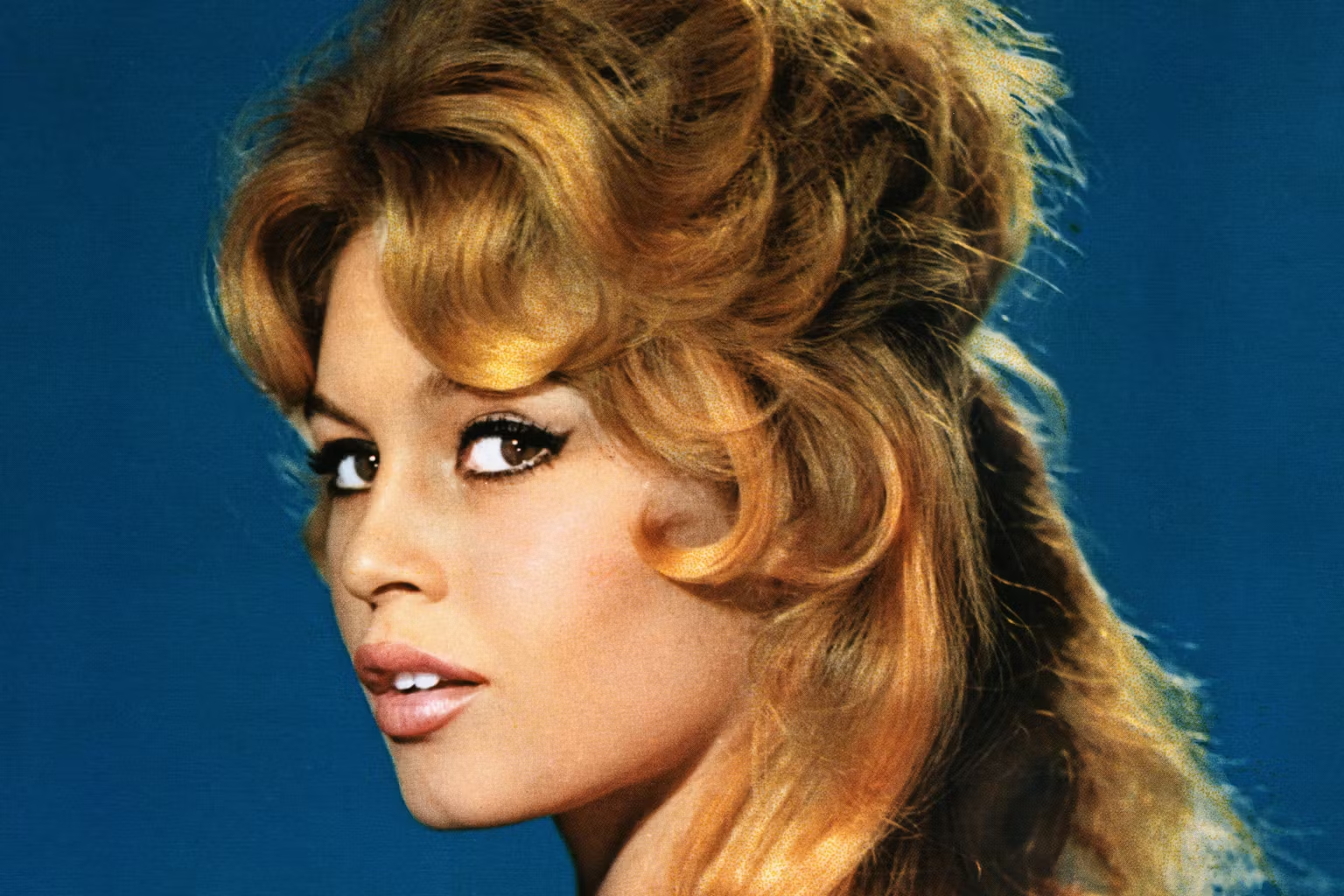
Born in Paris in 1934 to an upper-middle-class family, she described her early years as unhappy and insecure, recalling thick glasses and awkward features that made her painfully self-conscious. That self-image would soon be overturned. By her mid-teens, she appeared on the cover of Elle magazine, launching a modeling career that quickly opened the door to film.
Her ascent coincided with the golden age of European cinema. With an effortless mix of innocence and provocation, she came to embody a new kind of femininity—free, unapologetic, and modern. International attention followed rapidly, and her image crossed borders in a way few French performers had managed before.
It was during this period that Brigitte Bardot became more than an actress. She became a cultural phenomenon. Artists, musicians, and filmmakers across the world were captivated by her presence. Bob Dylan reportedly wrote his first song about her as a teenager, while Andy Warhol immortalized her likeness in pop art, sealing her status as a global icon.
Despite her success, fame came at a high personal cost. She later described celebrity as a form of confinement, saying she felt unable to move freely or live an ordinary life. Public adoration, she said, masked deep unhappiness and isolation.
Her private life was frequently splashed across headlines. Four marriages, highly publicized affairs, and long struggles with depression followed her rise to fame. On her 26th birthday, she was found unconscious at a villa on the French Riviera after attempting to take her own life. Years later, rumors of another suicide attempt circulated after she abruptly canceled a milestone birthday celebration and was hospitalized.
Alongside her acting career, she also found success in music. Collaborations with Serge Gainsbourg produced songs that became both celebrated and controversial, including “Je t’aime… moi non plus,” which challenged cultural taboos and was banned by several broadcasters at the time.
Yet praise and notoriety brought little fulfillment. Reflecting on her life around her 50th birthday, she once said she had been rich, adored, and famous—but profoundly unhappy. Disillusioned, she chose to retreat from public life.
Her final film was released in 1973, closing a career that spanned 42 movies. Declaring the film industry “rotten,” she walked away from cinema entirely and settled in Saint-Tropez. There, far from red carpets and premieres, she redirected her passion toward animal welfare.
What began as personal solace became a defining mission. In 1986, she founded a major animal protection organization, later auctioning personal belongings to finance its work. She campaigned relentlessly against seal hunting, whaling, animal testing, and the mistreatment of circus animals, often confronting governments and public institutions.
She lived largely in seclusion behind high walls, surrounded by animals rather than people. In interviews, she described her devotion to animals as a response to disappointment in human relationships, saying she had given her youth to men and would give her wisdom to animals.
Her activism, however, was not without controversy. Over the years, she made repeated political statements on immigration, religion, and sexuality that led to multiple convictions in French courts for inciting racial hatred. Between 1997 and 2008, she was fined several times for remarks widely condemned as inflammatory, particularly toward France’s Muslim community.
Politically, she aligned herself with the far right, marrying a former adviser to the National Front and openly endorsing party leaders. These positions complicated her legacy, drawing a sharp divide between admiration for her artistic impact and criticism of her views.
Even so, her influence endured. Her hairstyle, fashion sense, and screen presence continued to inspire designers, filmmakers, and photographers decades after she left cinema. Documentaries, retrospectives, and books regularly revisited her work, underscoring her lasting imprint on French culture.
In one of her final interviews in 2025, she dismissed the idea that she symbolized the sexual revolution, saying such changes had already been underway. She also made clear she did not consider herself a feminist, stating bluntly that she liked men and rejected ideological labels.
Asked whether she reflected on her film career, she replied that she rarely thought about it—though she acknowledged it was the reason her voice carried weight in her later advocacy.
Her death closes the chapter on a life marked by extreme contrasts: beauty and despair, adoration and isolation, artistic triumph and public controversy. Few figures left such a complicated and indelible mark on modern French history.

Emily Johnson is a critically acclaimed essayist and novelist known for her thought-provoking works centered on feminism, women’s rights, and modern relationships. Born and raised in Portland, Oregon, Emily grew up with a deep love of books, often spending her afternoons at her local library. She went on to study literature and gender studies at UCLA, where she became deeply involved in activism and began publishing essays in campus journals. Her debut essay collection, Voices Unbound, struck a chord with readers nationwide for its fearless exploration of gender dynamics, identity, and the challenges faced by women in contemporary society. Emily later transitioned into fiction, writing novels that balance compelling storytelling with social commentary. Her protagonists are often strong, multidimensional women navigating love, ambition, and the struggles of everyday life, making her a favorite among readers who crave authentic, relatable narratives. Critics praise her ability to merge personal intimacy with universal themes. Off the page, Emily is an advocate for women in publishing, leading workshops that encourage young female writers to embrace their voices. She lives in Seattle with her partner and two rescue cats, where she continues to write, teach, and inspire a new generation of storytellers.