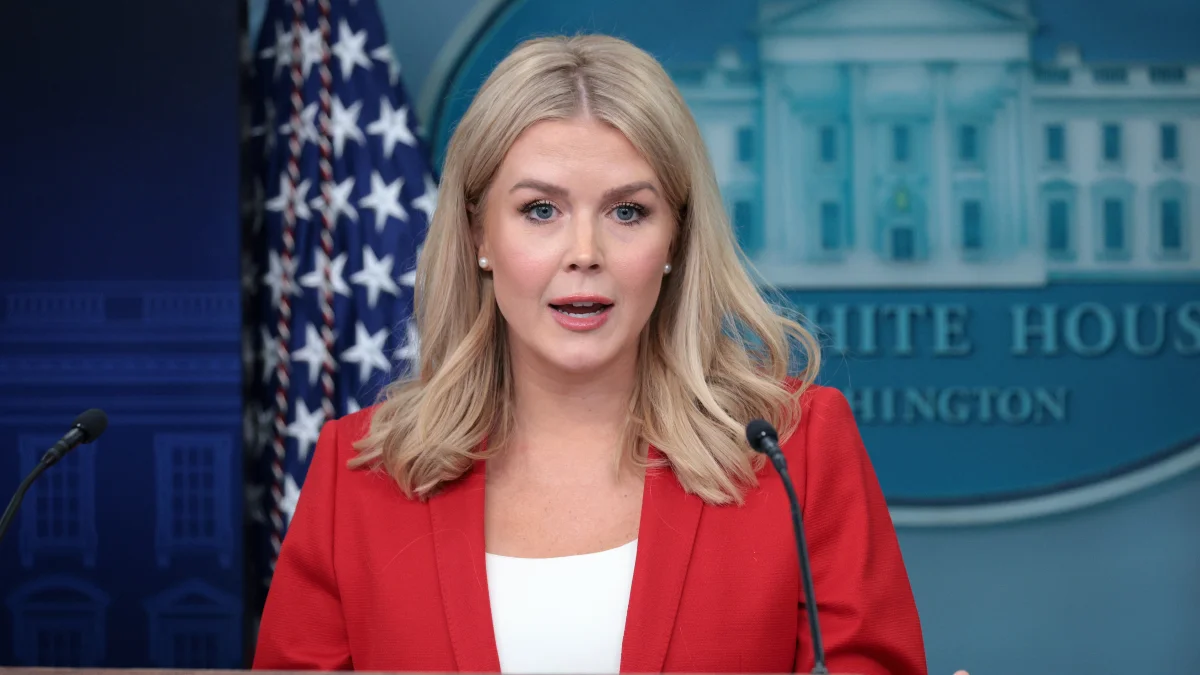
President Donald Trump has confirmed that discussions regarding a potential U.S. purchase of Greenland are ongoing, even as he reiterates the United States’ commitment to NATO. White House spokeswoman Karoline Leavitt addressed the issue on Wednesday, clarifying that while Greenland remains an active topic in national security planning, diplomacy remains the first option.
Greenland, the world’s largest island, is an autonomous territory of Denmark and is considered part of the NATO alliance through its connection to Copenhagen. It holds strategic importance due to its location in the Arctic, as well as rich deposits of rare minerals, hydrocarbons, and other resources.
“All options are always on the table for President Trump,” Leavitt told reporters during a briefing at the White House. “The president’s first option always has been diplomacy.”
The administration’s focus on Greenland comes amid growing concerns about Russian and Chinese activities in the Arctic region. According to Leavitt, acquiring Greenland would allow the United States to exercise greater control over the Arctic, strengthen its military presence, and enhance its ability to deter potential aggression in the strategically significant region.
“The president has been very open and clear with all of you and with the world that he views it in the best interest of the United States to deter Russian and Chinese aggression in the Arctic region,” she said. “That is why his team is currently evaluating what a potential purchase would look like.”
Trump has long expressed interest in acquiring Greenland. During previous public statements, he emphasized the island’s potential value to U.S. national security and economic interests. While some commentators have interpreted these comments as a veiled threat of military action, Leavitt emphasized that diplomacy and negotiation are the preferred approach.
“President Trump has always been clear that he respects our NATO allies,” Leavitt said. “Any discussions regarding Greenland are conducted with full awareness of our commitments to the alliance, and the president remains firmly committed to NATO.”
In addition to strategic and mineral considerations, Greenland also occupies a central position along Arctic shipping routes that are becoming increasingly accessible due to climate change. These routes provide a potential shortcut between North America, Europe, and Asia, making control of the region a significant geopolitical and economic advantage.
During the briefing, Leavitt dismissed reports suggesting that Trump has questioned Denmark’s sovereignty over Greenland. “I have not heard the president challenge Denmark’s claim to Greenland,” she said. “Our discussions are focused entirely on what is in the best interest of the United States and how we can secure our strategic position in the Arctic region.”
Geopolitical Context
The Arctic has emerged as a critical area of global competition. Russia has significantly expanded its military presence in the region, reopening Cold War-era bases, deploying advanced missile systems, and conducting large-scale exercises. China, while not an Arctic nation, has also declared itself a “near-Arctic state” and has been actively investing in shipping, mineral extraction, and research initiatives.
Experts say that Greenland’s location makes it a valuable asset for early warning systems, missile defense, and control over air and sea routes. The island is home to Thule Air Base, the northernmost U.S. military installation, which provides key surveillance and defense capabilities. Any expansion of American influence on Greenland could bolster these strategic advantages.
“From a military perspective, Greenland is one of the most important territories the U.S. could control outside of its borders,” said Dr. Amelia Grant, a senior fellow at the Center for Strategic and International Studies. “It offers both a geographic and operational advantage, particularly as Arctic ice melts and new maritime routes open up.”
U.S.-Denmark Relations
The White House has sought to reassure NATO partners, particularly Denmark, that Trump’s interest in Greenland does not reflect a challenge to Danish sovereignty or alliance commitments. Denmark has historically exercised strong control over Greenland, with the island enjoying self-rule while Denmark manages foreign affairs and defense.
Nonetheless, the U.S. interest in purchasing Greenland has raised eyebrows in Copenhagen and among other European allies. A previous U.S. proposal to buy the island, reportedly floated during Trump’s first term, was firmly rejected by Danish authorities. The notion of purchasing sovereign territory remains unprecedented in modern international relations, and it has prompted concerns about the legality and diplomatic implications of such a move.
“Any discussion about Greenland must be grounded in respect for international law and the sovereignty of Denmark,” said Dr. Henrik Jorgensen, a Danish political analyst. “While the U.S. is a close ally, any attempt to acquire territory would require negotiation and consent, not unilateral action.”
Domestic Political Implications
Trump’s Greenland statements also carry domestic political weight. His administration has consistently highlighted strategic initiatives as part of a broader “America First” approach, emphasizing national security and resource control. The discussion about Greenland aligns with this messaging, presenting an image of proactive global engagement.
At the same time, the idea of purchasing foreign territory has generated a mix of criticism and support within the United States. Some view it as a bold, strategic move to secure American interests, while others see it as an unrealistic or provocative idea that could strain relations with allies and international organizations.
The timing of the announcement also comes amid heightened tensions in the Arctic and international focus on Russia and China. By framing Greenland as a critical element of U.S. strategy, the White House seeks to underscore Trump’s commitment to protecting American security while leveraging the island’s resources and location.
Strategic Benefits
Acquiring Greenland—or establishing a more formal American presence on the island—would provide several strategic advantages:
-
Military Positioning: Greenland’s location allows for rapid deployment and monitoring of the Arctic region, including potential threats from Russia or China.
-
Resource Access: The island holds significant deposits of rare earth minerals, iron, and hydrocarbons, which could enhance American technological and energy capabilities.
-
Control of Shipping Lanes: Melting Arctic ice has opened new maritime routes between Europe, Asia, and North America. Control of Greenland could provide leverage over shipping and trade in the region.
-
Surveillance and Early Warning: Greenland hosts radar and communication infrastructure critical to U.S. missile defense systems and early warning capabilities.
Challenges Ahead
Despite the potential advantages, acquiring or increasing American influence over Greenland presents significant challenges. Any purchase or formal arrangement would require agreement with Denmark and potentially with Greenlandic authorities, whose autonomy has expanded since the 1970s.
Legal and diplomatic hurdles are substantial. International law prohibits the seizure of sovereign territory without consent, and any unilateral action could provoke condemnation or retaliatory measures from European allies and international organizations, including the United Nations.
Moreover, domestic public opinion could be divided. While strategic thinkers may emphasize the benefits, some Americans and political opponents may view the proposal as an impractical or aggressive overreach that distracts from other pressing domestic issues.
Conclusion
White House officials emphasize that discussions about Greenland remain exploratory, with diplomacy and negotiation as the primary tools. President Trump’s interest in the island reflects both strategic and economic considerations, particularly in light of increased Russian and Chinese activity in the Arctic.
Leavitt reaffirmed that Trump remains committed to NATO and values American alliances. She stressed that no actions have been taken to challenge Danish sovereignty and that the administration’s focus is on ensuring U.S. security and maintaining influence in a critical region of global competition.
“President Trump has consistently shown that he prioritizes America’s safety and interests while respecting our allies,” Leavitt said. “Greenland is a strategic opportunity, and our team is exploring how best to secure American interests while upholding our international commitments.”
The situation continues to develop, and any decision regarding Greenland will likely involve consultation with both Danish and Greenlandic authorities, as well as careful consideration of international law, NATO commitments, and domestic political dynamics.

Emily Johnson is a critically acclaimed essayist and novelist known for her thought-provoking works centered on feminism, women’s rights, and modern relationships. Born and raised in Portland, Oregon, Emily grew up with a deep love of books, often spending her afternoons at her local library. She went on to study literature and gender studies at UCLA, where she became deeply involved in activism and began publishing essays in campus journals. Her debut essay collection, Voices Unbound, struck a chord with readers nationwide for its fearless exploration of gender dynamics, identity, and the challenges faced by women in contemporary society. Emily later transitioned into fiction, writing novels that balance compelling storytelling with social commentary. Her protagonists are often strong, multidimensional women navigating love, ambition, and the struggles of everyday life, making her a favorite among readers who crave authentic, relatable narratives. Critics praise her ability to merge personal intimacy with universal themes. Off the page, Emily is an advocate for women in publishing, leading workshops that encourage young female writers to embrace their voices. She lives in Seattle with her partner and two rescue cats, where she continues to write, teach, and inspire a new generation of storytellers.