

NOTE: VIDEO INSIDE THE ARTICLE.
White House Press Secretary Karoline Leavitt escalated the administration’s criticism of CNN this week, arguing that a tense verbal exchange she had with the network’s star reporter Kaitlan Collins serves as direct evidence that the outlet requires sweeping change at the leadership level. The comments punctuated a growing political and corporate drama surrounding CNN’s future, as President Trump and key players in the media industry confront a period of extraordinary transition for one of America’s most influential cable news networks.
The episode unfolded during a regularly scheduled White House briefing in which Collins pressed Leavitt on mounting voter concerns about the direction of the U.S. economy. Collins, known for her pointed questioning and high-profile confrontations with government officials, pushed the press secretary on persistent public pessimism despite the administration’s claims of economic progress. The exchange turned increasingly sharp, prompting Leavitt to tie the moment directly to the president’s broader criticisms of CNN.
“I think the president’s comments on CNN and new leadership is evidenced by my exchange with a CNN reporter in this room,” Leavitt said, suggesting that the tone and substance of Collins’s questions reflect deeper cultural and editorial problems within the network.
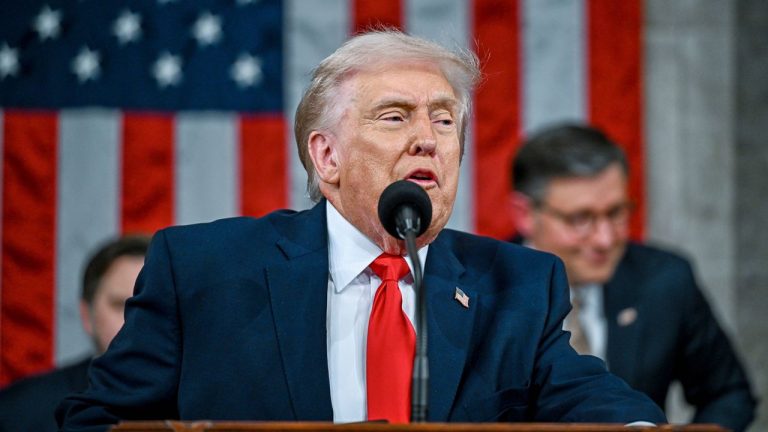
Leavitt’s remarks came just one day after President Trump publicly declared that CNN should be sold, arguing that the network’s operational and editorial failures necessitate a complete overhaul of its ownership structure. The president’s comments were delivered against the backdrop of a major corporate restructuring at CNN’s parent company, Warner Bros. Discovery, which is preparing to split off key divisions—including its moviemaking arm, its streaming business, and its linear broadcast properties—in the coming months.
Warner Bros. Discovery’s internal shakeup has triggered an intense wave of external interest from some of the largest players in global entertainment. The company recently finalized a deal with Netflix for the streaming giant to acquire its extensive film and television catalog, a move that signaled a willingness to divest significant assets in pursuit of long-term financial stability. Almost immediately afterward, Paramount mounted a hostile bid to acquire all Warner Bros. Discovery holdings, a sweeping plan that would include CNN, TNT Sports, and other major media properties.
With two heavyweight bidders expressing interest in reshaping the company’s future, Trump signaled his preference for one of them, telling reporters Wednesday that CNN would benefit from new ownership and new management.
“It’s imperative that CNN be sold,” the president said. “I think CNN should be sold, because I think the people running CNN right now are either corrupt or incompetent.”
The unusually direct language reflects years of friction between Trump and CNN, a feud that originated during his first presidential run and has endured through multiple administrations. Throughout this period, CNN has frequently been one of the administration’s most aggressive critics, and Trump has consistently portrayed the network as an adversary rather than a neutral press institution. The tension has only deepened in recent weeks as Trump has directed personal attacks at Collins on his Truth Social platform, accusing her of biased reporting and partisan motivation.
For the White House, the confrontation between Leavitt and Collins appears to have offered a timely example through which to frame a broader critique of CNN’s editorial culture. “Their ratings have gone down and their viewership has declined,” Leavitt said at the podium, invoking one of the administration’s longstanding talking points about the network’s performance. She declined to comment further on the competing acquisition bids, saying only that the president “has great respect for both companies who are bidding against one another.”
Behind the political back-and-forth, however, lies a more complex story about the financial health of the modern cable news industry and the long-term viability of legacy media brands. CNN, like most traditional cable networks, has struggled with the decline of linear television viewership as streaming platforms command an ever-larger share of public attention. Ratings for the network have fluctuated sharply over the last several years, influenced by shifting audience behavior, a changing political environment, and the broader industry challenges facing cable news in the digital era.
Warner Bros. Discovery has already executed multiple rounds of cost reductions and programming changes aimed at stabilizing the network’s financial trajectory. These actions include staff reductions, restructured programming blocks, and strategic pivots toward digital platforms. Still, the company’s long-term plan for CNN remains uncertain, particularly in light of the potential sale to outside buyers. Paramount, the most aggressive bidder, has reportedly pitched a vision that involves dramatic editorial change—changes that the Ellison family, which controls Paramount, is said to have discussed directly with the president.
David Ellison, founder of Skydance Media, and his father Larry Ellison, co-founder of Oracle and a longtime Trump ally, are believed to support restructuring CNN’s editorial management if they succeed in acquiring Warner Bros. Discovery. Industry sources have suggested that the Ellisons view CNN as an underperforming but strategically valuable brand—one that could be repositioned to capture a larger share of the news market with a different editorial approach.
The possibility of such changes has electrified Washington and the media industry. Trump allies have openly celebrated the prospect that new ownership could usher in a more favorable or more balanced editorial tone. Critics, meanwhile, argue that overt political influence in a major media acquisition raises questions about journalistic independence and the appropriate boundaries between government officials and news organizations.
Amid these crosscurrents, the confrontation between Leavitt and Collins has become a symbolic flashpoint. Collins, one of CNN’s most recognizable journalists, has a long history of high-stakes exchanges with Trump administration officials. Her style—persistent, direct, and often sharply confrontational—has made her a frequent target of criticism from the president and his supporters, who view her questioning as emblematic of what they describe as CNN’s adversarial posture.
In the briefing room, Leavitt’s decision to connect Collins’s tone to Trump’s call for new ownership demonstrated the administration’s intent to link individual journalistic behavior with broader systemic claims about the network. The move was notable both for its rhetorical aggressiveness and for its timing, occurring just as the potential sale of the network has become a headline issue across the business press.
The broader stakes extend well beyond CNN. The future of cable news itself is increasingly uncertain as consumer habits evolve and digital media dominates the information landscape. Legacy networks are being forced to reconsider their distribution models, invest more heavily in streaming, and rethink the kind of journalism that resonates with audiences who consume news through social platforms rather than television screens. Any major ownership change at CNN—whether through Paramount, another bidder, or internal restructuring—would likely become a test case for how legacy news brands navigate a radically changing marketplace.
Meanwhile, political dynamics ensure that CNN’s future will remain a high-profile topic in Washington. Trump and his advisors have positioned the network as a focal point in their ongoing critique of mainstream media institutions, portraying it as emblematic of what they see as entrenched bias. The administration’s claims about CNN’s performance, editorial direction, and leadership are likely to intensify as long as ownership opportunities remain in play.
For now, Warner Bros. Discovery continues to manage its restructuring process while weighing multiple acquisition proposals. Decisions about the company’s assets—including CNN—are expected to take shape in the coming months. Analysts note that the outcome could have far-reaching implications not only for the cable news industry but also for the broader relationship between media power, political influence, and corporate governance.
Regardless of which bidder ultimately prevails, CNN stands at a pivotal moment in its history. The escalating political scrutiny surrounding the network, combined with financial pressures and shifting audience behavior, ensures that its eventual trajectory will be watched closely by industry executives, policymakers, journalists, and the millions of viewers who still rely on traditional news outlets for information.

Emily Johnson is a critically acclaimed essayist and novelist known for her thought-provoking works centered on feminism, women’s rights, and modern relationships. Born and raised in Portland, Oregon, Emily grew up with a deep love of books, often spending her afternoons at her local library. She went on to study literature and gender studies at UCLA, where she became deeply involved in activism and began publishing essays in campus journals. Her debut essay collection, Voices Unbound, struck a chord with readers nationwide for its fearless exploration of gender dynamics, identity, and the challenges faced by women in contemporary society. Emily later transitioned into fiction, writing novels that balance compelling storytelling with social commentary. Her protagonists are often strong, multidimensional women navigating love, ambition, and the struggles of everyday life, making her a favorite among readers who crave authentic, relatable narratives. Critics praise her ability to merge personal intimacy with universal themes. Off the page, Emily is an advocate for women in publishing, leading workshops that encourage young female writers to embrace their voices. She lives in Seattle with her partner and two rescue cats, where she continues to write, teach, and inspire a new generation of storytellers.