A New Lead That Is Raising Eyebrows in Washington
For nearly four years, one of the most puzzling mysteries from January 6, 2021, has remained unsolved: Who planted the two pipe bombs discovered near the DNC headquarters and the Capitol Hill Club?
Despite endless footage, thousands of tips, and multiple agencies searching for clues, the identity of the bomber has never been officially confirmed.
Now, a new report from Blaze Media claims to have uncovered a major lead — one that, if accurate, could force the federal government to answer some uncomfortable questions. The finding centers on a forensic gait analysis, the same type of technology used in numerous criminal investigations around the world. According to the outlet, the program produced a stunning 94% match to a former U.S. Capitol Police officer.
To be clear, no federal agency has publicly confirmed this, and the individual named has not been charged with any crime. But the report is already reverberating through political circles, because of what it could mean if the analysis holds up.
How Blaze Media Says They Found the Lead
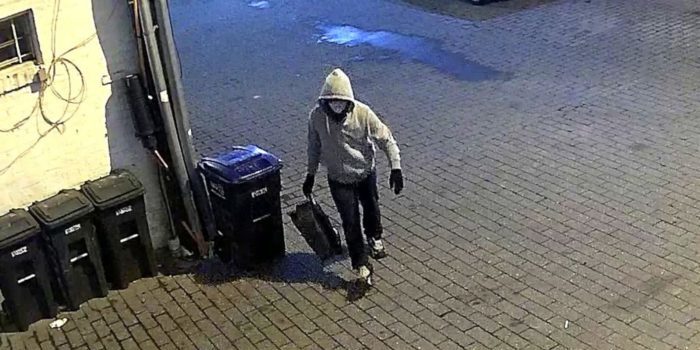
According to their reporting, Blaze Media obtained FBI-released surveillance footage from January 5th — the night before the riot — showing the suspected bomber moving through the Capitol Hill neighborhood. They then commissioned a forensic specialist to run the video through high-level gait-analysis software.
The outlet says the program compares a person’s:
-
knee flexion
-
hip rotation
-
step cadence
-
stride length
-
walking speed
-
overall limb symmetry
The system then produces a probability score based on unique movement markers, similar to how facial-recognition algorithms look for consistent structural patterns.
In this case, Blaze reports the algorithm flagged a 94% probability match, while the analyst overseeing the review personally estimated it closer to 98% based on visual markers the software doesn’t quantify.
The name identified was Shauni Rae Kerkhoff, a former Capitol Police officer who left the force in mid-2021 and later worked in a security role connected to the CIA.
Again — these claims come solely from Blaze Media’s investigation. There has been no confirmation from the FBI, DOJ, or Capitol Police.
https://twitter.com/NoVA_Campaigns/status/1987187326896800089
Why This Claim Hit Washington Like a Shockwave
The idea that the bomber might have been a law-enforcement insider carries enormous consequences.
If the Blaze report is true — and that remains an open question — it would mean the attack wasn’t carried out by an outside extremist, but someone who knew the Capitol grounds, the security layout, the blind spots in surveillance, and the timing of shifts.
Some intelligence sources told Blaze Media that internal involvement has always been considered a possibility, even if not publicly acknowledged.
A congressional source reportedly said investigators had recently developed reasons to suspect “law enforcement involvement,” though the source did not confirm any specific individual. The Blaze article claims the new gait analysis is consistent with those suspicions.
Even if the match turns out to be incorrect, the report has reignited a deeper question many Americans have asked for years:
Why has the FBI never identified the bomber, despite clearer footage than many solved cases?
A Former FBI Agent Raises Even More Questions
One of the most striking parts of the Blaze Media report comes from former FBI Special Agent Kyle Seraphin, who now openly criticizes the bureau.
After seeing the name identified in the gait analysis, Seraphin said he realized that he and his team had been assigned surveillance at the house next door to Kerkhoff’s residence just days after January 6.
According to his account, federal supervisors suddenly pulled his surveillance team off the assignment with no explanation — and with no replacement.
Seraphin told Blaze Media:
“The FBI put us one door away from the pipe bomber within days of January 6, and we were deliberately pulled away for no logical investigative reason.”
He believes investigators were kept from pursuing a lead that might have led directly to the suspect.
Whether his account reflects miscommunication, coincidence, or something more coordinated is unknown. But it adds another layer of intrigue to a case already surrounded by unresolved questions.
Who Is the Former Officer Named in the Report?
Blaze Media says Kerkhoff joined the Capitol Police in 2017 and served for four and a half years. After January 6, she reportedly shifted to a security role affiliated with the CIA, though the outlet noted her current employment status is unclear.
The report does not accuse her of planting the bombs. Instead, it states the forensic analysis shows a “high-probability match” based on movement patterns.
No agency has charged her, contacted her publicly, or confirmed the Blaze findings.
As of now, she is simply the subject of an unverified allegation in a developing story.
The Broader Implications If the Lead Proves Credible
Let’s be clear: this is not a settled matter.
However, the implications of the report — if verified later — would be enormous.
First, it would raise questions about:
-
how law enforcement vetted personnel,
-
whether any threats existed inside the Capitol Police at the time,
-
why the FBI has failed to identify a suspect for nearly four years, and
-
whether political pressure influenced the investigation.
Second, it would add fuel to long-standing claims that certain events surrounding January 6 were not fully or transparently investigated.
Third, it would put immense pressure on Congress to demand answers from the DOJ, FBI, and intelligence community.
For now, the Blaze report remains a claim, not a conclusion. But the reaction from lawmakers suggests they’re taking it seriously enough to ask questions — and that alone signals a shift.
Why This Story Is Gaining So Much Traction
This isn’t just another January 6 headline. Americans — especially older voters who lived through decades of political scandals — recognize the patterns:
-
A major attack with no suspect identified
-
Surveillance footage kept under tight control
-
Inconsistent or withheld information
-
Internal leads that allegedly went nowhere
-
Media outlets uncovering what the government doesn’t acknowledge
Even people who don’t believe the Blaze report outright are asking why the government has come no closer to identifying the bomber despite years of investigation.
And the timing doesn’t help. Congress is already battling over accusations of selective transparency, politically motivated prosecutions, and internal misconduct. So when a new allegation points to potential insider involvement, Washington takes notice.
A Story That’s Far From Over
At this stage, Americans are left with two truths:
-
The Blaze Media report is unverified and relies on independent forensic analysis.
-
The official investigation has produced zero suspects for nearly four years.
Both realities create a vacuum — and in Washington, a vacuum always invites scrutiny.
If Congress pushes for the release of additional footage, internal memos, or withheld evidence, the next few months could reshape what Americans thought they knew about January 6.
This story is still developing, and the final outcome could look very different depending on what additional information, if any, comes to light.

Sarah Mitchell is a bestselling novelist recognized for her insightful and emotionally resonant stories that explore the complexities of human relationships. Originally from Denver, Colorado, Sarah grew up in a family of teachers who nurtured her curiosity and love for storytelling. She studied psychology at Stanford University, where she became fascinated by the intricacies of human behavior—an interest that would later shape her writing career. Sarah’s novels are praised for their nuanced characters, intricate plots, and ability to capture the subtle tensions that define love, friendship, and family ties. Her breakthrough novel, The Spaces Between Us, became an instant bestseller, lauded for its honest portrayal of strained family relationships and the fragile bonds that hold people together. Since then, she has published several works that continue to captivate audiences around the world. Outside of her writing career, Sarah is passionate about mental health advocacy and often partners with organizations to promote awareness and support for those struggling with emotional well-being. Her personal life is quieter—she enjoys hiking in the Colorado mountains, practicing yoga, and spending time with close friends. With each new book, Sarah Mitchell cements her reputation as a writer who illuminates the beauty and struggles of human connection.