A federal court has dealt a significant blow to a White House effort aimed at reshaping how voter eligibility is verified in federal elections, ruling that the president overstepped constitutional boundaries by attempting to impose new requirements through executive action. The decision underscores longstanding tensions between the executive branch and the constitutional framework that assigns control over elections primarily to states and Congress.
At the heart of the ruling is a fundamental question: who has the authority to determine the rules governing voter registration and participation in federal elections? While the executive branch has argued that safeguarding election integrity falls within its responsibility to enforce federal law, the court concluded that the Constitution sharply limits presidential power in this area.
The judge found that several provisions of the administration’s directive intruded on powers explicitly reserved for other branches of government. In doing so, the ruling reaffirmed the principle of separation of powers, a cornerstone of the U.S. constitutional system designed to prevent any one branch from unilaterally reshaping the democratic process.
A Challenge Rooted in Constitutional Structure
The dispute arose after civil rights organizations and political groups filed multiple lawsuits challenging new federal requirements tied to voter registration and absentee voting. These plaintiffs argued that the executive branch had effectively attempted to rewrite election law without congressional approval, placing new burdens on voters and state agencies alike.
Central to their argument was the assertion that election procedures are not a matter of executive discretion. Under the Constitution, authority over federal elections is primarily vested in state governments, with Congress retaining the power to regulate certain aspects. The president, the plaintiffs argued, has no independent authority to impose new rules governing how citizens register to vote or cast ballots.
The judge agreed, emphasizing that constitutional design deliberately excludes the president from direct control over election mechanics. The framers, the ruling noted, sought to ensure that election rules would be set by institutions closest to the people and most accountable to them.
Limits on Executive Enforcement
In a detailed opinion, the court rejected the argument that the president could rely on general enforcement powers to justify changes to election procedures. While the executive branch is responsible for enforcing laws passed by Congress, the judge explained, it cannot create new legal requirements where Congress has already spoken clearly.
The ruling emphasized that when Congress establishes a statutory framework—particularly one governing elections—the president may not override or supplement that framework unless explicitly authorized to do so. In this case, federal law already sets out how voter eligibility is confirmed, including the use of sworn attestations under penalty of perjury.
By directing federal agencies to impose additional verification steps, the executive branch effectively substituted its own judgment for that of Congress. According to the court, this move violated the constitutional balance of power and could not be justified as routine law enforcement.
Impact on Federal Agencies and Voters
One of the contested provisions required certain federal agencies to take steps to assess citizenship status before providing voter registration materials to individuals receiving public assistance. The judge ruled that this requirement conflicted directly with existing federal law.
Under the National Voter Registration Act, agencies that provide public services are required to offer voter registration opportunities to eligible individuals. The statute specifies that eligibility is confirmed through sworn statements, not through pre-screening or independent assessments by agency officials.
The court concluded that Congress’s decision to rely on sworn attestations implicitly rejected alternative verification mechanisms. As a result, the executive branch lacked authority to impose additional hurdles that Congress chose not to include.
The ruling also addressed provisions affecting absentee voting, particularly for military and overseas voters. These voters rely on streamlined federal procedures to participate in elections from abroad. The judge found that imposing new documentation requirements through executive action unlawfully altered those procedures.
Revealing the Order at Issue
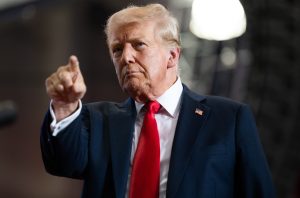
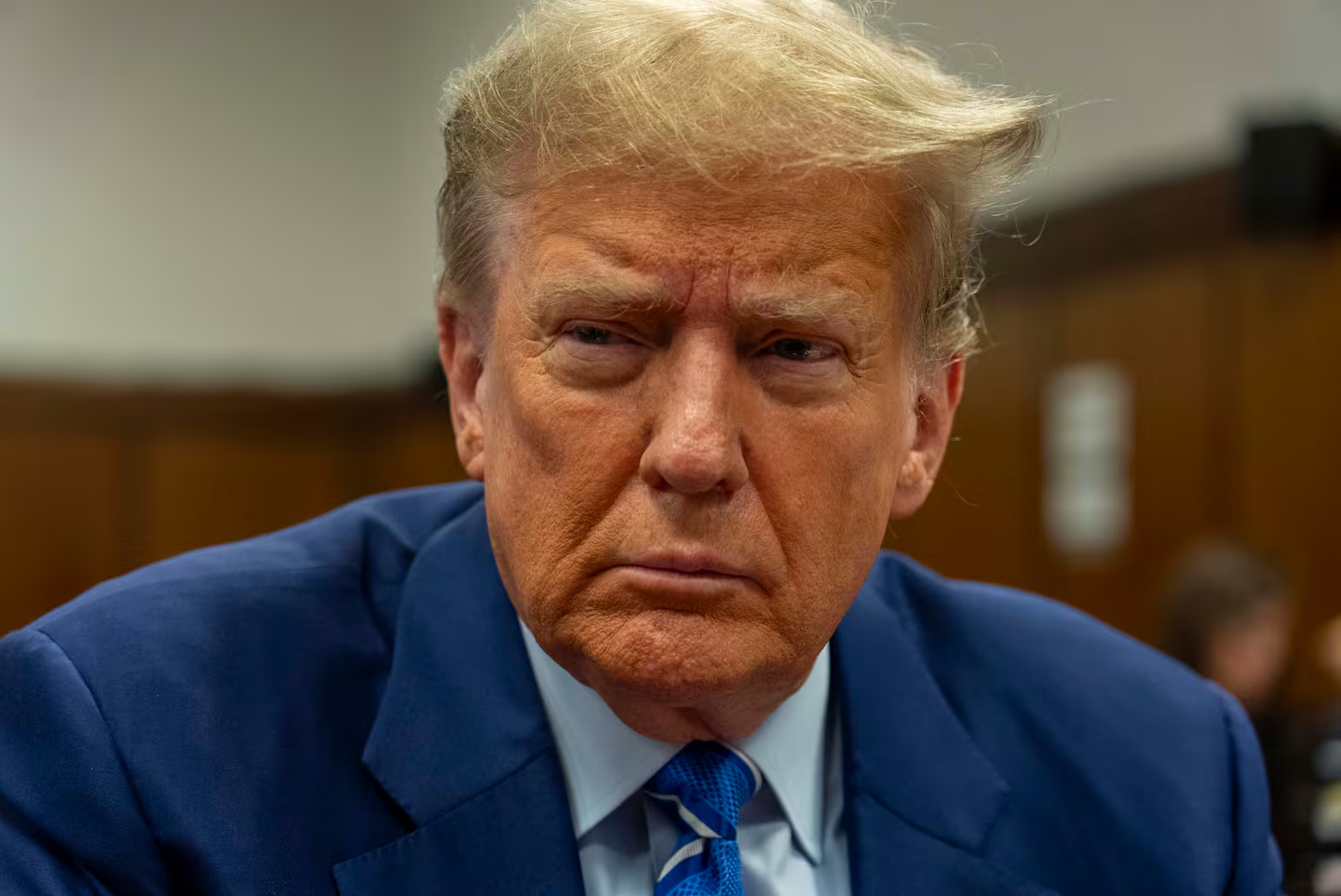
Midway through the opinion, the court identified the directive at the center of the controversy: an executive order signed by President Donald Trump that sought to tighten citizenship verification requirements for voter registration and absentee ballots. The order directed the Election Assistance Commission to revise federal forms to require documentary proof of U.S. citizenship, such as a passport, before individuals could register to vote using national mail-in forms.
The Election Assistance Commission, created by Congress, plays a limited but important role in supporting state and local election officials. The court noted that while the commission operates within the executive branch, its authority is constrained by the statutes that created it. The president cannot direct the commission to take actions that exceed or contradict those statutory limits.
By attempting to mandate changes to federally prescribed voter registration forms, the executive order crossed a constitutional line, according to the judge.
Separation of Powers Reaffirmed
The ruling repeatedly returned to the principle of separation of powers, describing it as essential to preserving democratic accountability. The Constitution divides authority among the legislative, executive, and judicial branches precisely to prevent unilateral action in areas as sensitive as elections.
The judge emphasized that the framers intentionally excluded the presidency from direct involvement in election rulemaking. While Congress may pass laws governing federal elections and states may administer them, the president’s role is limited to enforcing those laws as written.
Allowing a president to impose election rules unilaterally, the court warned, would concentrate too much power in a single office and undermine the carefully balanced system envisioned by the Constitution.
Unresolved Legal Questions
Although the ruling struck down several key provisions of the executive order, it did not resolve all challenges raised by the plaintiffs. The lawsuits include additional claims related to voter access, administrative burdens, and potential discriminatory effects.
The judge directed the parties to work together to establish a schedule for addressing the remaining issues. As a result, the case is expected to continue, with further legal analysis likely to examine the broader implications of federal involvement in election administration.
For now, however, the decision represents a significant check on executive authority and a reaffirmation of congressional primacy in election law.
Arguments About Election Integrity
Beyond its legal directives, the executive order at issue included a sharp critique of how elections are conducted in the United States. It argued that the country fails to employ safeguards commonly used by other nations, citing examples such as biometric voter identification systems and stricter limits on mail-in voting.
According to the order, reliance on self-attestation for citizenship leaves U.S. elections vulnerable, especially when compared to systems used abroad. It contrasted American practices with those of countries that limit absentee voting or require ballots to arrive by Election Day to be counted.
The court, however, made clear that policy critiques—even those grounded in international comparisons—do not grant the president authority to change election rules unilaterally. If reforms are necessary, the judge noted, they must come through legislation enacted by Congress or changes implemented by states within constitutional bounds.
Broader Implications
The ruling arrives amid ongoing national debates over election security, voter access, and the appropriate balance between preventing fraud and ensuring participation. While concerns about election integrity resonate with many voters, the court’s decision highlights the limits of executive power in addressing those concerns.
Legal scholars have noted that the case serves as a reminder that even widely supported policy goals must be pursued through constitutionally authorized means. The judiciary’s role, in this context, is not to weigh the merits of election reforms but to ensure that changes are made by the appropriate branch of government.
Conclusion
The federal judge’s decision blocking key parts of the president’s election-related directive reinforces a fundamental principle of American governance: no single branch of government may unilaterally control the rules of democracy. By striking down provisions that imposed new voter verification requirements, the court reaffirmed Congress’s authority and the states’ central role in administering elections.
While debates over election integrity are likely to continue, the ruling makes clear that lasting reforms must be achieved through legislation, not executive decree. As the remaining legal challenges proceed, the case stands as a significant moment in the ongoing struggle to balance security, access, and constitutional limits in the administration of U.S. elections.

Emily Johnson is a critically acclaimed essayist and novelist known for her thought-provoking works centered on feminism, women’s rights, and modern relationships. Born and raised in Portland, Oregon, Emily grew up with a deep love of books, often spending her afternoons at her local library. She went on to study literature and gender studies at UCLA, where she became deeply involved in activism and began publishing essays in campus journals. Her debut essay collection, Voices Unbound, struck a chord with readers nationwide for its fearless exploration of gender dynamics, identity, and the challenges faced by women in contemporary society. Emily later transitioned into fiction, writing novels that balance compelling storytelling with social commentary. Her protagonists are often strong, multidimensional women navigating love, ambition, and the struggles of everyday life, making her a favorite among readers who crave authentic, relatable narratives. Critics praise her ability to merge personal intimacy with universal themes. Off the page, Emily is an advocate for women in publishing, leading workshops that encourage young female writers to embrace their voices. She lives in Seattle with her partner and two rescue cats, where she continues to write, teach, and inspire a new generation of storytellers.