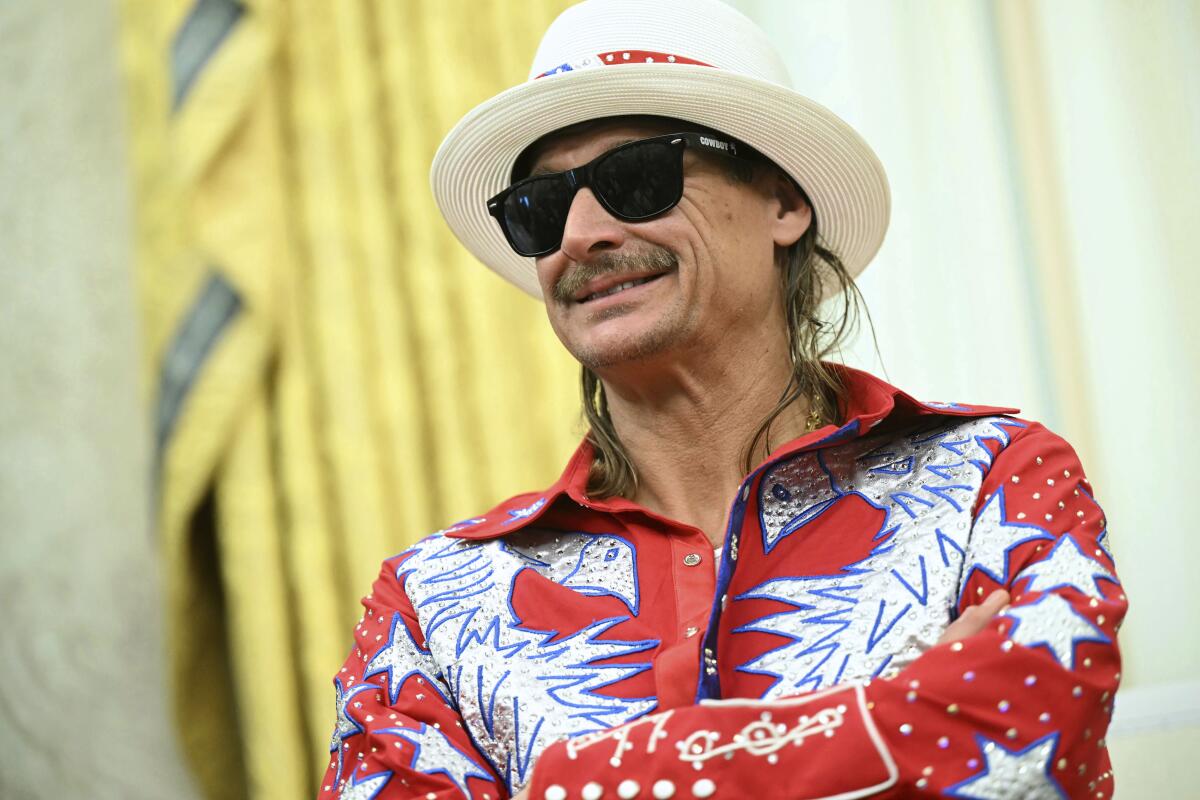
Kid Rock is once again at the center of controversy after being announced as the headline performer for Turning Point USA’s alternative halftime show, a politically charged counter-programming effort scheduled to air during the Super Bowl. The announcement has prompted widespread backlash online, with critics revisiting elements of the musician’s past work that many now describe as deeply troubling.
The 55-year-old rocker, born Robert James Ritchie, was revealed this week as the face of what Turning Point USA is calling “The All-American Halftime Show,” an event positioned as a conservative alternative to the NFL’s official halftime performance, which this year will feature global pop star Bad Bunny. While the announcement was intended to energize right-leaning audiences unhappy with the NFL’s choice, it instead ignited a firestorm on social media.
Almost immediately after the lineup was made public, critics began circulating references to a song released in the early 2000s that includes content many view as inappropriate and alarming by today’s standards. The renewed attention has led to intense criticism not only of Kid Rock himself, but also of Turning Point USA for elevating him at a moment when scrutiny of public figures’ past statements is especially sharp.
On platforms such as X (formerly Twitter), users questioned how a performer with such lyrics in his catalog could be selected for a nationally promoted event, particularly one framed around “faith, family, and freedom.” Others pointed to what they described as hypocrisy, noting that the same political circles criticizing the NFL’s halftime choice appeared willing to overlook controversies tied to their preferred performer.
For several days, discussion focused less on the upcoming halftime event itself and more on the broader cultural implications of resurfacing past material in a modern political climate. Critics argued that lyrics dismissed decades ago as shock value or satire now land very differently, especially amid ongoing conversations about accountability in entertainment.
The controversy also gained traction because of the setting in which the song in question originally appeared. Beyond being part of Kid Rock’s early musical output, it was later included on the soundtrack of a mainstream animated film, a fact that many online commentators described as particularly disturbing in hindsight.
It was only midway through the renewed debate that users began posting direct excerpts from the song, drawing fresh attention to lines that reference attraction to underage girls. One specific refrain, repeated in posts and screenshots, sparked outrage for its explicit framing and casual tone. The lyric has since been widely shared, often accompanied by calls for Turning Point USA to reconsider its decision.
Daily Mail has contacted Kid Rock’s representatives for comment regarding the resurfaced lyrics and the criticism surrounding them, but no response has been issued as of publication.
Turning Point USA, meanwhile, has defended its halftime show as a celebration of American values rather than a political provocation. In a statement to conservative media outlets, a spokesperson said the event was designed to give viewers “another option” during halftime, emphasizing entertainment without what the group describes as ideological messaging.
Kid Rock himself addressed the competitive nature of the event in a promotional statement, comparing the effort to a “David versus Goliath” challenge against the NFL and a globally recognized pop star. While he framed the moment as playful and defiant, critics argue the comparison ignores the seriousness of the backlash now surrounding his past work.
The broader dispute also intersects with criticism directed at the NFL’s choice of Bad Bunny, which drew complaints from some conservative commentators when it was announced last fall. Several critics of the NFL pledged to boycott the official halftime show, a reaction that helped create space for Turning Point USA’s alternative broadcast.
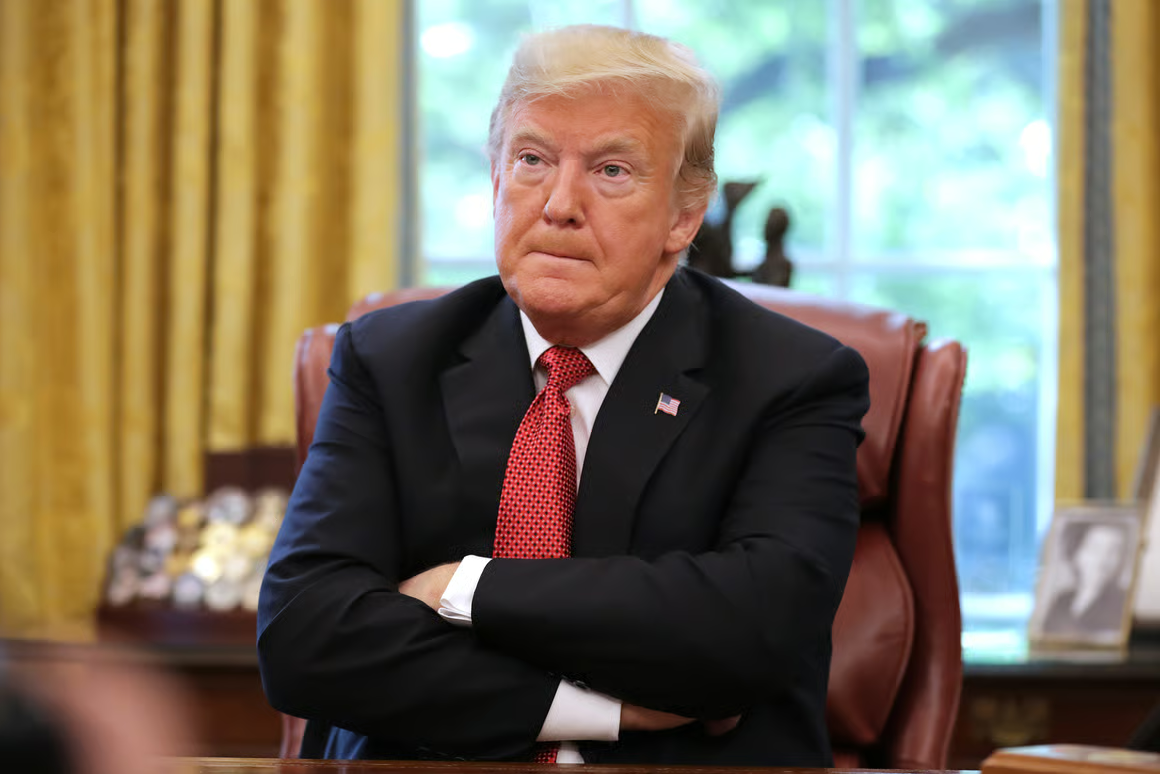
Former President Donald Trump weighed in on the NFL decision in a previous interview, stating he was unfamiliar with Bad Bunny and calling the choice “ridiculous.” Supporters of the alternative show have cited such remarks as evidence of a cultural disconnect between league executives and segments of their audience.
Bad Bunny, for his part, has responded to criticism with humor, joking about the backlash during a recent television appearance and expressing excitement about performing on one of the world’s largest stages. His comments were met with applause from fans but further inflamed critics who argue the NFL disregarded traditional viewers.
The debate over Kid Rock’s resurfaced lyrics is not the first time the musician has faced public criticism in recent years. In October, he drew condemnation from disability advocacy groups after using an offensive slur during a television interview, prompting calls for an apology and greater accountability. A senior official from Special Olympics later issued an open letter urging him to acknowledge the harm caused and to use his platform responsibly.
Taken together, these incidents have fueled questions about whether Kid Rock’s public persona—and past artistic choices—align with the image Turning Point USA says it wants to promote. While supporters dismiss the backlash as politically motivated or overly sensitive, critics argue it reflects a broader reckoning over who is elevated in American cultural spaces.
As the Super Bowl approaches, attention is likely to remain fixed not just on the competing halftime shows, but on the unresolved questions surrounding accountability, nostalgia, and the consequences of revisiting controversial material decades after it was first released. Whether the controversy will affect viewership or force any changes remains unclear, but the debate has already ensured that Kid Rock’s performance will not occur without scrutiny.
For now, the alternative halftime show stands as planned—though it arrives under a cloud of criticism that continues to grow louder with each passing day.