FBI Director Kash Patel Breaks Silence After Guard Attack: Calls Afghan Vetting Collapse an “Emblematic Failure”
A deadly shooting in Washington, D.C., has once again pushed the Biden administration’s Afghan resettlement program under a national microscope—and this time, the criticism is coming directly from inside the intelligence community.
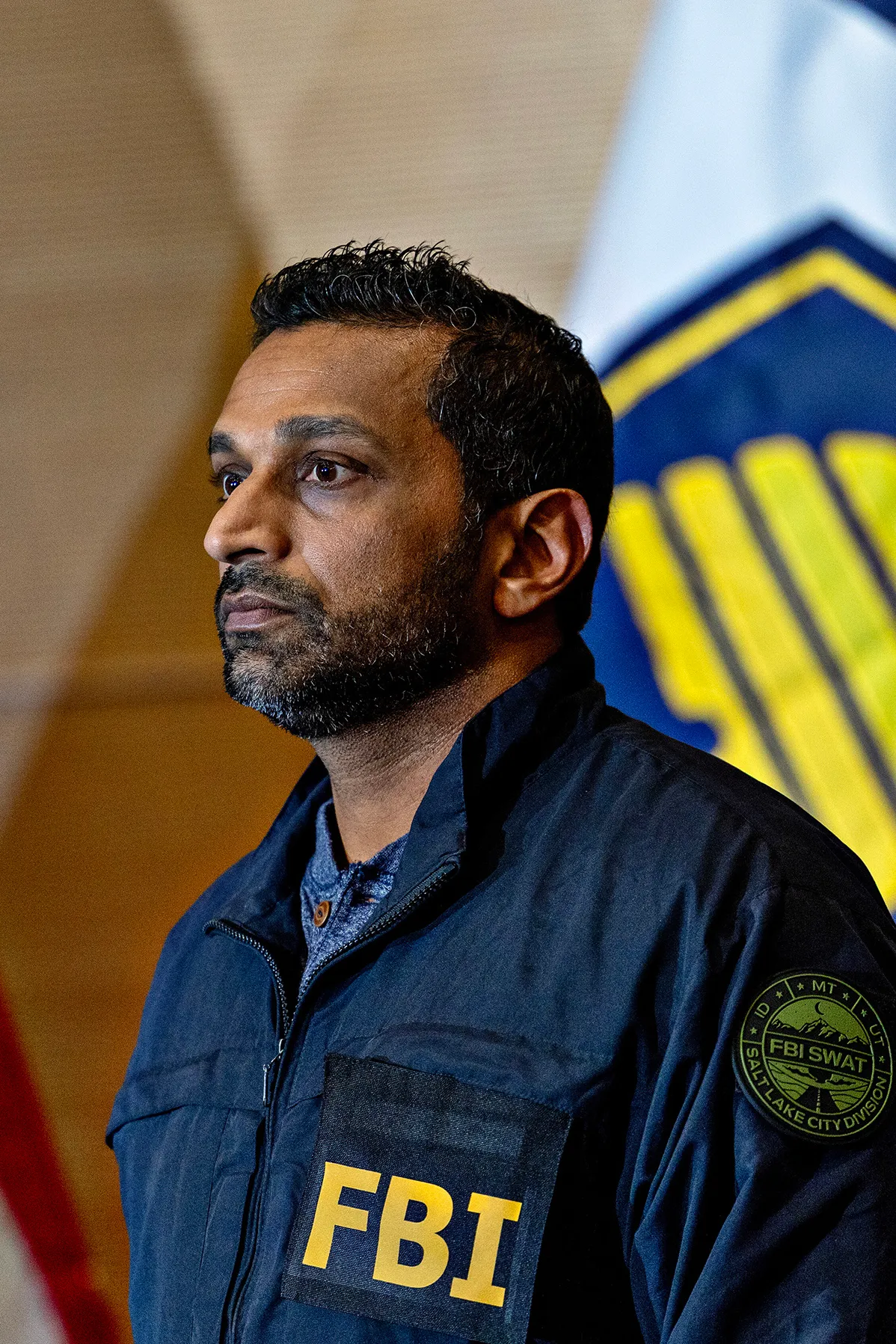
During an appearance on The Ingraham Angle, FBI Director Kash Patel did not mince words. He argued that the tragedy exposes what he called a “massive and emblematic failure” by the Biden White House to properly vet Afghan nationals brought into the United States after the chaotic withdrawal from Afghanistan in 2021.
The case centers around 29-year-old Afghan national Rahmanullah Lakanwal, who prosecutors say shot two National Guard members on November 26 just blocks from the U.S. Capitol. The Justice Department has now charged him with four counts, including murder.
One victim, Spc. Sarah Beckstrom, a 20-year-old Army soldier with the West Virginia National Guard, died from her wounds. The second victim, Staff Sgt. Andrew Wolfe, 24, remains hospitalized.
Patel said the attack highlights what intelligence agencies had warned about for years.
“This is exactly what happens when you don’t vet people,” Patel says
Speaking to Laura Ingraham, Patel said the Biden administration rushed tens of thousands of Afghan nationals into the country without proper screening.
“The problem with this case shows the emblematic failure of the Biden administration to vet anyone who came here from Afghanistan after the disastrous withdrawal,” Patel said.
He reminded viewers that the Department of Homeland Security’s own inspector general issued a damning report in September 2022, revealing that U.S. Customs and Border Protection “did not always have critical data” to screen the evacuees.
Patel stressed that the FBI is now trying to determine when and how Lakanwal became radicalized.
“This is a sprawling international terrorism investigation,” he told Ingraham. “We are not going to leave any stone unturned.”
So far, Patel says the FBI has executed dozens of legal warrants, seized devices, raided multiple homes, and interviewed a long list of associates.
Intelligence officials fear the attack may not be isolated
Patel warned that the investigation could expand dramatically. He emphasized that federal agents are now reviewing every Afghan evacuee brought into the United States—regardless of whether they arrived legally or through humanitarian parole programs.
“We will vet every single person that came in here,” Patel said. “Legally or illegally, or otherwise.”
His blunt tone stood in sharp contrast to the Biden administration’s early assurances that Afghan refugees had undergone “rigorous” security checks.
Inside the FBI and DHS, Patel said morale is tense because the Guard shootings confirmed what many analysts feared: the vetting system cracked under political pressure in 2021.
Kristi Noem pushes full travel ban as DHS begins emergency overhaul
The fallout from the attack didn’t stop with the FBI. Homeland Security Secretary Kristi Noem announced sweeping changes to the vetting process for illegal migrants—including biometric cross-checking, expanded criminal background reviews, social media monitoring, and mandatory yearly check-ins.
But Noem went further.
On December 1, she revealed she had just met with President Trump and urged him to implement a full travel ban on what she called “every damn country that’s been flooding our nation with killers, leeches, and entitlement junkies.”
Her comments triggered intense media reaction, but the White House did not walk them back.
A DHS spokesperson told the BBC that the official list of banned countries would be released soon.
Trump signals even broader immigration freeze
White House Press Secretary Karoline Leavitt confirmed on Fox News that Trump had already imposed a travel ban earlier this year targeting “third-world and failed-state countries.” Noem’s recommendation would expand that ban to include additional nations.
On June 4, the White House identified 19 countries facing full or partial immigration restrictions. Now, according to CBS News sources, Noem’s additions could push that number to roughly 30 countries.
Inside USCIS, Director Joseph Edlow ordered an immediate pause on asylum decisions after the Guard shootings.
The pause, he said, would remain in place “until we can ensure every alien is vetted and screened to the maximum degree possible.”
Trump himself escalated the rhetoric during a Thanksgiving message, declaring he would “permanently pause migration” from all third-world nations. He argued that decades of refugee programs had produced “social dysfunction” and pledged to remove anyone who is not a “net asset” to the United States.
His language echoed early 20th-century immigration laws that prioritized economic contribution and national cohesion.
Biden’s Afghan strategy comes under renewed fire
While the Guard shooting ignited the immediate backlash, the deeper issue is the growing belief among intelligence and national security professionals that the Biden administration rushed tens of thousands of Afghans into the U.S. with no consistent vetting framework.
Patel noted that the FBI now must reconstruct what should have been done years earlier.
“This should never have happened,” Patel said. “We are now conducting a massive terrorism investigation because the system failed at the beginning.”
Critics argue that the Biden administration rejected Trump-era security protocols, choosing political optics over national security during the withdrawal.
Republicans have pointed out that Lakanwal entered the U.S. legally under Biden’s Operation Allies Welcome — a program that has been repeatedly criticized as one of the least-vetted mass-entry immigration efforts in modern American history.
Families demand answers as Pentagon reviews policies
The families of both Guard members are demanding accountability. Pentagon officials confirmed an internal review is underway to determine whether Afghan parolees received proper monitoring after arrival.
Patel told Ingraham that federal agencies now worry the attack may embolden extremists from similar backgrounds.
“This is a case that touches every corner of our counterterrorism system,” he said. “We will go back to the beginning to determine who missed what.”
Behind the scenes, officials acknowledge the public wants answers — and quickly.
A turning point in national security debate
The D.C. Guard attack has revived many of the questions that dominated politics in 2021 but were never resolved:
• Were Afghan evacuees vetted properly?
• Did the administration ignore warnings?
• How many individuals slipped into the U.S. with incomplete records?
• And — the question Patel’s comments implicitly raise — what else has the government missed?
Until the FBI completes its investigation, those questions remain open.
But one thing is clear: The shooting has changed the conversation in Washington. Even inside agencies normally reluctant to criticize a sitting president, frustration is boiling over.
Patel’s on-air comments signal a rare public acknowledgment from an FBI director that the administration’s vetting system did not just fall short — it failed catastrophically.
And now, the consequences are deadly.
Emily Johnson is a critically acclaimed essayist and novelist known for her thought-provoking works centered on feminism, women’s rights, and modern relationships. Born and raised in Portland, Oregon, Emily grew up with a deep love of books, often spending her afternoons at her local library. She went on to study literature and gender studies at UCLA, where she became deeply involved in activism and began publishing essays in campus journals. Her debut essay collection, Voices Unbound, struck a chord with readers nationwide for its fearless exploration of gender dynamics, identity, and the challenges faced by women in contemporary society. Emily later transitioned into fiction, writing novels that balance compelling storytelling with social commentary. Her protagonists are often strong, multidimensional women navigating love, ambition, and the struggles of everyday life, making her a favorite among readers who crave authentic, relatable narratives. Critics praise her ability to merge personal intimacy with universal themes. Off the page, Emily is an advocate for women in publishing, leading workshops that encourage young female writers to embrace their voices. She lives in Seattle with her partner and two rescue cats, where she continues to write, teach, and inspire a new generation of storytellers.