
President Donald Trump said Sunday that a potential agreement to end the war in Ukraine is beginning to take shape, warning that the continued failure to secure peace could result in “millions” more deaths as the nearly four-year conflict drags on.
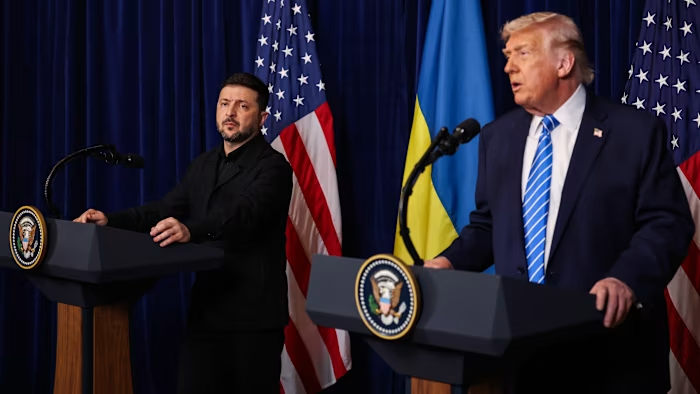
Speaking to reporters just before a closed-door meeting with Ukrainian President Volodymyr Zelensky at his Mar-a-Lago estate, Trump expressed cautious optimism while underscoring the urgency of ending the bloodshed.
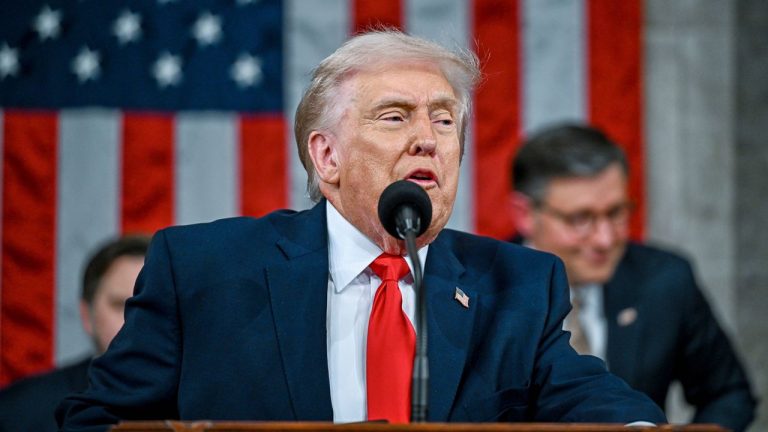
“I do believe that we have the makings of a deal,” Trump said as the two leaders stood outside the main dining room at the Florida resort. “It’s good for Ukraine, good for everybody. There’s nothing more important than getting this war ended.”
The sit-down marked the first in-person meeting between the two leaders since October and came amid an intensifying diplomatic push to finalize a framework that could halt a conflict that has devastated Ukraine, reshaped European security, and strained relations between global powers.
A Grim Assessment of the Human Cost
Trump repeatedly returned to the scale of the human toll, warning that the consequences of delay would be catastrophic.
“If the war continues, millions of additional people will be killed — millions,” he said. “And no one wants that.”
The figures underscore the severity of the conflict. A June 2025 report by the Center for Strategic and International Studies estimates that roughly 250,000 Russian soldiers have been killed since the invasion began, with total Russian casualties approaching 950,000 and another 50,000 listed as missing. Ukrainian losses are also staggering. Earlier this year, Zelensky estimated that about 400,000 Ukrainians have been killed or wounded, with approximately 35,000 missing.
Despite the mounting casualties, Trump declined to set a firm timeline for approving a final peace agreement, arguing that rigid deadlines could undermine negotiations.
“No deadlines,” he said. “My deadline is getting the war ended.”
Inside the Emerging Peace Framework
At the center of the talks is a 20-point peace plan that both sides’ negotiating teams have been refining for weeks. Zelensky has said the proposal is roughly 90 percent complete and represents the core framework for ending the war.
The revised plan replaces an earlier 28-point proposal that had drawn criticism for being overly favorable to Moscow. According to Ukrainian officials, the updated framework is more balanced and focused on long-term security.
Key elements reportedly include security guarantees from the United States, NATO, and European allies should Russia attempt another invasion, reaffirmations of Ukraine’s sovereignty, and a proposed non-aggression pact between Kyiv and Moscow.
Trump said he and Zelensky discussed several unresolved issues during their Mar-a-Lago meeting and predicted that negotiations could accelerate quickly.
“Pretty complex, but not that complex,” Trump said of the talks. “I think it will move very rapidly.”
Putin’s Position Casts a Shadow
Any optimism surrounding the negotiations is tempered by Moscow’s stance. On the eve of the Mar-a-Lago summit, Russian President Vladimir Putin signaled that Russia remains prepared to continue the war unless Ukraine accepts its demands.
“If Ukraine does not want to resolve everything peacefully, Russia will resolve all its objectives by military means,” Putin said, according to translated remarks.
Those demands reportedly include Ukraine surrendering significant territory, sharply reducing its military forces, and abandoning any formal alliances with Western nations — conditions Kyiv has consistently rejected.
Trump said he spoke with Putin ahead of his meeting with Zelensky, describing the conversation as “good and very productive.” He added that he plans to follow up with additional calls to the Russian leader and key European officials after the Mar-a-Lago talks.
Still, Putin’s public rhetoric suggests that Moscow remains unwilling to compromise on its core objectives, raising doubts about whether diplomacy can overcome entrenched positions.
A Complicated Relationship Revisited
Sunday’s meeting also carried symbolic weight given the history between Trump and Zelensky, whose relationship has included public disagreements in past years. Yet Trump adopted a notably conciliatory tone as the two leaders prepared to meet.
“This gentleman has worked very hard,” Trump said, referring to Zelensky. “He’s very brave, and his people are very brave. What they’ve gone through — very rarely has a nation ever gone through something like this.”
The remarks marked a shift toward a more personal and empathetic approach, as Trump seeks to present himself as a dealmaker capable of bridging deep divisions.
Trump also described the Ukraine war as the most difficult diplomatic challenge he has faced, despite claiming success in resolving multiple other international conflicts.
“I solved eight wars,” he said. “This is the most difficult one.”
European Stakes and Global Pressure
European leaders are closely monitoring the talks, particularly as the war continues to strain NATO unity, disrupt energy markets, and increase defense spending across the continent. Trump said he intends to brief several European heads of state following his discussions with Zelensky and Putin.
The proposed peace framework’s emphasis on Western-backed security guarantees reflects Ukraine’s insistence that any agreement must prevent a repeat of past ceasefires that collapsed amid renewed Russian aggression.
For Ukraine, the stakes are existential. For Russia, the outcome could define its long-term geopolitical standing. For the United States, the war has become a defining test of leadership and diplomatic leverage.
An Uncertain Path Forward
Despite Trump’s confidence, significant obstacles remain. Deep mistrust between Kyiv and Moscow, unresolved territorial disputes, and competing geopolitical interests all threaten to derail negotiations.
Still, Trump’s assertion that a deal is within reach represents one of the most optimistic public assessments of peace prospects in months.
“There’s nothing more important,” he said again, as images of shattered Ukrainian cities and ongoing battlefield losses continue to dominate global headlines.
Whether the Mar-a-Lago talks will produce a lasting ceasefire or simply another temporary diplomatic opening remains unclear. But with casualties mounting and international patience wearing thin, pressure is intensifying on all sides to find a way out of the war.
For now, Trump is betting that personal diplomacy and momentum can succeed where years of fighting have failed.

Emily Johnson is a critically acclaimed essayist and novelist known for her thought-provoking works centered on feminism, women’s rights, and modern relationships. Born and raised in Portland, Oregon, Emily grew up with a deep love of books, often spending her afternoons at her local library. She went on to study literature and gender studies at UCLA, where she became deeply involved in activism and began publishing essays in campus journals. Her debut essay collection, Voices Unbound, struck a chord with readers nationwide for its fearless exploration of gender dynamics, identity, and the challenges faced by women in contemporary society. Emily later transitioned into fiction, writing novels that balance compelling storytelling with social commentary. Her protagonists are often strong, multidimensional women navigating love, ambition, and the struggles of everyday life, making her a favorite among readers who crave authentic, relatable narratives. Critics praise her ability to merge personal intimacy with universal themes. Off the page, Emily is an advocate for women in publishing, leading workshops that encourage young female writers to embrace their voices. She lives in Seattle with her partner and two rescue cats, where she continues to write, teach, and inspire a new generation of storytellers.