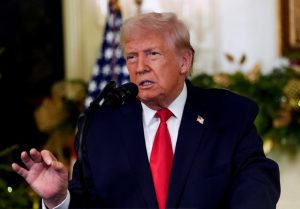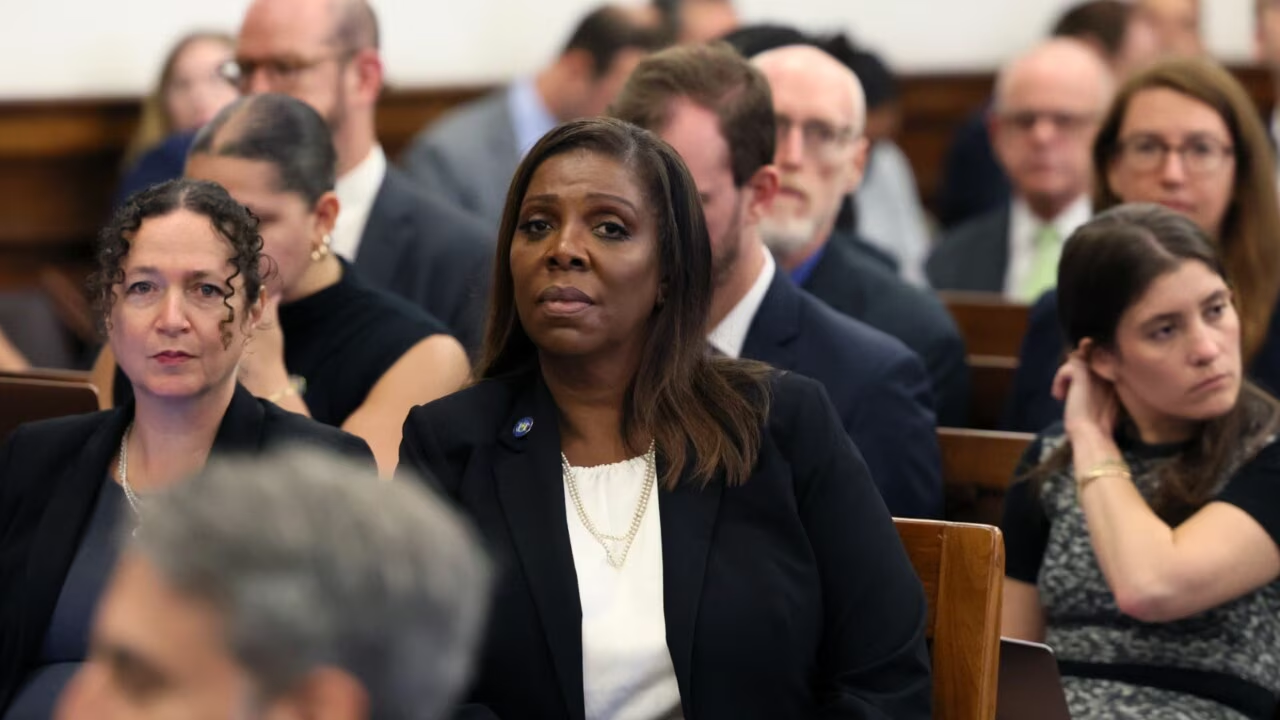
A federal judge has disqualified John A. Sarcone III, a Trump-appointed acting U.S. attorney in New York, ruling that his appointment was unlawful and invalidating subpoenas he issued in investigations involving New York Attorney General Letitia James. The ruling marks the latest in a series of judicial checks on the Trump administration’s appointments to federal prosecutorial positions during the former president’s second term.
The decision, handed down on January 8, 2026, came after New York Attorney General Letitia James challenged Sarcone’s authority, arguing that he had been improperly installed in the Northern District of New York. Sarcone had issued subpoenas seeking documents related to James’s lawsuits alleging fraud against former President Donald Trump, as well as inquiries into her office’s investigation of the National Rifle Association (NRA) and its former leadership.
Sarcone, a member of Trump’s 2016 legal team and a former regional administrator for the Northeast and Caribbean with the U.S. General Services Administration, was initially nominated by Trump to serve as U.S. attorney. However, his nomination was blocked in the U.S. Senate. He was then appointed as interim U.S. attorney, effective March 17, 2025, for a statutory 120-day term. When that period ended, judges in his district did not extend his term as allowed under federal law. Instead, the Department of Justice reportedly attempted to maintain Sarcone in the acting role through administrative maneuvers, a strategy that the court deemed unlawful.
“Federal law then required the use of other statutory procedures to fill the position,” U.S. District Judge Lorna Schofield wrote in her ruling. “The Department of Justice did not follow those procedures. Instead, the DOJ took coordinated steps—through personnel moves and shifting titles—to install Mr. Sarcone as Acting U.S. Attorney. Federal law does not permit such a workaround.”
Judge Schofield emphasized that bypassing statutory safeguards to place political allies in prosecutorial positions undermines the rule of law. “When the Executive branch of government skirts restraints put in place by Congress and then uses that power to subject political adversaries to criminal investigations, it acts without lawful authority,” she wrote.
As a result of the ruling, Sarcone was immediately disqualified from participating in the investigations involving AG James. The subpoenas he issued were deemed invalid, and the court noted that any actions taken by Sarcone while unlawfully acting in his capacity were “void or voidable.” James’s office hailed the ruling as “an important win for the rule of law,” signaling that it would continue defending its investigations from what it described as politically motivated interference.
A spokesperson for the Attorney General’s office said in a statement, “We will continue to defend our office’s successful litigation from this administration’s political attacks.”
The Department of Justice, however, indicated it intends to contest the ruling. A DOJ spokesperson stated that the agency “will continue to fight and defend the President and the Attorney General’s authority to appoint their own U.S. Attorneys.” The ongoing dispute highlights the broader tensions between state authorities and federal enforcement during periods of political polarization, particularly regarding appointments of interim prosecutors with ties to the White House.
Sarcone is the fifth Trump-appointed interim U.S. attorney disqualified by federal courts during the former president’s second term. His case follows similar rulings against Alina Habba, a Trump administration appointee in New Jersey. In December 2025, a three-judge panel of the U.S. Court of Appeals for the Third Circuit ruled that Habba’s appointment as U.S. attorney for New Jersey was invalid. Habba had been installed as first assistant U.S. attorney, but the court clarified that only the first assistant in place at the time of a vacancy automatically assumes the office under the Federal Vacancies Reform Act.
The ruling against Habba arose after defendants facing prosecution in New Jersey filed lawsuits challenging her authority, asserting that her appointment violated statutory procedures. Courts agreed, prompting her disqualification and calls to dismiss actions taken under her authority.
The disqualification of Sarcone and Habba reflects growing judicial scrutiny over the use of interim appointments as a mechanism to circumvent Senate confirmation. Legal experts have noted that while the president has significant discretion in appointing U.S. attorneys, statutory limits exist to ensure checks and balances and prevent political exploitation of prosecutorial powers.
In the case of Sarcone, James argued that his subpoenas were politically motivated, aiming to pressure or retaliate against her office’s active investigations into Trump and allied entities. Sarcone’s prior work on Trump’s campaign and federal administration experience raised concerns among legal analysts about potential conflicts of interest in the investigations.
“Appointing a partisan actor to wield prosecutorial power against a political opponent undermines public confidence in the justice system,” said Thomas M. Boyd, a former federal prosecutor not involved in the case. “Courts are right to scrutinize these appointments and ensure that legal processes are followed.”
The decision also underscores the importance of procedural compliance in the federal justice system. Judge Schofield noted that the Department of Justice must follow statutory procedures to maintain legitimacy and protect the constitutional separation of powers. Her ruling serves as a reminder that executive overreach in judicial appointments can be legally challenged, even when the individuals involved have strong political connections.
For AG James, the ruling provides immediate relief, halting subpoenas she described as intrusive and politically motivated. Her office had been defending against multiple investigative efforts initiated by Sarcone, including requests for internal communications, financial records, and other documents related to ongoing civil and criminal inquiries. By disqualifying Sarcone, the court effectively shields the state attorney general’s investigations from federal interference orchestrated under questionable authority.
The outcome is likely to have ripple effects across other jurisdictions where interim appointments of Trump-affiliated attorneys are under scrutiny. Legal observers anticipate that additional challenges may arise, particularly as ongoing investigations intersect with politically sensitive subjects, including campaign-related matters, nonprofit organizations, and regulatory compliance cases linked to former President Trump.
While the DOJ has signaled its intent to appeal, the ruling establishes a clear precedent that federal courts are willing to act decisively against executive attempts to circumvent statutory requirements for appointing U.S. attorneys. Observers note that such rulings strengthen judicial oversight and provide a critical check on potential abuses of prosecutorial power for political gain.
As the legal battle continues, the disqualification of Sarcone reinforces the broader principle that federal authority must operate within established legal frameworks. For New York Attorney General Letitia James, the ruling represents a vindication in her ongoing effort to protect the integrity of her office and pursue accountability for high-profile cases, free from partisan manipulation.

Emily Johnson is a critically acclaimed essayist and novelist known for her thought-provoking works centered on feminism, women’s rights, and modern relationships. Born and raised in Portland, Oregon, Emily grew up with a deep love of books, often spending her afternoons at her local library. She went on to study literature and gender studies at UCLA, where she became deeply involved in activism and began publishing essays in campus journals. Her debut essay collection, Voices Unbound, struck a chord with readers nationwide for its fearless exploration of gender dynamics, identity, and the challenges faced by women in contemporary society. Emily later transitioned into fiction, writing novels that balance compelling storytelling with social commentary. Her protagonists are often strong, multidimensional women navigating love, ambition, and the struggles of everyday life, making her a favorite among readers who crave authentic, relatable narratives. Critics praise her ability to merge personal intimacy with universal themes. Off the page, Emily is an advocate for women in publishing, leading workshops that encourage young female writers to embrace their voices. She lives in Seattle with her partner and two rescue cats, where she continues to write, teach, and inspire a new generation of storytellers.