Charlotte, North Carolina, was at the center of national attention again this week as a federal judge issued a decision in one of the most heated confrontations involving immigration authorities in recent memory. For days, the case has drawn sharp debate over law enforcement authority, First Amendment protections, and the escalating tensions surrounding federal operations in American cities.
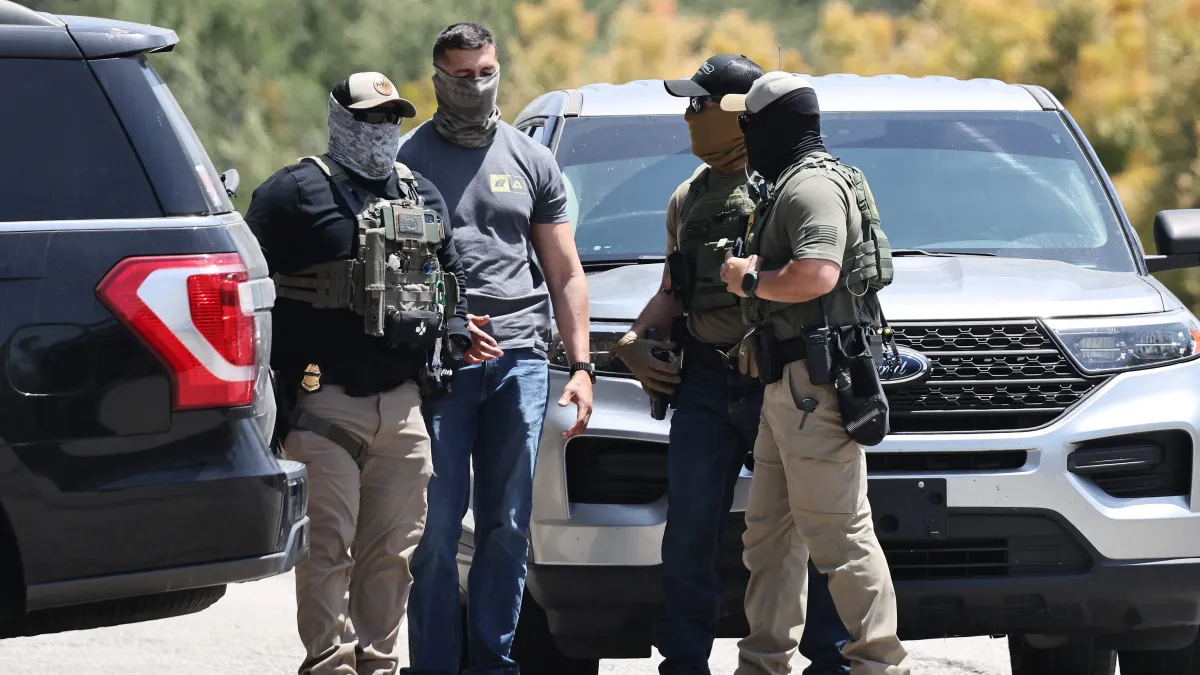
The events leading to the judge’s ruling began on November 16, when Border Patrol units dispatched to Charlotte encountered a young man circling their positions while taking photographs. What began as what agents described as a “voluntary stop” quickly spiraled into a confrontation that would end with a vehicle pursuit, damaged federal vehicles, an injured officer, and a long list of criminal charges.
Now, that list of charges looks different.
The judge’s decision did not absolve the suspect—but it did reshape the government’s case in a way that both sides say will have major implications moving forward.
A Familiar Flashpoint in a New City
Tensions between immigration enforcement agencies and activists have intensified nationwide as federal officers expand their operations into cities previously considered low-priority. Charlotte became the latest flashpoint earlier this month when Border Patrol agents arrived wearing tactical gear, setting up stops in public areas after receiving intelligence related to human trafficking and illegal crossings.
It was during one of these moments that Miguel Martinez, 24, was spotted photographing agents across several locations. Authorities say Martinez circled their vehicles multiple times, prompting agents to attempt what they characterized as a voluntary engagement.
Martinez drove off. What followed became the centerpiece of the case: a quickly escalating chase in which both the suspect and federal agents maneuvered over medians, crossed into oncoming lanes, and raced through a populated area with lights and sirens activated.
Martinez was ultimately stopped after nearly two miles when federal officers boxed in his van. An affidavit later stated that a Border Patrol agent was injured while breaking Martinez’s window to take him into custody. During that moment, Martinez reportedly told officers a firearm was inside a black bag in the vehicle.
Federal authorities wasted no time announcing the arrest, describing Martinez as having “weaponized his vehicle” and posing a “serious public safety threat.”
The Charges—and the Judge’s Surprising Move
Martinez initially faced felony charges including assaulting, resisting, impeding, intimidating, or interfering with federal officers. Prosecutors then added an enhancement, alleging he used a “deadly or dangerous weapon”—his vehicle—during the confrontation.
Enhancement charges significantly increase the potential penalties in a federal case.
But on Wednesday, U.S. Magistrate Judge David Keesler took a closer look at the evidence and delivered a ruling that left both sides recalibrating.
Keesler dismissed the enhancement related to the use of a deadly weapon, stating that the video footage and testimony did not support probable cause for that allegation. However, he upheld the broader interference charge, finding that the pursuit itself and the driving behavior documented on video supported that element of the case.
The distinction is significant. While the government retains leverage in prosecuting interference with federal officers, losing the deadly weapon enhancement removes the most severe element of the indictment.
In his decision, Keesler acknowledged that Martinez’s actions—including circling the agents, fleeing, driving across medians, and nearly striking a federal vehicle—demonstrated clear interference with an active operation.
But Keesler was not convinced that the evidence met the legal threshold for weaponizing the vehicle in the manner prosecutors claimed.
A Defense Built on First Amendment Arguments
Martinez’s federal public defender, John Parke Davis, presented an argument that resonated with civil liberties groups: that Martinez was operating as a “citizen journalist,” documenting federal activity in a public place—a right protected under the First Amendment.
Davis further claimed that the pursuit began only after agents infringed upon those rights. According to the defense, Martinez fled because he feared unlawful detention after officers moved to stop him without cause.
The government argued that the defendant escalated the situation by fleeing, driving erratically, and colliding with an ICE vehicle.
Davis countered that Martinez swerved intentionally to avoid a collision he says agents attempted to induce.
Keesler ultimately declined to rule on those arguments, stating that questions about First Amendment violations “are not properly before the Court” at this preliminary stage—but he did leave the door open for those issues to resurface as the case progresses.
Competing Narratives of Danger and Intent
As with most cases involving federal officers and civilians, both sides paint dramatically different interpretations of the same moments.
Federal agents say:
-
Martinez deliberately used his van as a weapon
-
He struck the front of a federal vehicle carrying four ICE officers
-
He continued fleeing after the collision
-
He endangered the public by driving into oncoming lanes
-
An officer was injured attempting to break the window to arrest him
The defense says:
-
Martinez was legally recording agents in a public space
-
Officers initiated an unlawful stop
-
Martinez fled out of fear, not intent
-
Federal vehicles attempted to force collisions
-
The defendant avoided those collisions, not caused them
-
The government is exaggerating the threat to justify aggressive tactics
Keesler’s ruling reflects a middle ground: the pursuit and the driving behavior warrant charges, but the enhancement lacked sufficient evidence.
A Growing Trend of Legal Battles Over Federal Policing
This case is not unfolding in a vacuum. Across the country, federal agencies have run into challenges from state and local governments as they expand operations beyond traditional border areas. Critics argue that these operations resemble “roving checkpoints,” while supporters insist they are necessary given the ongoing immigration crisis.
Charlotte’s operation represented part of a nationwide push—not just to intercept illegal immigrants, but to gather intelligence in communities where federal officials say cartels and smuggling networks embed themselves.
Martinez’s case now sits at the intersection of these debates.
https://twitter.com/DHSgov/status/1990249095911350330
What Comes Next
Federal prosecutors will proceed with the remaining charges. The interference count carries serious penalties, though far less severe than the dismissed enhancement.
Defense attorneys plan to file additional motions, including arguments based on First Amendment grounds and potential claims of excessive force or unlawful detainment.
Meanwhile, DHS has publicly stood by its agents. In its statement, DHS emphasized the threat Martinez posed:
“He immediately fled the scene, starting a dangerous high-speed chase through a densely populated area… He attempted to ram into law enforcement vehicles—posing a serious public safety threat.”
The agency also noted that one officer was injured.
As the case moves forward, the legal system will have to untangle questions surrounding intent, civil liberties, law enforcement authority, and public safety—questions that have become more urgent amid rising tensions around immigration enforcement nationwide.
One thing is clear: Wednesday’s ruling ensured that this case will remain a focal point in the national immigration debate for months to come.

Sarah Mitchell is a bestselling novelist recognized for her insightful and emotionally resonant stories that explore the complexities of human relationships. Originally from Denver, Colorado, Sarah grew up in a family of teachers who nurtured her curiosity and love for storytelling. She studied psychology at Stanford University, where she became fascinated by the intricacies of human behavior—an interest that would later shape her writing career. Sarah’s novels are praised for their nuanced characters, intricate plots, and ability to capture the subtle tensions that define love, friendship, and family ties. Her breakthrough novel, The Spaces Between Us, became an instant bestseller, lauded for its honest portrayal of strained family relationships and the fragile bonds that hold people together. Since then, she has published several works that continue to captivate audiences around the world. Outside of her writing career, Sarah is passionate about mental health advocacy and often partners with organizations to promote awareness and support for those struggling with emotional well-being. Her personal life is quieter—she enjoys hiking in the Colorado mountains, practicing yoga, and spending time with close friends. With each new book, Sarah Mitchell cements her reputation as a writer who illuminates the beauty and struggles of human connection.