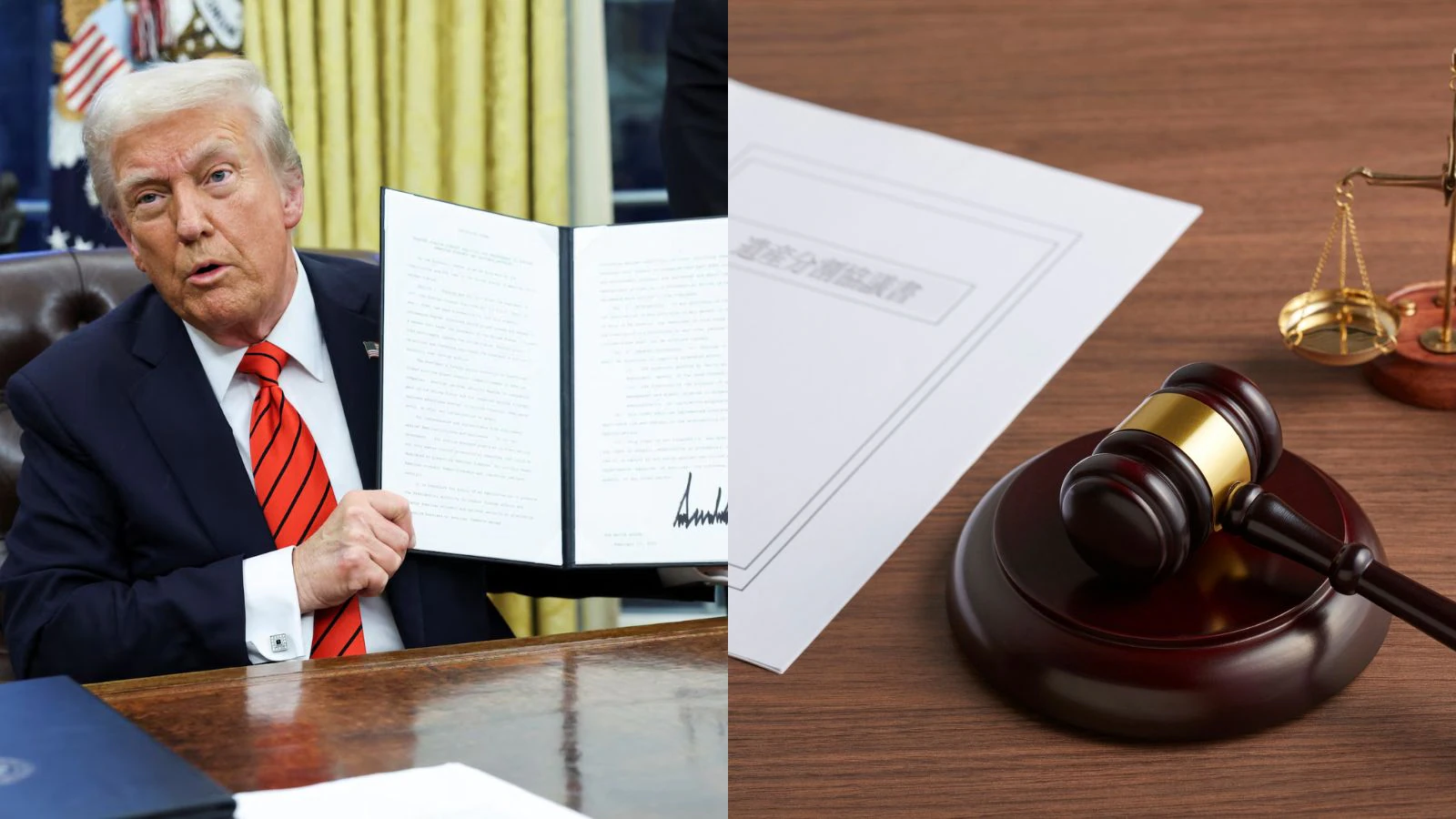
A federal judge has temporarily blocked the Trump administration from detaining and deporting a prominent activist who was recently targeted under new visa-related sanctions, ruling that the government may not proceed while the court reviews serious constitutional claims raised in the case.
The injunction, issued on Dec. 25, prevents immigration authorities from taking custody of Imran Ahmed, a British citizen and U.S. legal permanent resident, pending further legal proceedings. Ahmed is the chief executive officer of the Center for Countering Digital Hate (CCDH), a U.S.-based nonprofit organization that has frequently clashed with conservative figures and government officials over online speech and content moderation.
The ruling represents an early legal setback for the administration’s broader effort to impose visa restrictions on foreign nationals accused of participating in censorship or undermining free expression.
Lawsuit Filed to Halt Deportation
Ahmed filed suit in federal court on Dec. 24, one day before the injunction was granted, arguing that the government’s actions amounted to political retaliation and violated his constitutional rights.
In his complaint, Ahmed contended that the visa sanctions imposed by the State Department were being used as a punitive tool against individuals based on their political viewpoints and advocacy work. He alleged that the attempt to remove him from the country violated the First Amendment and due process protections.
The lawsuit named several senior administration officials as defendants, including Secretary of State Marco Rubio, Attorney General Pam Bondi, Secretary of Homeland Security Kristi Noem, acting Immigration and Customs Enforcement Director Todd Lyons, acting New York ICE Field Office Director Judith Almodovar, and Undersecretary of State for Public Diplomacy Sarah Rogers.
Ahmed’s legal team argued that the government’s actions created a chilling effect on political speech and advocacy, particularly for immigrants and permanent residents engaged in public debate.
Court Issues Temporary Injunction
The judge granted a temporary injunction preventing federal authorities from detaining or deporting Ahmed while the case proceeds. The order does not resolve the underlying legal questions but preserves the status quo until the court can fully assess the merits of the claims.
In granting the injunction, the court indicated that Ahmed had raised serious legal questions about whether the administration’s actions exceeded its authority or violated constitutional protections. Temporary injunctions are typically issued when a court finds that a plaintiff may suffer irreparable harm without immediate relief and that the case presents substantial legal issues.
The ruling ensures that Ahmed will remain in the United States for now, though the case is expected to move forward in the coming weeks.
Background on Visa Restrictions
The injunction comes amid heightened scrutiny of a recent State Department policy targeting foreign nationals accused of participating in or facilitating censorship, particularly through digital platforms and advocacy organizations.
Administration officials have argued that such measures are necessary to protect free speech and American interests, asserting that certain activists and organizations exert undue influence on online discourse and pressure companies to suppress viewpoints.
Critics, however, argue that the policy risks being applied selectively and could be used to punish individuals for political positions that conflict with those of the administration.
Ahmed was among a group of activists recently subjected to visa restrictions under this policy, according to court filings. His attorneys argue that the sanctions were not based on criminal conduct or immigration violations, but rather on his public advocacy and criticism of political figures.
Who Is Imran Ahmed?
Ahmed is the CEO and founder of the Center for Countering Digital Hate, an organization that campaigns against online extremism, disinformation, and hate speech. The group has published reports critical of social media companies and public figures, accusing them of allowing harmful content to spread online.
CCDH has been a frequent target of criticism from conservative lawmakers and commentators, who accuse the organization of promoting censorship under the guise of combating misinformation.
Ahmed, who is a British citizen, holds lawful permanent resident status in the United States. As a green card holder, he is entitled to significant constitutional protections, though the federal government retains broad authority over immigration enforcement.
First Amendment at the Center of the Case
A central issue in the lawsuit is whether the administration’s actions violate the First Amendment by retaliating against protected speech.
Ahmed’s complaint argues that targeting him for removal based on his advocacy work constitutes unlawful viewpoint discrimination. Courts have repeatedly held that the government may not punish individuals for expressing political opinions, even in the context of immigration enforcement, particularly when lawful residents are involved.
Legal experts note that while the executive branch has wide discretion in matters of immigration and foreign policy, that authority is not unlimited. When immigration actions intersect with free speech rights, courts often apply heightened scrutiny.
The judge’s decision to issue an injunction suggests concern that those constitutional boundaries may have been crossed.
Administration Response Pending
At the time of the ruling, the administration had not issued a detailed public response to the injunction. Government attorneys are expected to argue that visa sanctions and related enforcement actions fall squarely within executive authority and are justified by national interest considerations.
Officials have previously maintained that the policy is aimed at protecting free expression rather than suppressing it, framing the sanctions as a response to foreign actors who allegedly influence censorship decisions affecting Americans.
The administration may seek to appeal the injunction or request its modification as the case progresses.
Broader Implications
The case could have significant implications for how immigration law intersects with political speech, particularly for activists, journalists, and nonprofit leaders who are not U.S. citizens.
If the court ultimately rules in Ahmed’s favor, it could limit the government’s ability to use visa sanctions against individuals engaged in controversial or politically charged advocacy. Conversely, a ruling for the administration could expand executive authority to penalize foreign nationals based on perceived ideological influence.
Civil liberties groups are closely watching the case, viewing it as a test of whether immigration enforcement tools can be used in disputes over speech and political power.
What Comes Next
The temporary injunction will remain in place while the court considers additional filings and arguments from both sides. A hearing on the merits of the case is expected in the coming weeks.
For now, the ruling provides Ahmed with legal protection from detention and deportation, ensuring that the constitutional questions raised by his lawsuit will be addressed before any enforcement action can proceed.
As the case unfolds, it is likely to draw national attention, given its implications for free speech, immigration authority, and the scope of executive power under the Trump administration.

Emily Johnson is a critically acclaimed essayist and novelist known for her thought-provoking works centered on feminism, women’s rights, and modern relationships. Born and raised in Portland, Oregon, Emily grew up with a deep love of books, often spending her afternoons at her local library. She went on to study literature and gender studies at UCLA, where she became deeply involved in activism and began publishing essays in campus journals. Her debut essay collection, Voices Unbound, struck a chord with readers nationwide for its fearless exploration of gender dynamics, identity, and the challenges faced by women in contemporary society. Emily later transitioned into fiction, writing novels that balance compelling storytelling with social commentary. Her protagonists are often strong, multidimensional women navigating love, ambition, and the struggles of everyday life, making her a favorite among readers who crave authentic, relatable narratives. Critics praise her ability to merge personal intimacy with universal themes. Off the page, Emily is an advocate for women in publishing, leading workshops that encourage young female writers to embrace their voices. She lives in Seattle with her partner and two rescue cats, where she continues to write, teach, and inspire a new generation of storytellers.